This scenic hike on the Côte d’Azur combines history, nature and spectacular sea views. Over a relatively short distance, you will encounter Mediterranean vegetation, military architecture and descend into one of the most beautiful bays in the region.
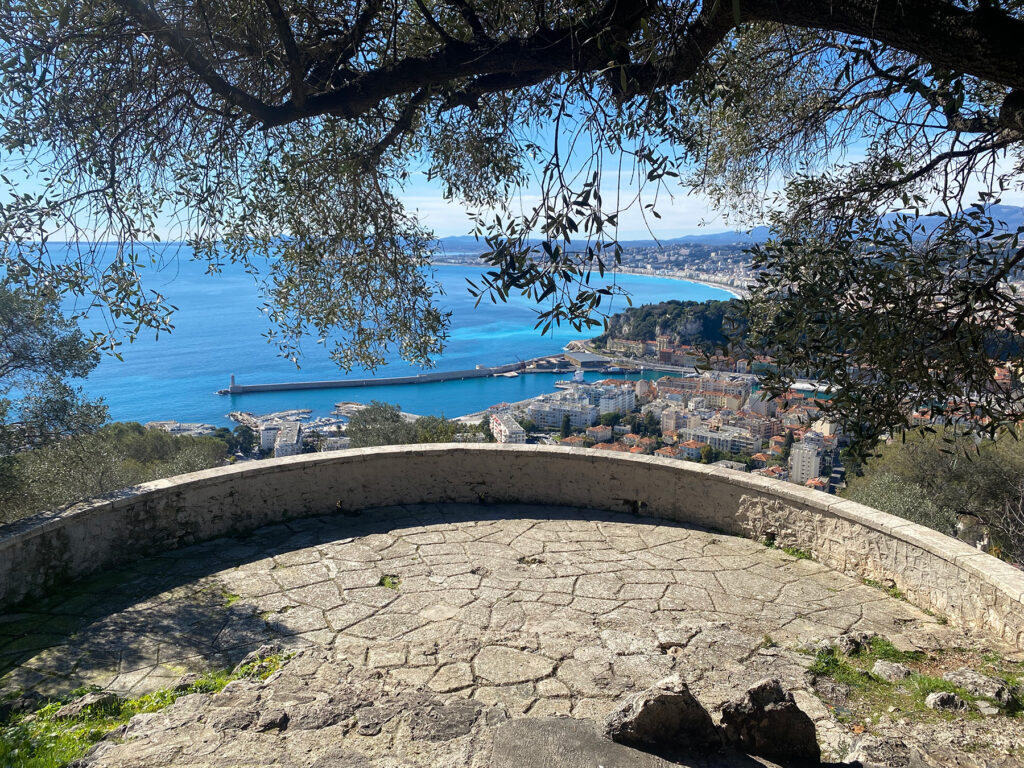
Start: Col de Villefranche
The Col de Villefranche is located at an altitude of about 200 metres between Nice and Villefranche-sur-Mer. From here, several well-signposted paths lead towards Mont Alban. After just a few minutes, the view opens up to the deep blue Rade de Villefranche and the Cap Ferrat peninsula.
The trail initially runs through a sparse pine forest. The scent of Aleppo pines, rosemary and thyme accompanies you – typical of the garrigue vegetation of the region. The incline is moderate and easily manageable.
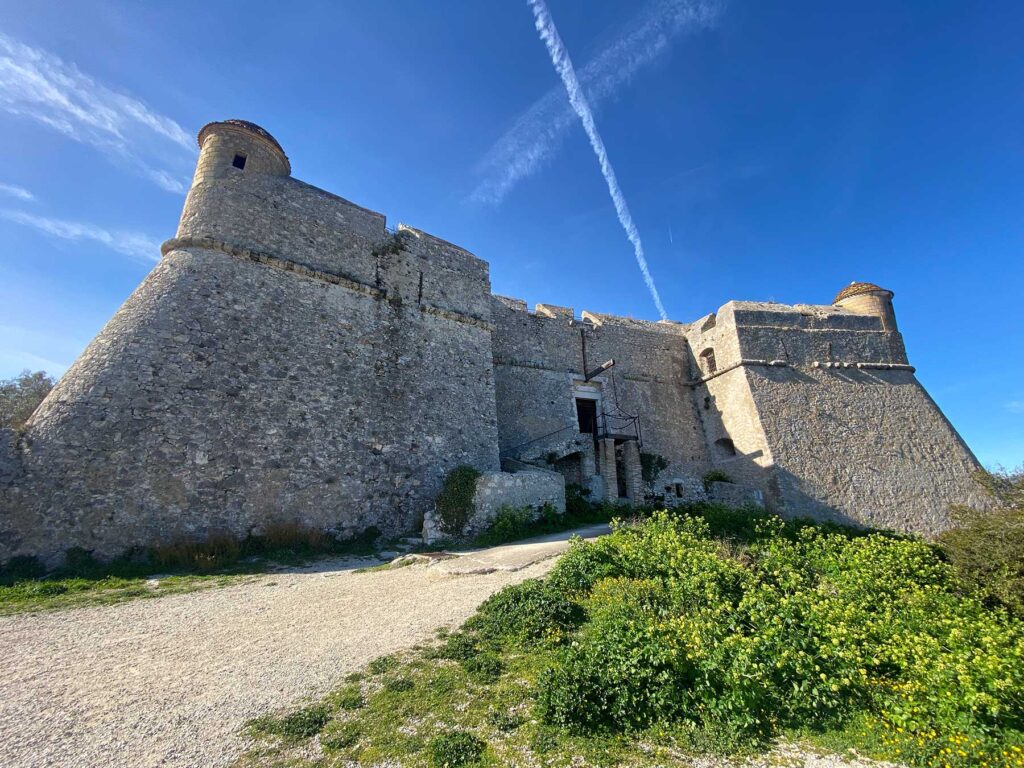
Stage 1: Ascent to the fort
After about 20–30 minutes, you will reach the Fort du Mont Alban, a 16th-century fortress. The massive structure is perched at an altitude of around 220 metres and offers one of the most beautiful panoramas of the Côte d’Azur:
View westwards over the Bay of Nice
View eastwards over the roadstead of Villefranche
On a clear day: the snow-capped Maritime Alps in the hinterland
It is definitely worth taking a break here. Small paths lead to various vantage points around the fort.
Stage 2: Descent towards Villefranche
From the fort, take the path towards Villefranche-sur-Mer. The path winds its way downhill through Mediterranean vegetation. Again and again, new perspectives of the bay open up – the play of colours between ochre facades, turquoise water and green hills is typical of the region.
The descent takes about 40–60 minutes, depending on your pace and photo stops. The path is rocky in places, so sturdy shoes are recommended.
Destination: Villefranche-sur-Mer
Once you reach the bottom, you will arrive at the old town of Villefranche-sur-Mer with its narrow streets and pastel-coloured houses. The historic Saint-Elme citadel, which also refers to the military importance of the region, is particularly worth seeing.
You can relax at the harbour or on the beach at the end of your hike – perhaps with a coffee or a swim in the sea.
Practical information
Duration: approx. 1.5–2.5 hours (without long breaks)
Difficulty: easy to moderate
Elevation difference: approx. 200 metres
Best time: spring and autumn (summer can be very hot)
Equipment: water, sunscreen, sturdy shoes
Conclusion
The hike from Col de Villefranche via Fort Vauban (Mont Alban) to Villefranche-sur-Mer is ideal for anyone looking for a short but impressive tour. It combines nature with history and offers some of the most beautiful views on the French Mediterranean coast.
Places
Hike from Col de Villefranche via Fort du Mont Alban to Villefranche-sur-Mer with a tour of the Citadelle Saint-Elme
This varied tour combines nature, spectacular views and impressive military architecture – an ideal day trip on the Côte d’Azur.
- Start at Col de Villefranche
Col de Villefranche is located at an altitude of about 200 metres between Nice and Villefranche-sur-Mer. Several paths lead from the car park or the road towards Mont Alban. After just a few minutes, the first views of the deeply indented bay of Villefranche and Cap Ferrat open up.
The path climbs gently and leads through a sparse pine forest. Mediterranean plants such as rosemary, thyme and dwarf palms line the path. The climb is moderate and easy to walk.
Walking time to the fort: approx. 20–30 minutes
- Fort du Mont Alban viewpoint (Fort Vauban)
At an altitude of around 220 metres, you will reach Fort du Mont Alban, a 16th-century fortress. The complex was built under Savoyard rule and served to control the strategically important coastline.
From up here, you can enjoy a spectacular panorama:
To the west, the Baie des Anges and Nice
To the east, the Rade de Villefranche
In the background, the Maritime Alps
The view is one of the most beautiful in the entire region. It is worth taking a longer break to enjoy the different perspectives around the complex.
- Descent to Villefranche-sur-Mer
From the fort, the path winds downhill towards Villefranche. The path is partly rocky but easy to follow. During the descent, wooded areas alternate with open viewpoints that offer ever-changing perspectives of the sea.
As you get closer to the village, the ochre-coloured houses and small harbour of Villefranche-sur-Mer come into view. The descent takes about 45-60 minutes.
- Destination: The Citadelle Saint-Elme in Villefranche
Once you arrive at the harbour, you will reach the impressive Citadelle Saint-Elme. Built in the 16th century, this fortress served to secure the bay and was part of a comprehensive defence system for the region.
Today, the citadel is the cultural centre of the city and houses several museums and exhibitions:
Museums and galleries in the citadel
Musée Volti – sculptures by the artist Antoniucci Volti
Musée Goetz-Boumeester – works of modern art
Collections on the history of the city – historical documents and models
The inner courtyards, vaulted corridors and bastions can be explored freely. The thick walls and the view of the bay from the bastions are particularly impressive.
Visiting time: approx. 1–1.5 hours
- Practical information
Total duration (including visit): approx. 3–4 hours
Elevation difference: approx. 200 metres
Difficulty: easy to moderate
Equipment: sturdy shoes, water, sun protection
Best season: spring and autumn (very hot in summer)
Conclusion
This hike impressively combines nature, history and culture. From the panorama at Fort du Mont Alban to the atmospheric tour of the Citadelle Saint-Elme, you will experience the strategic importance of the bay of Villefranche up close. The alternation between Mediterranean landscape and historical architecture makes this tour one of the most beautiful half-day excursions on the Côte d’Azur.
Fort du Mont Alban
High above the Bay of Nice, between Nice and Villefranche-sur-Mer, stands the Fort du Mont Alban – usually referred to simply as ‘Fort Alban’. This striking 16th-century fortress is not only an impressive example of early modern military architecture, but also a landmark that shapes the identity of the Côte d’Azur region.
Historical background
The fort was built in the 16th century under the rule of Emmanuel Philibert. At that time, Nice did not yet belong to France, but to the Duchy of Savoy. The aim of the construction was to secure the strategically important coastline against attacks, especially from the sea. Its exposed location at an altitude of around 220 metres allowed a wide view over the Bay of Nice and the port of Villefranche.
The massive, star-shaped structure with its thick walls and bastions was in line with the most modern defence principles of its time. Together with the citadel of Villefranche, the fort formed an effective defence system that could control both sea and land attacks.
Strategic importance
Its location between present-day Nice and Villefranche-sur-Mer made the fort a key point for regional security. From here, troops could detect movements along the coast at an early stage. Especially in an era when Mediterranean ports were of great importance for trade and the military, control of the sea routes was a decisive factor of power.
The fort retained its military relevance in later centuries. It continued to be used and adapted during various conflicts. Its solid construction has contributed to its good state of preservation to this day.
Significance for the surrounding area
Today, the fort no longer fulfils a military function, but is an important cultural and tourist attraction. It symbolises the region’s turbulent history – from Savoyard rule to integration into France and the modern development of the Côte d’Azur.
The fort is a popular destination for the inhabitants of Nice. The surrounding park offers walking trails with spectacular panoramic views of the Mediterranean, the foothills of the Alps and the coastal towns. Especially at sunset, the viewpoint is one of the most beautiful in the region.
The fort also contributes to the local identity: it is a reminder of the time when Nice was not yet French and illustrates the city’s historical role as a border and port city between different political powers.
Architecture and current condition
The compact, rectangular structure with its bastions is an example of Renaissance military architecture. Although the interior of the fort is not permanently open to the public, the complex can be viewed from the outside. The massive stone walls still convey an impression of the strategic importance of the building.
Conclusion
Fort Alban is much more than an old fortress. It is a historical testimony to power politics in the Mediterranean region, a symbol of regional identity and a viewpoint of exceptional beauty. Its presence above the Bay of Nice connects the past and the present – and highlights how closely history, landscape and urban development are intertwined on the Côte d’Azur.
in german:
Diese aussichtsreiche Wanderung an der Côte d’Azur verbindet Geschichte, Natur und spektakuläre Meerblicke. Auf relativ kurzer Strecke erlebst du mediterrane Vegetation, militärische Architektur und den Abstieg in eine der schönsten Buchten der Region.
Start: Col de Villefranche
Der Col de Villefranche liegt auf etwa 200 Metern Höhe zwischen Nizza und Villefranche-sur-Mer. Von hier aus führen mehrere gut ausgeschilderte Wege in Richtung Mont Alban. Schon nach wenigen Minuten öffnet sich der Blick auf die tiefblaue Rade de Villefranche und die Halbinsel Cap Ferrat.
Der Weg verläuft zunächst durch lichten Pinienwald. Der Duft von Aleppokiefern, Rosmarin und Thymian begleitet dich – typisch für die Garrigue-Vegetation der Region. Die Steigung ist moderat und gut machbar.
Etappe 1: Aufstieg zum Fort
Nach etwa 20–30 Minuten erreichst du das Fort du Mont Alban, eine Festung aus dem 16. Jahrhundert. Die massive Anlage thront auf rund 220 Metern Höhe und bietet eines der schönsten Panoramen der Côte d’Azur:
- Blick westwärts über die Bucht von Nizza
- Blick ostwärts über die Reede von Villefranche
- Bei klarer Sicht: die schneebedeckten Seealpen im Hinterland
Eine Pause lohnt sich hier unbedingt. Rund um das Fort führen kleine Wege zu verschiedenen Aussichtspunkten.
Etappe 2: Abstieg Richtung Villefranche
Vom Fort aus nimmst du den Weg in Richtung Villefranche-sur-Mer. Der Pfad schlängelt sich in Serpentinen bergab durch mediterrane Vegetation. Immer wieder eröffnen sich neue Perspektiven auf die Bucht – das Farbspiel zwischen Ockerfassaden, türkisfarbenem Wasser und grünen Hügeln ist typisch für die Region.
Der Abstieg dauert etwa 40–60 Minuten, je nach Tempo und Fotostopps. Der Weg ist stellenweise steinig, daher sind feste Schuhe empfehlenswert.
Ziel: Villefranche-sur-Mer
Unten angekommen erreichst du die Altstadt von Villefranche-sur-Mer mit ihren engen Gassen und pastellfarbenen Häusern. Besonders sehenswert ist die historische Zitadelle Saint-Elme, die ebenfalls auf die militärische Bedeutung der Region verweist.
Am Hafen oder am Strand kannst du die Wanderung entspannt ausklingen lassen – vielleicht mit einem Kaffee oder einem Bad im Meer.
Praktische Hinweise
- Dauer: ca. 1,5–2,5 Stunden (ohne lange Pausen)
- Schwierigkeit: leicht bis mittel
- Höhenunterschied: etwa 200 Meter
- Beste Zeit: Frühjahr und Herbst (Sommer kann sehr heiß sein)
- Ausrüstung: Wasser, Sonnenschutz, feste Schuhe
Fazit
Die Wanderung vom Col de Villefranche über das Fort Vauban (Mont Alban) nach Villefranche-sur-Mer ist ideal für alle, die eine kurze, aber eindrucksvolle Tour suchen. Sie verbindet Naturerlebnis mit Geschichte und bietet einige der schönsten Ausblicke an der französischen Mittelmeerküste.
Beschreibe mir bitte eine Wanderung vom Col de Villefranche über das Fort Vauban nach Villefranche und abschließender Besichtung des Fort von Villefranche mit Besichtigung der Galerien und Museen im Fort.
Orte
Wanderung vom Col de Villefranche über das Fort du Mont Alban nach Villefranche-sur-Mer mit Besichtigung der Citadelle Saint-Elme
Diese abwechslungsreiche Tour verbindet Natur, spektakuläre Ausblicke und eindrucksvolle Militärarchitektur – ein idealer Tagesausflug an der Côte d’Azur.
1. Start am Col de Villefranche
Der Col de Villefranche liegt auf etwa 200 Metern Höhe zwischen Nizza und Villefranche-sur-Mer. Vom Parkplatz bzw. der Straße aus führen mehrere Wege in Richtung Mont Alban. Schon nach wenigen Minuten eröffnen sich erste Blicke auf die tief eingeschnittene Bucht von Villefranche und das Cap Ferrat.
Der Weg steigt sanft an und führt durch lichten Pinienwald. Mediterrane Pflanzen wie Rosmarin, Thymian und Zwergpalmen säumen den Pfad. Der Anstieg ist moderat und gut begehbar.
Gehzeit bis zum Fort: ca. 20–30 Minuten
2. Aussichtspunkt Fort du Mont Alban (Fort Vauban)
Auf rund 220 Metern Höhe erreichst du das Fort du Mont Alban, eine Festung aus dem 16. Jahrhundert. Die Anlage wurde unter savoyischer Herrschaft erbaut und diente der Kontrolle der strategisch wichtigen Küste.
Von hier oben bietet sich ein spektakuläres Panorama:
- Westwärts die Baie des Anges und Nizza
- Ostwärts die Rade de Villefranche
- Im Hintergrund die Seealpen
Die Aussicht gehört zu den schönsten der gesamten Region. Eine längere Pause lohnt sich, um die verschiedenen Blickwinkel rund um die Anlage zu genießen.
3. Abstieg nach Villefranche-sur-Mer
Vom Fort führt der Weg in Serpentinen bergab Richtung Villefranche. Der Pfad ist teils steinig, aber gut erkennbar. Während des Abstiegs wechseln sich Waldstücke mit offenen Aussichtspunkten ab, die immer neue Perspektiven auf das Meer eröffnen.
Mit zunehmender Nähe zum Ort erscheinen die ockerfarbenen Häuser und der kleine Hafen von Villefranche-sur-Mer. Der Abstieg dauert etwa 45–60 Minuten.
4. Ziel: Die Citadelle Saint-Elme in Villefranche
Am Hafen angekommen erreichst du die beeindruckende Citadelle Saint-Elme. Diese im 16. Jahrhundert errichtete Festung diente der Sicherung der Bucht und war Teil eines umfassenden Verteidigungssystems der Region.
Heute ist die Zitadelle kulturelles Zentrum der Stadt und beherbergt mehrere Museen und Ausstellungen:
Museen und Galerien in der Zitadelle
- Musée Volti – Skulpturen des Künstlers Antoniucci Volti
- Musée Goetz-Boumeester – Werke moderner Kunst
- Sammlungen zur Stadtgeschichte – historische Dokumente und Modelle
Die Innenhöfe, Gewölbegänge und Bastionen können frei erkundet werden. Besonders eindrucksvoll sind die dicken Mauern und die Aussicht von den Bastionen auf die Bucht.
Besichtigungszeit: ca. 1–1,5 Stunden
5. Praktische Hinweise
- Gesamtdauer (inkl. Besichtigung): ca. 3–4 Stunden
- Höhenunterschied: ca. 200 Meter
- Schwierigkeit: leicht bis mittel
- Ausrüstung: feste Schuhe, Wasser, Sonnenschutz
- Beste Jahreszeit: Frühjahr und Herbst (im Sommer sehr heiß)
Fazit
Diese Wanderung verbindet eindrucksvoll Natur, Geschichte und Kultur. Vom Panorama am Fort du Mont Alban bis zur atmosphärischen Besichtigung der Citadelle Saint-Elme erlebst du die strategische Bedeutung der Bucht von Villefranche aus nächster Nähe. Der Wechsel zwischen mediterraner Landschaft und historischer Architektur macht diese Tour zu einem der schönsten Halbtagesausflüge an der Côte d’Azur.
Leave a Reply