Kurt and Theodor Wolff, the Berliner Tageblatt, “Ten Years of Nice,” and Alfred Neumann—Facets of a Liberal Public Sphere.
These men were primarily active in the late 19th and first half of the 20th century, with a focus on the period between the German Empire and the Weimar Republic. The history of the German press and intellectual world in the late 19th and early 20th centuries is hardly conceivable without the Berliner Tageblatt. As one of the most important liberal mass-circulation newspapers of the German Empire and the Weimar Republic, it was not only a news medium but also a forum for political debate, literary innovation, and European self-understanding. This environment attracted personalities such as Kurt and Theodor Wolff and authors such as Alfred Neumann, whose contributions exemplify the connection between journalism, literature, and political thought.
Theodor Wolff, long-time editor-in-chief of the Berliner Tageblatt, had a decisive influence on the newspaper. He understood journalism as a moral and political task. Under his leadership, the newspaper developed into a voice for liberalism, the rule of law, and understanding between European nations. Wolff’s editorials combined analytical acuity with linguistic elegance and made the Berliner Tageblatt a leading medium for the educated public. His work showed that political journalism could be more than mere reporting: it became intellectual intervention.
Kurt Wolff, although not directly part of the editorial team, represented a similar intellectual attitude. As one of the most important publishers of the 20th century, he promoted authors of literary modernism such as Franz Kafka, Georg Trakl, and Else Lasker-Schüler. The proximity between the press and literature, as evidenced in the environment of the Berliner Tageblatt, points to a common cultural project: the renewal of language, thought, and social sensitivity. Kurt Wolff’s publishing work thus complemented Theodor Wolff’s journalistic work on a different, literary level.
One example of the Berliner Tageblatt’s European perspective is its review “Ten Years of Nice.” Such articles were typical of the paper: they combined current politics with historical reflection. The reference to Nice—as a venue for international conferences and diplomatic negotiations—symbolizes the paper’s interest in European power relations, peace agreements, and Germany’s role in international politics. Reviews of this kind served not only to inform readers, but also to educate them politically.
Alfred Neumann, who contributed to the intellectual milieu of the time as a journalist and writer, can also be placed in this context. His texts often combined political analysis with literary ambition, thus fitting in with the profile of the Berliner Tageblatt. Authors such as Neumann embodied the type of writing intellectual who mediated between feature pages, political commentary, and literary form.
In summary, it can be said that Kurt and Theodor Wolff, the Berliner Tageblatt, articles such as “Ten Years in Nice,” and authors such as Alfred Neumann were part of a shared cultural context. They represent an era in which journalism, literature, and politics were closely intertwined and in which liberal public discourse was understood as a central prerequisite for democratic culture. Looking back, it becomes clear how fragile—and at the same time how significant—this tradition was.
These men were primarily active in the late 19th and first half of the 20th century, with a focus on the period between the German Empire and the Weimar Republic.
Theodor Wolff (1868–1943)
Active approx. 1900–1933
Editor-in-chief of the Berliner Tageblatt from 1906 to 1933
A defining figure of left-wing liberal journalism in the German Empire and the Weimar Republic
Had to go into exile from the Nazis in 1933
Kurt Wolff (1887–1963)
Active from around 1910 until the 1950s
Most important publisher of literary modernism
Focus of his work: the 1910s and 1920s
Also emigrated after 1933 (USA)
Alfred Neumann (1895–1952)
Active primarily in the 1920s and early 1930s
Journalist and writer of the Weimar Republic
Wrote political and literary texts
Emigration after 1933
Shared historical context
German Empire (1871–1918)
First World War
Weimar Republic (1919–1933)
End of their activities in Germany due to the National Socialists’ seizure of power
Overall, they belonged to Germany’s liberal intellectual public sphere between 1900 and 1933.
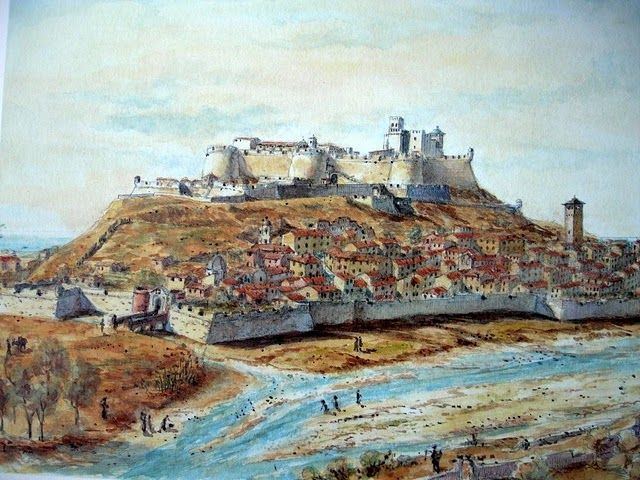
Èze Village towers above the sparkling ribbon of the Mediterranean Sea like a silent witness to a complex past. Perched on a steep rocky outcrop on the French Riviera, the village uniquely combines traces of early Ligurian cultures, medieval power struggles, modern fortification policies, and the cultural trends of the Belle Époque. Its development is a prime example of the transformation of Mediterranean settlements from strategic strongholds to symbolic cultural landscapes.
1. The beginnings: Ligurian settlements and Roman spheres of influence
The earliest traces of human presence in the Èze area can be attributed to the Celto-Ligurian tribes who settled in the region around what is now Mont Bastide. The choice of location was motivated by both defensive and economic considerations: the extremely steep topography offered protection from attackers, while the proximity to the sea facilitated trade.
With Roman expansion in Provence, the entire coastal region was integrated into a systematic administrative and transportation system. Although Èze itself was not at the center of Roman urbanity, continuous settlement established itself along the coast, particularly in Èze-sur-Mer. The Roman presence also left behind agricultural techniques such as terraced farming and olive cultivation, which shaped the landscape until modern times.
Èze Village – Cactus Garden
2. Medieval consolidation: between Provence and Savoy
From the High Middle Ages onwards, Èze developed into a fortified village, which was ideal for military purposes due to its location at an altitude of 430 meters. From then on, its history was marked by territorial conflicts: Èze initially belonged to the County of Provence.
From the 14th century onwards, it fell under the rule of the House of Savoy. The conflict between Savoy and France in the 17th century led to multiple changes in strategy and ultimately to its integration into the Kingdom of France.
The medieval streets – now home to artists’ studios and boutiques – were originally designed for defensive purposes. The village functioned as a stone labyrinth intended to confuse attackers. The central fortress, the citadel of Èze, was repeatedly expanded, but fell victim to Louis XIV’s strategic order of destruction in 1706. Today’s platform with the “Jardin Exotique” is a relic of this military past.
3. Modern infrastructure: Fort Révère as part of national defense systems
In the 19th century, Èze once again became the focus of French military planning due to its geographical location. Fort Révère, located in the hinterland above the village, was built after 1870 as part of the so-called Séré de Rivières system – a network of modern fortifications of European significance, created in response to the Franco-Prussian War.
Fort Révère is characterized by: a polygonal layout with casemates, embrasures in all directions, massive walls made of stone and concrete, devices for communication with neighboring coastal and mountain forts.
Although Fort Révère was never involved in combat, it played a role in monitoring the coast and securing the Italian-French border. Today, as a restored monument, it offers one of the most impressive panoramic views of the Riviera and symbolizes an era of European rearmament that changed fundamentally with the First World War.
4. Château Balsan – Riviera romance and sophisticated
The advent of Riviera tourism in the 19th century marked the beginning of a new era for Èze. Château Balsan played a special role in this development. Industrialist Émile Balsan, who came from an influential textile family, acquired the estate and transformed it into a sophisticated retreat.
The château is remarkable for cultural and historical reasons: It was a frequent meeting place for the Parisian and international elite. Coco Chanel, who was closely associated with Émile Balsan in her early life, spent long periods here. It was in Èze that she made the transition from the world of aristocracy and bohemianism to her calling as a designer.
The subsequent conversion of the building into the exclusive Château de la Chèvre d’Or hotel marked another turning point: the Riviera became a luxury destination, while the historic buildings of Èze were integrated into tourist and cultural contexts.
5. Continuity and renewal: From an agricultural society to a cultural landscape
Until the early 20th century, Èze was still heavily agricultural: olive groves, vineyards, terraced farming, and sheep breeding dominated life. It was only with the expansion of modern transport infrastructure—roads, railways along the coast, and later the Corniche Routes—that the village underwent structural change.
The significant combination of historic buildings, an exceptional location, and romantic aesthetics led to Èze becoming a fixture for: artists and writers, botanists (especially because of the exotic garden), historians, and tourists from all over the world.
Today, Èze combines the preservation of its medieval identity with a mixture of arts and crafts, luxury hotels and natural landscape typical of the Côte d’Azur.
6. Concluding remarks
Èze Village is a prime example of the transformative power of historical sites. Its history encompasses: Ligurian origins, medieval power struggles, French and Savoyard territorial politics, modern fortification systems, the sophisticated culture of the Belle Époque and modern cultural tourism.
The Château Balsan and Fort Révère serve as striking anchor points: one embodies the aesthetic and social appeal of the Riviera, the other the strategic importance of the region in an era of geopolitical uncertainty.
Èze is thus not only a picturesque mountain village, but also a living archive of European history—a place where political, cultural, and landscape developments overlap in an extraordinary way.
Louis XIV organised the siege of Nice under the command of the Duke of La Feuillade. From 9 to 22 December 1705, the castle of Nice was bombarded relentlessly by 60 cannons and 24 mortars. More than 10,000 bombs and 120,000 cannonballs were fired at the castle during the siege, resulting in between 700 and 800 deaths and injuries. It was not until 4 January 1706 that the Marquis de Caraglio, commander of the citadel of Nice and governor of the county of Nice, surrendered.
When Varian Fry traveled to Europe aboard the transatlantic liner Bremen in 1935, he was still a young journalist, driven by curiosity, acumen, and an incorruptible eye for the political tensions of his time. Even during the crossing, among diplomats, businesspeople, and emigrants, he heard conversations about Hitler’s job creation programs, currency controls, and growing anti-Semitism. It was a premonition of what awaited him on the continent.
In Berlin, he took up residence at the Hotel-Pension Stern on Kurfürstendamm, a middle-class establishment in the heart of the capital. There, in the breakfast rooms, amid the rustling of newspapers, he conducted his first interviews: politicians who were still wavering between loyalty and inner resistance, business leaders who saw the regime as both a threat and an opportunity, and university lecturers who were torn between academic caution and open ideological loyalty. But Fry didn’t just listen to the voices of the elites. He spoke to shopkeepers who reported boycott actions, to waiters who whispered about guests who had disappeared, to churchgoers who described the pressure on their pastors, and to taxi drivers whose sober cynicism often contained more truth than the official slogans.
Kurfürstendamm became a burning mirror for Fry. Elegant strolling and intimidation by SA men existed side by side. One evening, he got caught up in a street battle: students were protesting against Gleichschaltung, and SA men were dispersing them with boots and batons. Fry, who only wanted to observe, was drawn into the melee. He escaped, but not without injuries – and not without an image of the violence he later described so vividly. Berlin had shown him how deeply ideology, fear, and violence had already penetrated everyday life.
When Fry was sent to Marseille in 1940 on behalf of the Emergency Rescue Committee after the Wehrmacht invaded France, he was prepared. What he had only observed in Berlin now determined his actions: saving people who were on the Gestapo’s blacklists.
Marseille, the last major port in unoccupied France, was a place of both hope and despair. Refugees from all over Europe flocked there—writers, artists, scientists, political dissidents. Fry worked under the guise of a journalist, but his real mission was to organize a rescue operation that was both improvised and life-threatening.
His team was a diverse bunch: Miriam Davenport, the art historian; Mary Jayne Gold, a wealthy American who contributed money and courage; Daniel Bénédite, the French trade unionist who maintained contacts with officials and workers; and later also the young economist Albert Hirschman, who forged passports and organized escape routes. Together, they saved hundreds of people, including Marc Chagall, Heinrich Mann, Lion Feuchtwanger, Max Ernst, Hannah Arendt, and many others whose work shaped the cultural memory of the 20th century.
The cooperation of the US was ambivalent. The Emergency Rescue Committee had sent him, but Washington kept its distance: officially, it did not want to risk a confrontation with Vichy France or Berlin. Fry therefore operated in a gray area, tolerated but viewed with suspicion. France also showed two faces: individual officials helped quietly, but the Vichy administration cooperated closely with the Germans and handed over refugees. It was only through bribery, forgery, and secret networks that Fry was able to continue his work.
From Marseille, his contacts also extended to the Côte d’Azur: to Nice and Sanary-sur-Mer, where German exiles had been living since the early 1930s—Heinrich and Thomas Mann, Lion Feuchtwanger, Franz Werfel, Alma Mahler-Werfel, and many others. Fry built on these structures, helping with onward transport, organizing visas and ship passages to Spain and Portugal. In this way, he connected the escape routes along the coast with the rescue routes in Marseille.
But in 1941, Vichy put an end to his work. Fry was expelled, exhausted and plagued by guilt because he could not save everyone. Back in New York, he reported on his experiences and wrote his book Surrender on Demand in 1945, but it went unnoticed for a long time. In the early post-war years, America did not want to be reminded of that period of inaction, when individuals had shown more courage than states. Fry himself lived on the fringes of the intellectual scene, scarred by what he had experienced.
It was not until decades later that he received the recognition he deserved. In 1996, Yad Vashem honored him as the first American with the title “Righteous Among the Nations.” Today, France and Germany also remember the “American Schindler,” who acted not out of political calculation but out of moral clarity.
Varian Fry was both an observer and an actor. In Berlin, he had learned to see behind the facades; in Marseille, he had taken action; in the US, he had fought for remembrance. His life journey—from the salons of the ocean liner Bremen to the Pension Stern on Kurfürstendamm to the improvised rescue offices in Marseille—is testimony to the fact that even a single individual can take responsibility in the face of violence.
in german:
Varian Fry – Von Berlin nach Marseille
Ein Leben zwischen Beobachtung und Verantwortung
Als Varian Fry 1935 an Bord des Transatlantikliners Bremen nach Europa reiste, war er noch ein junger Journalist, getrieben von Neugier, Scharfsinn und einem unbestechlichen Blick für die politischen Spannungen seiner Zeit. Schon auf der Überfahrt, zwischen Diplomaten, Geschäftsleuten und Emigranten, hörte er Gespräche über Hitlers Arbeitsbeschaffungsprogramme, über Devisenkontrollen und über den wachsenden Antisemitismus. Es war eine Vorahnung dessen, was ihn auf dem Kontinent erwartete.
In Berlin bezog er Quartier in der Hotel-Pension Stern am Kurfürstendamm, einem bürgerlichen Haus im Herzen der Hauptstadt. Dort, in den Frühstücksräumen, beim Rascheln der Zeitungen, führte er seine ersten Interviews: Politiker, die noch zwischen Loyalität und innerem Widerstand schwankten, Wirtschaftsführer, die im Regime ebenso Bedrohung wie Chance sahen, und Universitätsdozenten, die zwischen akademischer Vorsicht und offener Ideologietreue lavierten. Doch Fry hörte nicht nur den Stimmen der Eliten zu. Er sprach mit Ladenbesitzern, die von Boykottaktionen berichteten, mit Kellnern, die im Flüsterton von verschwundenen Gästen erzählten, mit Kirchenbesuchern, die den Druck auf ihre Pfarrer schilderten, und mit Taxichauffeuren, deren nüchterner Zynismus oft mehr Wahrheit enthielt als die offiziellen Parolen.
Der Kurfürstendamm wurde für Fry zu einem Brennspiegel. Elegantes Flanieren und Einschüchterung durch SA-Männer existierten nebeneinander. Eines Abends geriet er in eine Straßenschlacht: Studenten protestierten gegen die Gleichschaltung, SA-Männer trieben sie mit Stiefeln und Schlagstöcken auseinander. Fry, der nur beobachten wollte, wurde in das Getümmel hineingezogen. Er entkam, aber nicht ohne Verletzungen – und nicht ohne ein Bild jener Gewalt, die er später so eindringlich beschrieb. Berlin hatte ihm gezeigt, wie tief Ideologie, Angst und Gewalt bereits in den Alltag eingedrungen waren.
Als Fry 1940, nach dem Einmarsch der Wehrmacht in Frankreich, im Auftrag des Emergency Rescue Committee nach Marseille entsandt wurde, war er vorbereitet. Was er in Berlin nur beobachtet hatte, bestimmte nun sein Handeln: Menschen retten, die auf den schwarzen Listen der Gestapo standen.
Marseille, der letzte große Hafen im unbesetzten Frankreich, war ein Ort der Hoffnung und Verzweiflung zugleich. Flüchtlinge aus ganz Europa strömten dorthin – Schriftsteller, Künstler, Wissenschaftler, politische Dissidenten. Fry arbeitete unter dem Deckmantel eines Journalisten, doch sein eigentlicher Auftrag war die Organisation einer Rettungsmaschine, die zugleich improvisiert und lebensgefährlich war.
Sein Team war bunt zusammengesetzt: Miriam Davenport, die Kunsthistorikerin; Mary Jayne Gold, eine wohlhabende Amerikanerin, die Geld und Mut beisteuerte; Daniel Bénédite, der französische Gewerkschafter, der Kontakte zu Beamten und Arbeitern hielt; später auch der junge Ökonom Albert Hirschman, der Pässe fälschte und Fluchtwege organisierte. Gemeinsam retteten sie Hunderte – unter ihnen Marc Chagall, Heinrich Mann, Lion Feuchtwanger, Max Ernst, Hannah Arendt und viele andere, deren Werk das kulturelle Gedächtnis des 20. Jahrhunderts prägt.
Die Kooperation der USA war ambivalent. Das Emergency Rescue Committee hatte ihn entsandt, doch Washington hielt Distanz: Offiziell wollte man keine Konfrontation mit Vichy-Frankreich oder Berlin riskieren. Fry agierte daher im Graubereich, geduldet, aber misstrauisch beäugt. Auch Frankreich zeigte zwei Gesichter: Einzelne Beamte halfen im Stillen, doch die Vichy-Administration kooperierte eng mit den Deutschen und lieferte Flüchtlinge aus. Nur durch Bestechungen, Fälschungen und heimliche Netzwerke gelang es Fry, seine Arbeit fortzuführen.
Von Marseille aus reichten seine Kontakte auch an die Côte d’Azur: nach Nizza und nach Sanary-sur-Mer, wo bereits seit den frühen 1930er Jahren deutsche Exilanten lebten – Heinrich und Thomas Mann, Lion Feuchtwanger, Franz Werfel, Alma Mahler-Werfel und viele andere. Fry knüpfte an diese Strukturen an, half beim Weitertransport, organisierte Visa und Schiffspassagen nach Spanien und Portugal. So verband er die Fluchtwege an der Küste mit den Rettungsrouten in Marseille.
Doch 1941 setzte Vichy seiner Arbeit ein Ende. Fry wurde ausgewiesen, ausgelaugt und von Schuldgefühlen geplagt, weil er nicht alle retten konnte. Zurück in New York berichtete er, schrieb 1945 sein Buch Surrender on Demand, doch es blieb lange unbeachtet. Amerika wollte in den ersten Nachkriegsjahren nicht erinnert werden an jene Zeit der Untätigkeit, als Einzelne mehr Mut gezeigt hatten als Staaten. Fry selbst lebte am Rande der intellektuellen Szene, gezeichnet von dem, was er erlebt hatte.
Erst Jahrzehnte später erhielt er die Anerkennung, die ihm gebührte. 1996 ehrte ihn Yad Vashem als ersten Amerikaner mit dem Titel „Gerechter unter den Völkern“. Auch in Frankreich und Deutschland erinnert man heute an den „amerikanischen Schindler“, der nicht aus politischem Kalkül, sondern aus moralischer Klarheit handelte.
Varian Fry war Beobachter und Akteur zugleich. In Berlin hatte er gelernt, hinter die Fassaden zu sehen, in Marseille hatte er gehandelt, in den USA hatte er für Erinnerung gestritten. Sein Lebensweg – von den Salons des Linienschiffs Bremen über die Pension Stern am Kurfürstendamm bis zu den improvisierten Rettungsbüros in Marseille – ist ein Zeugnis dafür, dass auch ein Einzelner im Angesicht der Gewalt Verantwortung übernehmen kann.
Photo:Varian Fry in Marseille. Frankreich, 1940–1941 in Marseille. US Holocaust Memorial Museum, courtesy of Annette Fry
A book for all fans of France. And a wealth of experience for anyone who wants to follow in the author’s footsteps and make their dream of emigrating to France a reality.
„Aufgeben ist keine Option, wenn es darum geht, sich seinen Traum zu erfüllen.“ – Ines Sachs –
Author Ines Sachs and her husband decide to leave Germany behind and live a life in the sunshine of southern France. In this book, she describes her emigration with affection and a great deal of humor: how the dream becomes a plan (it’s no coincidence that she is married to a project manager), the minor difficulties and major hurdles that need to be overcome, and finally the arrival in their new home, which does not go as smoothly as they had imagined.
When Friedrich Nietzsche traveled to Nice in the winter of 1883/84, he was not only seeking the mild climate of the Côte d’Azur. He was seeking relief for his pain-ridden body, the rhythm of the sea, the clarity of the sky. What opened up for him here was more than just a “spa stay”: it was an aesthetic experience, a new topography of thought.
In a letter to his sister Elisabeth, he wrote from Nice: “I have never seen such a sky, such brightness in the air, which lies like a light cloak over everything. Here one lives in a world of colors that gives birth not to intoxication but to clarity. Blue, the inexhaustible blue, permeates my entire thinking.”
This view is significant: Nietzsche sees in the colors of Nice not a decorative idyll, but an existential reinforcement. Unlike in Turin or Genoa, where winter always brought him heaviness and illness, Nice opens up the possibility for him to experience the body not as an enemy, but as a resonance chamber of perception. Here he does not speak contemptuously of the body, but recognizes it as part of that “great yes” that his philosophy seeks.
The road to Èze – philosophy on the move
From Nice, an old mule track leads along the coast up to Èze, the eagle’s nest above the sea. Nietzsche often walked this path. The steep steps, the shimmer of light on the olive leaves, the play of shadows and rocks accompanied him like a silent choir.
He notes: “It is as if with every step you enter another world of thoughts. The ascent is difficult, but it resembles what thinking itself demands: difficulty in order to reach the heights.”
During these walks, the seed of that great unfinished work that would later become known as The Will to Power began to mature. Nietzsche’s notes from this period reveal a shift away from pure criticism of morality toward a philosophy of creation, of shaping, of “affirming life.”
For Nietzsche, the will to power was not an abstract metaphor. He understood it as the dynamic energy that drives all living things, not only the spirit, but also nature, colors, the power of the sea, which he felt so directly in Nice. The body was no longer a burden to be overcome, but the place where this power manifests itself.
Letters from a world of colors
In another letter to his sister, he writes: “Here in Nice, one learns how easy life can be when it speaks only through colors. Everything is bright, not in the way of dazzling snow, but like the most delicate music.”
These words are not merely private enthusiasm. They mark a turning point: Nietzsche develops a way of thinking that affirms the richness of appearances, that does not despise the body but recognizes it as a mediator of experience. For him, the world of colors is not an illusion but an expression of a depth that constitutes life itself.
Nice as a place of affirmation
Thus, Nice becomes a symbolic place of affirmation for Nietzsche. The road to Èze, the Mediterranean light, the bright facades of the old town, the vastness of the sky—all this is not a backdrop, but an active part of his thinking. It shapes the tone that can later be described as the “Dionysian” aspect of his late work: a way of thinking that is born not of contempt, but of affirmative power.
The sea, the stones, the olive trees—they appear in his philosophy not as romantic scenery, but as allies. The concept of the will to power is not abstract here, but concrete: the sea shows it in its waves, the body in pain, the colors in their brilliance.
Conclusion
Nietzsche’s Nice is not a place of escape, but a space for thought. By walking the Côte d’Azur, by talking about colors in his letters, by experiencing the body as a resonance of the world, he opens up a new possibility for philosophy: a philosophy without contempt for the body.
On the path to Èze, high above the sea, it seemed as if his thoughts were connected to the light—as if philosophy itself had become a walk, a path on which thought seeks altitude step by step.
in german:
Nietzsche in Nizza und Èze – Ein Porträt
Wenn Friedrich Nietzsche im Winter 1883/84 nach Nizza reist, sucht er nicht allein das milde Klima der Côte d’Azur. Er sucht die Erleichterung für seinen schmerzgeplagten Körper, den Rhythmus des Meeres, die Klarheit des Himmels. Was sich hier für ihn eröffnet, ist mehr als ein bloßes „Kuraufenthalt“: es ist eine ästhetische Erfahrung, eine neue Topographie des Denkens.
In einem Brief an seine Schwester Elisabeth schreibt er aus Nizza: „Ich habe noch nie einen solchen Himmel gesehen, eine solche Helle der Luft, die sich wie ein lichter Mantel über alles legt. Man lebt hier in einer Welt der Farben, die nicht den Rausch, sondern die Klarheit gebiert. Blau, das unerschöpfliche Blau, wie es mein ganzes Denken durchdringt.“
Dieser Blick ist bezeichnend: Nietzsche sieht in den Farben Nizzas nicht die dekorative Idylle, sondern eine existentielle Verstärkung. Anders als in Turin oder Genua, wo der Winter für ihn immer wieder Schwere und Krankheit brachte, öffnet Nizza ihm die Möglichkeit, den Leib nicht als Feind, sondern als Resonanzraum der Wahrnehmung zu erfahren. Hier spricht er nicht verächtlich vom Körper, sondern anerkennt ihn als Teil jenes „großen Ja“, das seine Philosophie sucht.
Der Weg nach Èze – Philosophie im Gehen
Von Nizza aus führt ein alter Saumpfad die Küste entlang hinauf nach Èze, das Adlernest über dem Meer. Nietzsche ging diesen Weg häufig. Die steilen Stufen, das Flimmern des Lichts auf den Olivenblättern, das Spiel von Schatten und Felsen begleiteten ihn wie ein stiller Chor.
Er notiert: „Es ist, als ob man mit jedem Schritt in eine andere Welt von Gedanken trete. Der Aufstieg ist schwer, doch er gleicht dem, was das Denken selbst verlangt: Schwere, um zur Höhe zu gelangen.“
In diesen Spaziergängen reifte der Keim zu jenem großen unvollendeten Werk, das später unter dem Titel Der Wille zur Macht bekannt werden sollte. Nietzsches Aufzeichnungen aus dieser Zeit zeigen eine Bewegung: weg von der reinen Kritik an der Moral hin zu einer Philosophie der Schöpfung, des Gestaltens, der „Bejahung des Lebens“.
Der Wille zur Macht war für Nietzsche keine abstrakte Metapher. Er verstand ihn als jene dynamische Energie, die alles Lebendige antreibt, nicht nur den Geist, sondern auch die Natur, die Farben, die Kraft des Meeres, die er in Nizza so unmittelbar empfand. Der Leib war nicht mehr die Last, die man überwinden muss, sondern der Ort, an dem sich diese Macht zeigt.
Briefe aus einer Welt der Farben
In einem anderen Brief an seine Schwester findet sich der Satz: „Hier in Nizza lernt man, wie leicht das Leben sein kann, wenn es nur durch Farben spricht. Alles ist hell, nicht in der Weise des blendenden Schnees, sondern wie die zarteste Musik.“
Diese Worte sind nicht bloß private Schwärmerei. Sie markieren einen Wendepunkt: Nietzsche entwirft ein Denken, das den Reichtum der Erscheinungen bejaht, das den Körper nicht verachtet, sondern ihn als Mittler der Erfahrung anerkennt. Die Welt der Farben ist ihm nicht Illusion, sondern Ausdruck einer Tiefe, die das Leben selbst ausmacht.
Nizza als Ort der Affirmation
So wird Nizza für Nietzsche zum symbolischen Ort der Affirmation. Der Weg nach Èze, das mediterrane Licht, die leuchtenden Fassaden der Altstadt, die Weite des Himmels – all dies ist kein Hintergrund, sondern aktiver Teil seines Denkens. Es prägt jenen Ton, den man später als das „Dionysische“ seines Spätwerks beschreiben kann: ein Denken, das nicht aus der Verachtung, sondern aus der bejahenden Kraft geboren wird.
Das Meer, die Steine, die Olivenbäume – sie treten in seine Philosophie nicht als romantische Staffage, sondern als Verbündete. Das Konzept des Willens zur Macht ist hier nicht abstrakt, sondern konkret: das Meer zeigt es im Wogen, der Körper im Schmerz, die Farben im Glanz.
Schluss
Nietzsches Nizza ist kein Fluchtort, sondern ein Denkraum. Indem er die Côte d’Azur ergeht, indem er in Briefen von den Farben spricht, indem er den Körper als Resonanz der Welt erfährt, öffnet er eine neue Möglichkeit der Philosophie: eine Philosophie ohne Verachtung des Leibes.
Auf dem Pfad nach Èze, hoch über dem Meer, schien es, als ob sich seine Gedanken mit dem Licht verbanden – als ob die Philosophie selbst zum Spaziergang geworden wäre, ein Weg, auf dem das Denken Schritt für Schritt die Höhe sucht.
Einige Originalzitate und ihre Bedeutung
Brief aus Genua, Ende November 1883 „[…] morgen geht es fort, meine Herzenslieben, ich will etwas Neues, nämlich Nizza, versuchen, denn Genua hat mir diesesmal nicht gutgetan. Auch war ich inzwischen hier zu bekannt geworden – ich konnte nicht mehr leben, wie ich wollte. Genua ist mir eine ausgezeichnete Schule harter, einfacher Lebensweise gewesen; ich weiß jetzt, daß ich wie ein Arbeiter und Mönch leben kann. […] Sobald ich mich fest für Nizza entschlossen habe, schreibe ich.“ Projekt Gutenberg Hier zeigt sich deutlich sein Sehnen nach Nizza, nicht nur als Ort körperlicher Erleichterung, sondern als Ort, an dem er „leben, wie er wollte“ kann – frei von dem Beklemmenden, das er in Genua empfand.
Brief an Schwester aus Nizza, 26. Januar 1887 „… bisher noch kein Stäubchen Schnee; und wenn auch die ferneren Berge um Nizza herum sich weiß gepudert haben, so möchte dies mehr unter die Toilettenkünste dieser südländischen Schönheit und Zauberin gehören als unter ihre Bösartigkeiten … Tatsächlich fehlt noch viel an der wirklichen Gesundheit; ich erinnere mich aber eines ganzen Nachmittags, wo ich mir gesund vorkam,…“ Projekt Gutenberg Dieses Zitat vermittelt, wie Nietzsche das milde Klima, das Licht und die Schönheit der Umgebung positiv erlebt – und wie diese Umgebung mit seiner Gesundheit, seiner Wahrnehmung und seinem Körperempfinden verbunden ist. Man merkt: Der Körper ist nicht Objekt der Verachtung, sondern Teil seiner Erfahrung.
Brief an Schwester, Nizza, „es wimmelt …“ (später Winter) „Die Tage kommen hier mit einer unverschämten Schönheit daher; es gab nie einen vollkommneren Winter. Und diese Farben Nizzas: ich möchte sie Dir schicken. Alle Farben mit einem leuchtenden Silbergrau durchgesiebt; geistige, geistreiche Farben; nicht ein Rest mehr von der Brutalität der Grundtöne. Der Vorzug dieses kleinen Stücks Küste zwischen Alassio und Nizza ist eine Erlaubnis zum Afrikanismus in Farbe, Pflanze und Lufttrockenheit: das kommt im übrigen Europa nicht vor.“ Projekt Gutenberg Das ist wohl einer der besten Belege dafür, wie Nietzsche die Farben und das Licht empfindet, wie er Nizza selbst als fast einzigartigen Erfahrungsraum malt. „Nicht ein Rest mehr von der Brutalität der Grundtöne“ – hier klingt durch, dass die Umgebung ihn sensibilisiert, lasst Körper und Sinne in positiver Weise wirken.
Brief vom 23. März 1887 „Ich wünsche etwas mehr Geld zu haben, so daß ich … eine eigene Küche haben könnte. … Es ist auch eine Sache des Stolzes: ich möchte ein Leben führen, das wirklich mir gemäß ist und nicht derartig schablonenmäßig erscheint …“ Projekt Gutenberg In diesem Zitat kommt heraus: Nietzsche wünscht sich Bedingungen, unter denen Leben und Leib in einem Einklang stehen, ohne fremde Zwänge, möglichst im Einklang mit eigenem Wesen. Auch das spricht gegen Verachtung des Leibes und für eine Philosophie, die Körper, Sinne und äußere Umgebung ernst nimmt.