Category: History

  • Views on left- and right-wing ideology

    Ideologies are always prisons of thought based on ignorance rather than tolerance.

    Using the example of

    Whittaker Chambers: (Cold War Classics) โ€œWitnessโ€
    vs.
    Hannah Arendt: โ€œVita activa or On Active Lifeโ€
    two responses to the same experience.

    Common starting point: break with ideology

    Chambers experienced

    communism as a belief system
    the break is existential, almost religious
    ideology = attempt to impose meaning on history

    Arendt

    analyzed ideology as a substitute for thinking
    Ideology = logic that overwhelms reality
    Totalitarianism arises when people stop judging
    Commonality:
    Ideology is not โ€œthinking wrong,โ€ but rather no longer thinking.
    The decisive difference: What follows from the break?
    Here, the paths diverge radically.
    Chambers: Withdrawal from politics
    Central motif in Witness

    Anthropology

    Man is fallen
    Power always corrupts
    History tends toward evil
    Response to totalitarianism:
    Asceticism, witness, sacrifice, refusal.
    Arendt: Return to politics
    Central motif in Vita activa
    Freedom exists only where people act together.
    Consequences:
    Politics is irreplaceable.
    No salvation, no ultimate goal.
    Freedom arises between people, not in the soul.
    Anthropology
    Humans are capable of beginning (natality).
    History is open.
    Guilt and responsibility are political, not metaphysical.
    Response to totalitarianism:
    Action, public discourse, judgment.
    The core conflict
    Question
    Chambers
    Arendt
    Where does salvation lie?
    Outside the world
    In the world
    Role of politics
    Danger
    Necessity
    Attitude toward history
    Doom logic
    Openness
    Antidote to ideology
    Faith
    Thinking
    Freedom
    Internal
    Public
    Why the New Right chooses Chambers โ€“ and avoids Arendt
    Chambers is attractive because:
    he creates meaning
    clearly distributes guilt and blame
    makes history readable as a struggle
    charges politics with morality
    perfect for Kulturkampf narratives.
    Arendt is uncomfortable because:
    she promises no salvation
    she critically examines all camps
    she demands judgment, not loyalty
    she desacralizes politics
    bad for mobilization, good for freedom.
    Blรผcher as the silent key
    Blรผcher would say between the two:
    โ€œThose who ask for meaning instead of responsibility are fleeing from freedom.โ€
    He shares the break with Chambers,
    but with Arendt the consequence:
    no ideology
    no doctrine of salvation
    no ultimate order
    Only action under uncertainty.
    Escalation (honest, not conciliatory)
    Chambers helps us to leave totalitarianism behind.
    Arendt helps us to avoid falling back into it.
    The New Right often stops at the first step.
    How Arendt is systematically misunderstood today (e.g., โ€œmass society = liberalismโ€)
    The fundamental misunderstanding: Arendt = anti-liberalism?
    Claim (New Right, but also post-liberals):
    Arendt showed that liberalism leads to mass society and thus to totalitarianism.
    What Arendt actually says:
    Mass society does not arise from too much freedom,
    but from the disintegration of the world, bonds, and political action.
    This can happen in liberal, authoritarian, or revolutionary systems.
    For Arendt, liberalism is not the cause, but is often too weak to prevent totalitarianism.
    Misunderstanding: โ€œMass society = multiculturalism/migrationโ€
    Right-wing interpretation:
    โ€œAtomized massesโ€ = cultural mixing, migration, urbanity
    Solution: homogeneity, nation, tradition
    Arendt:
    Mass = politically uprooted people
    The decisive factor is lawlessness, not origin.
    Nation states themselves have produced masses (e.g., stateless persons in the 1930s).
    Ethnic homogeneity does not protect against totalitarianism โ€“ it often accelerates it.
    Misunderstanding: Arendt legitimizes authoritarian order
    Right-wing appeal:
    Order, authority, discipline as a bulwark against chaos
    Arendt:
    makes a strict distinction between:
        authority (recognized, not enforced)
        power (derived from collective action)
        force (a substitute for power)
    Authoritarian regimes destroy power; they do not stabilize it.
    Those who confuse violence with order reproduce totalitarian logic.
    Misunderstanding: Arendt = cultural pessimism
    Simplified interpretation:
    Modernity = decline
    Technology, consumption, equality = threat
    Arendt:
    criticizes depoliticization, not modernity
    Technology is not the problem,
    but when it replaces human action
    Equality is a prerequisite for politics, not its enemy
    Arendt is not a cultural critic in the right-wing sense.
    Misunderstanding: โ€œThe banality of evilโ€ = trivialization
    Frequent right-wing (and popular) misreading:
    Eichmann was โ€œjust a cog in the wheelโ€
    Guilt disappears in the system
    Arendt means:
    Eichmann was guilty,
    but not demonic,
    rather lacking in judgment
    which is more dangerous than fanaticism
    Evil does not become smaller, but closer.
    This is uncomfortable for right-wing movements:
    Guilt cannot be externalized.
    Even โ€œnormal patriotsโ€ can bear injustice.
    Misunderstanding: Arendt as defender of โ€œWestern values.โ€
    Instrumentalization:
    Arendt as key witness for โ€œdefense of civilization.โ€
    The West vs. barbarism.
    Arendt:
    Rejects myths of civilization
    Totalitarianism is modern, Western, rational
    Not a โ€œforeignโ€ disease
    Those who use Arendt for cultural warfare have already lost.
    The blind spot of the New Right
    The New Right adopts:
    Arendt's diagnosis of fear
    Her criticism of ideology
    Her skepticism toward narratives of progress
    It rejects:
    Judgment against its own side
    Plurality
    Public sphere without compulsory loyalty
    Arendt would say:
    Ideology begins where thinking ends โ€“ even on the right.
    Misunderstanding: Liberals also misread Arendt
    Not just the right.
    Liberal simplification:
    Arendt = constitution, institutions, rule of law
    Problem:
    Arendt was skeptical of pure administrative liberalism
    without a vibrant public sphere, institutions collapse
    Bureaucracy is politically empty, not neutral
    Arendt is anti-technocratic, not anti-liberal.
    Arendt is anti-technocratic, not anti-liberal.
    The New Right reads Arendt as a warning against freedom.
    Liberals read her as a defender of order.
    Both are wrong.
    Arendt defends freedom as a practice.
    And that makes her dangerous to any camp logic.
    Hannah Arendt โ†” Carl Schmitt
    Why their proximity is assertedโ€”and their opposition is concealed
    Why they are mentioned together at all
    The New Right likes to claim:
    โ€œArendt and Schmitt both analyze the crisis of liberalism.โ€
    Formally, this is true:
    both criticize liberal legalism
    both do not see politics as administration
    both reject optimism about progress
    But:
    They draw opposite conclusions from this.
    The decisive contrast (one sentence)
    Schmitt asks: Who decides in a state of emergency?
    Arendt asks: How can people act together without a state of emergency?
    Understanding of politics
    Carl Schmitt
    Politics = friendโ€“enemy distinction
    The political is conflictual or not at all
    Unity arises through demarcation
    Homogeneity is a prerequisite for political order
    Politics requires decision-making, if necessary against the law.
    Hannah Arendt
    Politics = plural space of appearance
    Politics arises between different parties
    Conflict yes, but not existential
    Homogeneity destroys politics
    Politics needs publicity, not decision-making power.
    State of emergency vs. natality
    Schmitt
    Sovereignty lies with those who decide on states of emergency.
    Exceptions are the moment of truth in politics.
    Law thrives on the breaking of law.
    Order is always precarious, hence authoritarian safeguards.
    Arendt
    Central concept: natality (the ability to begin)
    Politics thrives on new beginnings, not on exceptions
    A state of emergency is political failure
    Freedom begins where violence ends.
    Power and violence (fundamental!)
    Schmitt
    Power = decision-making power
    Violence is a legitimate political means
    Law is ultimately based on violence
    Arendt
    Power arises from joint action
    Violence is a loss of power
    Violence destroys legitimacy, even if it is effective
    Here, any reconciliation is impossible.
    People, unity, homogeneity
    Schmitt
    Democracy = identity of the rulers and the ruled
    This presupposes homogeneity
    Exclusion is democratically legitimate
    Arendt
    The people are not a substance
    Political community arises through participation
    Rights arise from belonging to the world, not from identity
    Schmitt needs exclusion.
    Arendt needs plurality.
    Relationship to liberalism
    Schmitt’s criticism
    Liberalism = depoliticization
    Discussion replaces decision-making
    Morality supplants power
    โ†’ Solution: authoritarian sovereignty.
    Arendt’s critique
    Liberalism = danger of administration
    Politics is replaced by bureaucracy
    Public life becomes desolate
    โ†’ Solution: more politics, not less.
    Same diagnosis โ€“ opposite therapy.
    Why the New Right โ€œSchmittizesโ€ Arendt
    Typical strategy:
    Arendt quotes on crisis, masses, ideology
    combined with Schmitt's:
        Decision
        Sovereignty
        Exception
    Result: seemingly โ€œhumane Schmittโ€
    This is intellectually dishonest:
    Arendt undermines Schmitt's entire foundation
    her concepts of power and freedom directly contradict him
    The moral dividing line
    Schmitt
    Law follows power
    Guilt is secondary
    Loyalty is decisive
    Arendt
    Guilt is personal
    Thinking is a duty
    Loyalty is never an excuse
    Eichmann vs. State of Emergency.
    Escalation Schmitt thinks about politics in terms of war.
    Arendt thinks about politics in terms of action. Schmitt needs enemies to create order.
    Arendt needs others to enable freedom.
    Why this is crucial today
    Those who equate Arendt with Schmitt:
    legitimize states of emergency
    moralize power
    depoliticize responsibility
    Arendt would be radical here:
    The state of emergency is not the salvation of politics, but its end.
    Carl Schmitt and the authoritarian left
    Basic idea: Schmitt’s core concepts
    The central Schmittian concept:
    Sovereignty = Who decides on the state of emergency
    Power concentrates when rules fail.
    The sovereign stands above the law in order to enforce order or transformation.
    Friendโ€“enemy logic
    Politics is always conflict.
    Unity arises through demarcation.
    State decision โ‰ซ Moral or liberal principles
    Legal norms are secondary to effective power.
    Why this is attractive to the authoritarian left
    a) State-centered solution to crises
    Marxists, Leninists, or Stalinists seek instruments to enforce radical transformation.
    Schmitt provides legitimation for executive power beyond liberal restrictions.
    b) State of emergency as a political strategy
    Revolution = โ€œpermanent state of emergency.โ€
    Schmitt's theory allows for:
        Emergency as a moment of political clarity.
        Overriding the law as a legitimate means.
    c) Friendโ€“enemy logic for class struggle.
    The left can interpret โ€œbourgeoisie vs. proletariatโ€ as a political exceptional relationship.
    Schmitt's concept becomes the legal or strategic basis for class politics.
    d) Rejection of liberal civil society
    Liberal institutions = obstacle to radical transformation.
    Schmitt shows how law and democracy can be formal without real transformative power.
    Tensions / limits
    Schmitt is not a leftist; he defends the state and order, not revolution.
    Schmitt's emphasis on national homogeneity clashes with internationalist leftist thinking.
    Schmitt wants to limit the state of exception to sovereignty, not to permanent revolution.
    Conclusion: Leftists selectively adopt, often only, the mechanism of power concentration, not his conservative philosophy of the state.
    Historical examples
    Actor
    How Schmitt was received
    Leninism / Stalinism
    Schmitt’s justification of exceptions as justification for the โ€œdictatorship of the proletariatโ€
    Italian left (Gramsci circle)
    Schmitt’s friend-enemy logic for bloc formation in class struggle
    Neo-Marxists / Critical theory
    Schmitt as an analytical tool: states of emergency, political decision-making mechanisms, but without normative approval
    Comparison: left vs. right Schmitt reception
    Feature
    Right
    Authoritarian left
    State of emergency
    Protection of the nation, culture, order
    Transformation, revolution, class rule
    Friendโ€“enemy
    Nation / identity
    Classes, global enemies
    Legitimacy
    Defense, preservation
    Radical transformation
    Relationship to freedom
    Secondary, often repressive
    Secondary, often utopian
    Schmitt is technically flexible because he describes mechanisms of power rather than defining them morally. That is why he works on both sides.
    The crucial point
    Schmitt is attractive to any political movement that wants to transcend legal norms in favor of radical decisions.
    Right: Nation, tradition, identity
    Left: Revolution, class rule, transformation
    Both ignore Schmitt’s normative concern that sovereignty is always bound to responsibility and concrete community.
    Views on left-wing and right-wing ideology

    in german:

    Ansichten zur linken und rechten Ideologie

    Ideologien sind immer Denkgefรคngnisse die auf Ignoranz basieren und nicht auf Toleranz.

    am Beispiel von

    Whittaker Chambers: (Cold War Classics) โ€žWitnessโ€œ
    vs.
    Hannah Arendt: โ€žVita activa oder Vom tรคtigen Lebenโ€œ
    zwei Antworten auf dieselbe Erfahrung.
    1Gemeinsamer Ausgangspunkt: Bruch mit der Ideologie
    Chambers
    • erlebte den Kommunismus als Glaubenssystem
    • der Bruch ist existentiell, fast religiรถs
    • Ideologie = Versuch, der Geschichte einen Sinn aufzuzwingen
    Arendt
    • analysierte Ideologie als Ersatz fรผr Denken
    • Ideologie = Logik, die Realitรคt รผberrollt
    • Totalitarismus entsteht, wenn Menschen aufhรถren zu urteilen

    Gemeinsamkeit:
    Ideologie ist nicht โ€žfalsch denkenโ€œ, sondern nicht mehr denken.


    Der entscheidende Unterschied: Was folgt aus dem Bruch?

    Hier trennen sich die Wege radikal.


    Chambers: Rรผckzug aus der Politik
    Zentrales Motiv in Witness

    Geschichte ist ein geistlicher Kampf, den der Mensch nicht gewinnen kann.

    Konsequenzen:

    • Politik ist sekundรคr, fast gefรคhrlich
    • Erlรถsung liegt auรŸerhalb der politischen Welt
    • Christentum = letzte Wahrheit gegen geschichtsphilosophische Hybris
    Anthropologie
    • Mensch ist gefallen
    • Macht korrumpiert immer
    • Geschichte tendiert zum Bรถsen

    Antwort auf Totalitarismus:
    Askese, Zeugenschaft, Opfer, Verweigerung.


    Arendt: Rรผckkehr in die Politik
    Zentrales Motiv in Vita activa

    Freiheit existiert nur dort, wo Menschen gemeinsam handeln.

    Konsequenzen:

    • Politik ist unersetzlich
    • keine Erlรถsung, kein Endziel
    • Freiheit entsteht zwischen Menschen, nicht in der Seele
    Anthropologie
    • Mensch ist anfangsfรคhig (Natalitรคt)
    • Geschichte ist offen
    • Schuld und Verantwortung sind politisch, nicht metaphysisch

    Antwort auf Totalitarismus:
    Handeln, ร–ffentlichkeit, Urteilskraft.


    Der Kernkonflikt
    FrageChambersArendt
    Wo liegt das Heil?AuรŸerhalb der WeltIn der Welt
    Rolle der PolitikGefahrNotwendigkeit
    Haltung zur GeschichteUntergangslogikOffenheit
    Gegenmittel zur IdeologieGlaubeDenken
    Freiheitinnerlichรถffentlich

    Warum die Neue Rechte Chambers wรคhlt โ€“ und Arendt meidet
    Chambers ist attraktiv, weil:
    • er Sinn stiftet
    • Schuld und Opfer klar verteilt
    • Geschichte als Kampf lesbar macht
    • Politik moralisch auflรคdt

    perfekt fรผr Kulturkampf-Narrative.

    Arendt ist unbequem, weil:
    • sie keine Erlรถsung verspricht
    • sie alle Lager kritisch prรผft
    • sie Urteil verlangt, nicht Loyalitรคt
    • sie Politik entsakralisiert

    schlecht fรผr Mobilisierung, gut fรผr Freiheit.


    Blรผcher als stiller Schlรผssel

    Blรผcher wรผrde zwischen beiden sagen:

    โ€žWer nach Sinn statt nach Verantwortung fragt, flieht vor Freiheit.โ€œ

    Er teilt mit Chambers den Bruch,
    aber mit Arendt die Konsequenz:

    • keine Ideologie
    • keine Heilslehre
    • keine letzte Ordnung

    Nur Handeln unter Unsicherheit.


    Zuspitzung (ehrlich, nicht versรถhnlich)

    Chambers hilft, den Totalitarismus zu verlassen.
    Arendt hilft, danach nicht wieder hineinzugeraten.

    Die Neue Rechte bleibt oft beim ersten Schritt stehen.


    Wie Arendt heute systematisch missverstanden wird (z. B. โ€žMassengesellschaft = Liberalismusโ€œ)

    Das Grundmissverstรคndnis: Arendt = Anti-Liberalismus?
    Behauptung (Neue Rechte, aber auch Postliberale):

    Arendt habe gezeigt, dass Liberalismus zur Massengesellschaft und damit zum Totalitarismus fรผhre.

    Was Arendt tatsรคchlich sagt:
    • Massengesellschaft entsteht nicht aus zu viel Freiheit,
    • sondern aus Zerfall von Welt, Bindungen und politischem Handeln.
    • Das kann in liberalen, autoritรคren oder revolutionรคren Systemen passieren.

    Liberalismus ist bei Arendt nicht Ursache, sondern oft zu schwach, um Totalitarismus zu verhindern.


    Missverstรคndnis: โ€žMassengesellschaft = Multikulturalismus / Migrationโ€œ
    Rechte Lesart:
    • โ€žAtomisierte Massenโ€œ = kulturelle Vermischung, Migration, Urbanitรคt
    • Lรถsung: Homogenitรคt, Nation, Tradition
    Arendt:
    • Masse = politisch entwurzelte Menschen
    • entscheidend ist Rechtslosigkeit, nicht Herkunft
    • Nationalstaaten selbst haben Massen produziert (z. B. Staatenlose der 1930er)

    Ethnische Homogenitรคt schรผtzt nicht vor Totalitarismus โ€“ oft beschleunigt sie ihn.


    Missverstรคndnis: Arendt legitimiere autoritรคre Ordnung
    Rechte Berufung:
    • Ordnung, Autoritรคt, Disziplin als Bollwerk gegen Chaos
    Arendt:
    • unterscheidet strikt:
      • Autoritรคt (anerkannt, nicht erzwungen)
      • Macht (aus gemeinsamem Handeln)
      • Gewalt (Ersatz fรผr Macht)
    • Autoritรคre Regime zerstรถren Macht, sie stabilisieren sie nicht.

    Wer Gewalt mit Ordnung verwechselt, reproduziert totalitรคre Logik.


    Missverstรคndnis: Arendt = Kulturpessimismus
    Verkรผrzte Lesart:
    • Moderne = Verfall
    • Technik, Konsum, Gleichheit = Bedrohung
    Arendt:
    • kritisiert Entpolitisierung, nicht Moderne
    • Technik ist nicht das Problem,
    • sondern wenn sie menschliches Handeln ersetzt
    • Gleichheit ist Voraussetzung von Politik, nicht ihr Feind

    Arendt ist keine Kulturkritikerin im rechten Sinn.


    Missverstรคndnis: โ€žBanalitรคt des Bรถsenโ€œ = Verharmlosung
    Hรคufige rechte (und populรคre) Fehllektรผre:
    • Eichmann sei โ€žnur ein Rรคdchenโ€œ
    • Schuld verschwinde im System
    Arendt meint:
    • Eichmann war schuldig,
    • aber nicht dรคmonisch,
    • sondern urteilslos
    • das ist gefรคhrlicher als Fanatismus

    Das Bรถse wird nicht kleiner, sondern nรคher.

    Fรผr rechte Bewegungen ist das unangenehm:

    • man kann Schuld nicht externalisieren
    • auch โ€žnormale Patriotenโ€œ kรถnnen Unrecht tragen

    Missverstรคndnis: Arendt als Verteidigerin โ€žwestlicher Werteโ€œ
    Instrumentalisierung:
    • Arendt als Kronzeugin fรผr โ€žZivilisationsverteidigungโ€œ
    • Westen vs. Barbarei
    Arendt:
    • lehnt Zivilisationsmythen ab
    • Totalitarismus ist modern, westlich, rational
    • keine โ€žfremdeโ€œ Krankheit

    Wer Arendt fรผr Kulturkampf nutzt, hat sie bereits verloren.


    Der blinde Fleck der Neuen Rechten

    Die Neue Rechte รผbernimmt:

    • Arendts Angstdiagnose
    • ihre Kritik an Ideologie
    • ihre Skepsis gegenรผber Fortschrittsnarrativen

    Sie verweigert:

    • Urteilskraft gegen die eigene Seite
    • Pluralitรคt
    • ร–ffentlichkeit ohne Loyalitรคtszwang

    Arendt wรผrde sagen:

    Ideologie beginnt dort, wo Denken endet โ€“ auch rechts.


    Gegenmissverstรคndnis: Auch Liberale lesen Arendt falsch

    Nicht nur Rechte.

    Liberale Verkรผrzung:
    • Arendt = Verfassung, Institutionen, Rechtsstaat
    Problem:
    • Arendt war skeptisch gegenรผber reinem Verwaltungs-Liberalismus
    • ohne lebendige ร–ffentlichkeit kippen Institutionen
    • Bรผrokratie ist politisch leer, nicht neutral

    Arendt ist anti-technokratisch, nicht anti-liberal.


    Die Neue Rechte liest Arendt als Warnerin vor Freiheit.
    Liberale lesen sie als Verteidigerin von Ordnung.
    Beides ist falsch.

    Arendt verteidigt Freiheit als Praxis.
    Und das macht sie fรผr jede Lagerlogik gefรคhrlich.


    Hannah Arendt โ†” Carl Schmitt

    Warum ihre Nรคhe behauptet โ€“ und ihr Gegensatz verschwiegen wird


    Warum sie รผberhaupt zusammen genannt werden

    Die Neue Rechte behauptet gern:

    โ€žArendt und Schmitt analysieren beide die Krise des Liberalismus.โ€œ

    Formal stimmt das:

    • beide kritisieren liberalen Legalismus
    • beide sehen Politik nicht als Verwaltung
    • beide lehnen Fortschrittsoptimismus ab

    Aber:
    Sie ziehen daraus entgegengesetzte Schlรผsse.


    Der entscheidende Gegensatz (ein Satz)

    Schmitt fragt: Wer entscheidet im Ausnahmezustand?
    Arendt fragt: Wie kรถnnen Menschen gemeinsam handeln, ohne Ausnahmezustand?


    Politikverstรคndnis
    Carl Schmitt
    • Politik = Freundโ€“Feind-Unterscheidung
    • das Politische ist konfliktiv oder gar nicht
    • Einheit entsteht durch Abgrenzung
    • Homogenitรคt ist Voraussetzung politischer Ordnung

    Politik braucht Entscheidung, notfalls gegen Recht.


    Hannah Arendt
    • Politik = pluraler Raum des Erscheinens
    • Politik entsteht zwischen Verschiedenen
    • Konflikt ja, aber nicht existenziell
    • Homogenitรคt zerstรถrt Politik

    Politik braucht ร–ffentlichkeit, nicht Entscheidungsmacht.


    Ausnahmezustand vs. Natalitรคt
    Schmitt
    • Souverรคn ist, wer รผber den Ausnahmezustand entscheidet
    • Ausnahme ist der Wahrheitsmoment der Politik
    • Recht lebt vom Bruch des Rechts

    Ordnung ist immer prekรคr, daher autoritรคre Absicherung.


    Arendt
    • Zentralbegriff: Natalitรคt (Anfangsfรคhigkeit)
    • Politik lebt vom Neuanfang, nicht von der Ausnahme
    • Ausnahmezustand ist politisches Scheitern

    Freiheit beginnt dort, wo Gewalt endet.


    Macht und Gewalt (fundamental!)
    Schmitt
    • Macht = Entscheidungskraft
    • Gewalt ist legitimes politisches Mittel
    • Recht grรผndet letztlich auf Gewalt

    Arendt
    • Macht entsteht aus gemeinsamem Handeln
    • Gewalt ist Machtverlust
    • Gewalt zerstรถrt Legitimitรคt, auch wenn sie effektiv ist

    Hier ist jede Versรถhnung unmรถglich.


    Volk, Einheit, Homogenitรคt
    Schmitt
    • Demokratie = Identitรคt von Regierenden und Regierten
    • das setzt Homogenitรคt voraus
    • Ausschluss ist demokratisch legitim

    Arendt
    • Volk ist keine Substanz
    • politische Gemeinschaft entsteht durch Teilnahme
    • Rechte entstehen aus Zugehรถrigkeit zur Welt, nicht aus Identitรคt

    Schmitt braucht Ausschluss.
    Arendt braucht Pluralitรคt.


    Verhรคltnis zum Liberalismus
    Schmitts Kritik
    • Liberalismus = Entpolitisierung
    • Diskussion ersetzt Entscheidung
    • Moral verdrรคngt Macht

    โ†’ Lรถsung: autoritรคre Souverรคnitรคt.


    Arendts Kritik
    • Liberalismus = Gefahr der Verwaltung
    • Politik wird durch Bรผrokratie ersetzt
    • ร–ffentlichkeit verรถdet

    โ†’ Lรถsung: mehr Politik, nicht weniger.

    ๐Ÿ‘‰ Gleiche Diagnose โ€“ entgegengesetzte Therapie.


    Warum die Neue Rechte Arendt โ€žschmittisiertโ€œ

    Typische Strategie:

    • Arendt-Zitate zu Krise, Masse, Ideologie
    • kombiniert mit Schmitts:
      • Entscheidung
      • Souverรคnitรคt
      • Ausnahme
    • Ergebnis: scheinbar โ€žhumaner Schmittโ€œ

    Das ist intellektuell unredlich:

    • Arendt entzieht Schmitt jede Grundlage
    • ihre Macht- und Freiheitsbegriffe widersprechen ihm direkt

    Die moralische Trennlinie
    Schmitt
    • Recht folgt Macht
    • Schuld ist sekundรคr
    • Loyalitรคt entscheidet
    Arendt
    • Schuld ist persรถnlich
    • Denken ist Pflicht
    • Loyalitรคt ist nie Entschuldigung

    Eichmann vs. Ausnahmezustand.


    10. Zuspitzung

    Schmitt denkt Politik vom Krieg her.
    Arendt denkt Politik vom Handeln her.

    Schmitt braucht Feinde, um Ordnung zu schaffen.
    Arendt braucht Andere, um Freiheit zu ermรถglichen.


    Warum das heute entscheidend ist

    Wer Arendt mit Schmitt kurzschlieรŸt:

    • legitimiert Ausnahmezustรคnde
    • moralisiert Macht
    • entpolitisiert Verantwortung

    Arendt wรคre hier radikal:

    Der Ausnahmezustand ist nicht die Rettung der Politik, sondern ihr Ende.


    Carl Schmitt und die autoritรคre Linke

    Grundidee: Schmitts Kernkonzepte

    Die zentrale Schmittsche Denkfigur:

    1. Souverรคnitรคt = Wer รผber den Ausnahmezustand entscheidet
      • Macht konzentriert sich, wenn Regeln versagen.
      • Der Souverรคn steht รผber Recht, um Ordnung oder Transformation durchzusetzen.
    2. Freundโ€“Feind-Logik
      • Politik ist immer Konflikt.
      • Einheit entsteht durch Abgrenzung.
    3. Staatliche Entscheidung โ‰ซ Moralische oder liberale Prinzipien
      • Rechtsnormen sind sekundรคr gegenรผber effektiver Macht.

    Warum das fรผr autoritรคre Linke attraktiv ist
    a) Staatszentrierte Lรถsung von Krisen
    • Marxisten, Leninisten oder Stalinisten suchen Instrumente, um radikale Transformation durchzusetzen.
    • Schmitt liefert Legitimation fรผr Exekutive Macht jenseits liberaler Beschrรคnkungen.
    b) Ausnahmezustand als politische Strategie
    • Revolution = โ€ždauerhafter Ausnahmezustandโ€œ.
    • Schmitts Theorie erlaubt:
      • Notstand als Moment der politischen Klarheit
      • รœbergehung von Recht als legitimes Mittel
    c) Freundโ€“Feind-Logik fรผr Klassenkampf
    • Linke kรถnnen โ€žBourgeoisie vs. Proletariatโ€œ als politische Ausnahmebeziehung interpretieren.
    • Schmitts Begriff wird zur juristischen oder strategischen Untermauerung von Klassenpolitik.
    d) Ablehnung liberaler Zivilgesellschaft
    • Liberale Institutionen = Hindernis fรผr radikale Umgestaltung.
    • Schmitt zeigt, wie Recht und Demokratie formal sein kรถnnen, ohne echte transformative Macht.

    Spannungen / Grenzen
    • Schmitt ist kein Linker; er verteidigt Staat und Ordnung, nicht Revolution.
    • Schmitts Betonung der Nationalhomogenitรคt kollidiert mit internationalistischem Linken-Gedanken.
    • Schmitt will den Ausnahmezustand begrenzen auf Souverรคnitรคt, nicht auf permanente Revolution.

    Fazit: Linke nehmen selektiv, oft nur den Mechanismus der Machtkonzentration, nicht seine konservative Staatsphilosophie.


    Historische Beispiele
    AkteurWie Schmitt rezipiert wurde
    Leninismus / StalinismusSchmittsche Ausnahmebegrรผndung als Rechtfertigung fรผr โ€žDiktatur des Proletariatsโ€œ
    Italienische Linke (Gramsci-Kreis)Schmitts Freundโ€“Feind-Logik fรผr Blockbildung im Klassenkampf
    Neo-Marxisten / Kritische TheorieSchmitt als Analysewerkzeug: Ausnahmezustรคnde, politische Entscheidungsmechanismen, jedoch ohne normative Zustimmung

    Vergleich: Linke vs. Rechte Schmitt-Rezeption
    MerkmalRechteAutoritรคre Linke
    AusnahmezustandSchutz der Nation, Kultur, OrdnungTransformation, Revolution, Klassenherrschaft
    Freundโ€“FeindNation / IdentitรคtKlassen, globale Feinde
    LegitimationVerteidigung, ErhaltRadikale Umgestaltung
    Verhรคltnis zu FreiheitSekundรคr, oft repressivSekundรคr, oft utopisch

    โžก๏ธ Schmitt ist technisch flexibel, weil er Machtmechanismen beschreibt, nicht moralisch definiert. Darum funktioniert er auf beiden Seiten.


    Der entscheidende Punkt

    Schmitt ist attraktiv fรผr jede politische Richtung, die Rechtsnormen zugunsten radikaler Entscheidung รผberschreiten will.

    • Rechte: Nation, Tradition, Identitรคt
    • Linke: Revolution, Klassenherrschaft, Umgestaltung
    • Beide ignorieren Schmitts normatives Anliegen, dass Souverรคnitรคt immer an Verantwortung und konkrete Gemeinschaft gebunden ist.
  • Berliner Tageblatt, โ€œTen Years of Niceโ€

    Kurt and Theodor Wolff, the Berliner Tageblatt, โ€œTen Years of Nice,โ€ and Alfred Neumannโ€”Facets of a Liberal Public Sphere.

    These men were primarily active in the late 19th and first half of the 20th century, with a focus on the period between the German Empire and the Weimar Republic. The history of the German press and intellectual world in the late 19th and early 20th centuries is hardly conceivable without the Berliner Tageblatt. As one of the most important liberal mass-circulation newspapers of the German Empire and the Weimar Republic, it was not only a news medium but also a forum for political debate, literary innovation, and European self-understanding. This environment attracted personalities such as Kurt and Theodor Wolff and authors such as Alfred Neumann, whose contributions exemplify the connection between journalism, literature, and political thought.

    Theodor Wolff, long-time editor-in-chief of the Berliner Tageblatt, had a decisive influence on the newspaper. He understood journalism as a moral and political task. Under his leadership, the newspaper developed into a voice for liberalism, the rule of law, and understanding between European nations. Wolff’s editorials combined analytical acuity with linguistic elegance and made the Berliner Tageblatt a leading medium for the educated public. His work showed that political journalism could be more than mere reporting: it became intellectual intervention.

    Kurt Wolff, although not directly part of the editorial team, represented a similar intellectual attitude. As one of the most important publishers of the 20th century, he promoted authors of literary modernism such as Franz Kafka, Georg Trakl, and Else Lasker-Schรผler. The proximity between the press and literature, as evidenced in the environment of the Berliner Tageblatt, points to a common cultural project: the renewal of language, thought, and social sensitivity. Kurt Wolff’s publishing work thus complemented Theodor Wolff’s journalistic work on a different, literary level.

    One example of the Berliner Tageblatt’s European perspective is its review โ€œTen Years of Nice.โ€ Such articles were typical of the paper: they combined current politics with historical reflection. The reference to Niceโ€”as a venue for international conferences and diplomatic negotiationsโ€”symbolizes the paper’s interest in European power relations, peace agreements, and Germany’s role in international politics. Reviews of this kind served not only to inform readers, but also to educate them politically.

    Alfred Neumann, who contributed to the intellectual milieu of the time as a journalist and writer, can also be placed in this context. His texts often combined political analysis with literary ambition, thus fitting in with the profile of the Berliner Tageblatt. Authors such as Neumann embodied the type of writing intellectual who mediated between feature pages, political commentary, and literary form.

    In summary, it can be said that Kurt and Theodor Wolff, the Berliner Tageblatt, articles such as โ€œTen Years in Nice,โ€ and authors such as Alfred Neumann were part of a shared cultural context. They represent an era in which journalism, literature, and politics were closely intertwined and in which liberal public discourse was understood as a central prerequisite for democratic culture. Looking back, it becomes clear how fragileโ€”and at the same time how significantโ€”this tradition was.

    These men were primarily active in the late 19th and first half of the 20th century, with a focus on the period between the German Empire and the Weimar Republic.

    Theodor Wolff (1868โ€“1943)

    • Active approx. 1900โ€“1933
    • Editor-in-chief of the Berliner Tageblatt from 1906 to 1933
    • A defining figure of left-wing liberal journalism in the German Empire and the Weimar Republic
    • Had to go into exile from the Nazis in 1933

    Kurt Wolff (1887โ€“1963)

    • Active from around 1910 until the 1950s
    • Most important publisher of literary modernism
    • Focus of his work: the 1910s and 1920s
    • Also emigrated after 1933 (USA)

    Alfred Neumann (1895โ€“1952)

    • Active primarily in the 1920s and early 1930s
    • Journalist and writer of the Weimar Republic
    • Wrote political and literary texts
    • Emigration after 1933

    Shared historical context

    • German Empire (1871โ€“1918)
    • First World War
    • Weimar Republic (1919โ€“1933)
    • End of their activities in Germany due to the National Socialists’ seizure of power

    Overall, they belonged to Germany’s liberal intellectual public sphere between 1900 and 1933.

  • Abdruck aus “Zukunft erfinden”

    WIE MACHT, GELD UND LOBBYISMUS DEN FORTSCHRITT BREMSTEN โ€“ UND WIE WIR ES ร„NDERN Kร–NNEN, ein Buch von Klaus Kampe

    EINLEITUNG
    Fortschritt ist eine der mรคchtigsten Triebkrรคfte in der Geschichte der Menschheit. Seit dem ersten gezรคhmten Feuer, dem Rad, der Dampfmaschine und der Elektrizitรคt war die technische Entwicklung stets eng mit dem Wunsch nach Freiheit, Bequemlichkeit und รœberwindung der Grenzen des Mรถglichen verbunden. Doch dieser Fortschritt verlief nie linear. Immer wieder wurde er gebremst, umgelenkt oder gar ganz gestoppt โ€“ nicht etwa, weil die Ideen unbrauchbar waren, sondern weil sie zu gut, zu gefรคhrlich oder schlicht zu unprofitabel fรผr bestehende Machtstrukturen waren.

    Das 20. und 21. Jahrhundert sind in besonderem MaรŸe Zeugen dieses paradoxen Verhรคltnisses zwischen Innovation und Behinderung geworden. Auf der einen Seite erleben wir eine explosionsartige Entwicklung neuer Technologien, von kuฬˆnstlicher Intelligenz bis hin zur Gentechnik. Auf der anderen Seite offenbart sich eine Schattenseite: wirtschaftliche und politische
    Interessengruppen, die den Fortschritt dort aufhalten, wo er bestehende Monopole, Mรคrkte oder Machtgefuฬˆge bedroht. Die Geschichte des modernen Kapitalismus ist damit zugleich eine Geschichte der verhinderten Erfindungen โ€“ eine Chronik des stillen Kampfes zwischen kreativen Geistern und den Architekten der wirtschaftlichen Kontrolle.

    DIE DIALEKTIK DES FORTSCHRITTS
    Der Mythos vom genialen Erfinder, der mit einer bahnbrechenden Idee die Welt verรคndert, prรคgt bis heute unser Bild der Innovation. Doch die Realitรคt zeigt, dass der Weg von der Idee zur Umsetzung selten nur von wissenschaftlicher Leistung abhรคngt. Oft sind es wirtschaftliche Interessen, juristische Huฬˆrden oder gezielte โ€žDesinformationskampagnenโ€œ , die bestimmen, welche Technologie sich durchsetzt und welche in Vergessenheit gerรคt. Ein prรคgnantes Beispiel hierfuฬˆr ist der Konflikt zwischen Nikola Tesla und Thomas Edison. Teslas Konzept des Wechselstroms war technisch uฬˆberlegen, effizienter und sicherer โ€“ doch Edison, unterstuฬˆtzt von Investoren und industriellen Partnern, fuฬˆhrte einen beispiellosen Propagandafeldzug gegen den Wechselstrom. Teslas Ideen von drahtloser Energieuฬˆbertragung, globaler Kommunikation und nahezu unbegrenzter Energieversorgung galten als revolutionรคr โ€“ und zugleich als Bedrohung fuฬˆr jene, die an der zentralisierten Stromversorgung verdienten. Der โ€žKrieg der Strรถmeโ€œ wurde letztlich nicht nur mit wissenschaftlichen Argumenten, sondern mit wirtschaftlicher Macht entschieden. Dieser Konflikt steht stellvertretend fuฬˆr ein wiederkehrendes Muster in der Geschichte der Technik: Fortschritt wird nicht allein an seiner Nuฬˆtzlichkeit gemessen, sondern an seiner Vereinbarkeit mit den Interessen derjenigen, die uฬˆber Kapital und politische Einflussmรถglichkeiten verfuฬˆgen. Eine bahnbrechende Idee kann zur Weltverรคnderung fuฬˆhren โ€“ oder in einer Schublade verschwinden, wenn sie bestehende Strukturen infrage stellt.

    Inhaltsverzeichnis:

    • Die Dialektik des Fortschritts
    • Das Prinzip der strukturellen Innovationshemmung
    • Beispiele eines unterdruฬˆckten Fortschritts
    • Die ethische Dimension des Fortschritts
      Teil I โ€“ Die fruฬˆhen Fรคlle des technischen Lobbyismus
      Kapitel 1: Nikola Tesla und der Kampf um den Strom
    • 1.1 Ein Erfinder zwischen Genie und System
    • 1.2 Der Krieg der Strรถme: Gleichstrom gegen
      Wechselstrom
    • 1.3 Der Traum der freien Energie
    • 1.4 Die Manipulation der รถffentlichen Meinung
    • 1.5 Die Lehre aus Teslas Scheitern
    • 1.6 Parallelen zur Gegenwart
    • 1.7 Fazit: Der Sieg der Macht uฬˆber die Vernunft
      Kapitel 2: Die Gluฬˆhbirne und das Kartell der Lichtindustrie
    • 2.1 Der Beginn eines neuen Zeitalters
    • 2.2 Wer hat die Gluฬˆhbirne erfunden?
    • 2.3 Das Phoebus-Kartell โ€“ Der Beginn geplanter
      Obsoleszenz
    • 2.4 Wirtschaftliche Motive und gesellschaftliche Folgen
    • 2.5 Patentrecht als Machtinstrument
    • 2.6 Geplante Obsoleszenz als รถkonomisches Prinzip
    • 2.7 Der lange Schatten des Kartells
    • 2.8 Lehren fuฬˆr Gegenwart und Zukunft
    • 2.9 Fazit: Zwischen Innovation und Kontrolle
      Kapitel 3: Der unterdruฬˆckte Fortschritt im Automobilbau:
      Vom Elektroauto zum Verbrenner
    • 3.1 Die Anfรคnge: Elektromobilitรคt im 19. Jahrhundert
    • 3.2 Der Aufstieg des Verbrennungsmotors
    • 3.3 Energie, Macht und Monopol
    • 3.4 Der โ€žGreat American Streetcar Scandalโ€œ
    • 3.5 Vergessene Innovationen und unterdruฬˆckte Patente
    • 3.6 Der Fall GM EV1 โ€“ Eine moderne Wiederholung
    • 3.7 Die Rolle der Politik und der Konsument
    • 3.8 Wandel im 21. Jahrhundert: Ein verspรคtetes Comeback
    • 3.9 Fazit: Fortschritt im Kreis
      Kapitel 4: Pharmaindustrie und die Blockade alternativer
      Heilmethoden
    • 4.1 Medizin zwischen Fortschritt und Marktlogik
    • 4.2 Die Logik der Patente โ€“ Schutz und Barriere zugleich
    • 4.3 Innovation im Schatten der Profitlogik
    • 4.4 Der Fall der HIV-Medikamente โ€“ Patente gegen
      Menschenrechte
    • 4.5 COVID-19 und die Debatte um Impfstofflizenzen
    • 4.6 Alternative und komplementรคre Heilmethoden โ€“
      zwischen Forschung und Regulierung
    • 4.7 Lobbyismus und Einflussnahme
    • 4.8 Wege zu einer gerechteren Arzneimittelinnovation
    • 4.9 Fazit: Medizin als Gemeingut
      Kapitel 5: Agrarwirtschaft und die Kontrolle uฬˆber Saatgut
    • 5.1 Nahrung als Machtfaktor
    • 5.2 Die Entstehung des industriellen Saatgutmarktes
    • 5.3 Marktkonzentration und die โ€žBig Fourโ€œ
    • 5.4 Der Fall Monsanto โ€“ Kontrolle durch Patente
    • 5.5 Auswirkungen auf Biodiversitรคt und
      Ernรคhrungssouverรคnitรคt
    • 5.6 Wissenschaftliche Innovation oder รถkonomische
      Kontrolle?
    • 5.7 Politische Einflussnahme und Agrarlobbyismus
    • 5.8 Wege zu einer nachhaltigen und gerechten Agrarpolitik
    • 5.9 Fazit: Das Saatgut der Zukunft gehรถrt allen
      Kapitel 6: Digitale Monopole und Informationskontrolle
    • 6.1 Vom Industriezeitalter zum Datenzeitalter
    • 6.2 Die Entstehung digitaler Monopole
    • 6.3 Patente, Urheberrecht und geistiges Eigentum im
      Digitalzeitalter
    • 6.4 Daten als Eigentum โ€“ oder als Gemeingut?
    • 6.5 Politische Einflussnahme der Tech-Konzerne
    • 6.6 Die neue Form des Lobbyismus:
      Informationsgestaltung
    • 6.7 Der Kampf um digitale Souverรคnitรคt
    • 6.8 Offene Technologien und Gemeinguฬˆter
    • 6.9 Fazit: Freiheit im Zeitalter der Datenรถkonomie
      Teil III: Zukunftsperspektiven: Wie sich Innovationsblockaden
      verhindern lassen
    • 7.1 Innovation als gesellschaftliche Verantwortung
    • 7.2 Das Dilemma des modernen Patentrechts
    • 7.3 Neue Eigentumsmodelle fuฬˆr Wissen und Technologie
    • 7.4 Transparente Wissenschaft und demokratische
      Kontrolle
    • 7.5 Bildung und Aufklรคrung als Schluฬˆssel
    • 7.6 Internationale Kooperation und globale Gerechtigkeit
    • 7.7 Ethik und Verantwortung im Zeitalter der KI
    • 7.8 Wirtschaft im Dienst des Gemeinwohls
    • 7.9 Fazit: Eine offene Zukunft
      Kapitel 8: Medien, Zensur und Informationskriege: Wie
      Meinung zur Ware wurde
    • 8.1 Die Macht uฬˆber die Erzรคhlung
    • 8.2 Medien als Instrument wirtschaftlicher Interessen
    • 8.3 PR, Propaganda und die Erfindung des โ€žPublic
      Relationsโ€œ-Zeitalters
    • 8.4 Zensur durch Struktur: Wie Kontrolle ohne Verbot
      funktioniert
    • 8.5 Fallbeispiel: Medienkampagnen gegen unbequeme
      Wissenschaft
    • 8.6 Digitale Meinungsmacht: Social Media und Filterblasen
    • 8.7 Einfluss von Lobbyorganisationen und Thinktanks
    • 8.8 Informationskriege im 21. Jahrhundert
    • 8.9 Wege zu freier Information und Medienethik
    • 8.10 Fazit: Wahrheit als Gemeingut
      Kapitel 9: Wirtschaft und Ethik: Macht, Moral und
      Verantwortung
    • 9.1 Von der freien Information zur ethischen ร–konomie
    • 9.2 Der unsichtbare Vertrag
    • 9.3 Die Moral des Marktes
    • 9.4 Die Trennung von ร–konomie und Moral
    • 9.5 Verantwortung ohne Gesicht
    • 9.6 Die Ethik der Effizienz
    • 9.7 Korporative Ethik โ€“ PR oder Prinzip?
    • 9.8 Die Macht der Lobby
    • 9.9 Der moralische Imperativ der Wirtschaft
    • 9.10 Die Ruฬˆckkehr des Gewissens
    • 9.11 Macht, die sich selbst begrenzt
    • 9.12 Der neue Humanismus
    • 9.13 Die Wuฬˆrde der Grenze
      Teil IV โ€“ Wege in eine offene Innovationskultur
      Kapitel 10: Kapitel 10 โ€“ Wege in die Zukunft: Innovation und
      Freiheit
    • 10.1 Der Mensch als Schรถpfer
    • 10.2 Die Wiederentdeckung des Gemeinwohls
    • 10.3 Bildung als Quelle der Freiheit
    • 10.4 Wissenschaft im Dienst der Menschheit
    • 10.5 Der digitale Humanismus
    • 10.6 Nachhaltigkeit als Systemprinzip
    • 10.7 Politik und die Macht des Mutigen
    • 10.8 Wirtschaft als Partner, nicht als Herr
    • 10.9 Der neue Gesellschaftsvertrag
    • 10.10 Innovation als moralische Aufgabe
    • 10.11 Hoffnung als Erfindung
      Kapitel 11: Reform des Patentrechts: Wissen als Gemeingut
    • 11.1 Das Dilemma des geistigen Eigentums
    • 11.2 Verkuฬˆrzung der Patentlaufzeiten
    • 11.3 Gemeinwohlorientierte Lizenzen
    • 11.4 Staatliche Fรถrderung offener Innovation
    • 11.5 Das Wissen der Zukunft
      Kapitel 12: Bildung, Transparenz und digitale Aufklรคrung
    • 12.1 Bildung als Fundament der Freiheit
    • 12.2 Wissenschaft als รถffentliches Gut
    • 12.3 Transparenzplattformen und Buฬˆrgerbeteiligung
    • 12.4 Ethik des Fortschritts: Verantwortung fuฬˆr Mensch und
      Planet
    • 12.5 Bildung als kollektives Bewusstsein
    • 12.6 Die Zukunft der Aufklรคrung
      Schlusswort โ€“ Der Mut zur Zukunft
    • Der Preis des Wandels
    • Warum Innovation Mut braucht
    • Eine Vision fuฬˆr eine gerechtere Zukunft
    • Appell an Politik, Forschung und Gesellschaft
    • Der Kreis schlieรŸt sich
    • Anhang
  • Excerpt from โ€œGerman Exiles on the Cรดte dโ€™Azurโ€

    A journey through the 1930s by Klaus Kampe

    HISTORICAL CONTEXT AND EXILE IN SOUTHERN FRANCE

    When the National Socialists seized power in Germany in January 1933, a period of persecution and loss began for many writers, artists, and intellectuals. Theaters were closed, editorial offices purged, books burned. Those who remained risked being banned from their professions, imprisonment, or worse. Those who left had to find a new world. Countless Germans set out on their journey โ€“ with suitcases full of manuscripts, sketches, or simply hope.

    The south of France, the Cรดte d’Azur, became a lifeline for many of them. The light, the vastness of the sea, the olive groves, and pine-covered hills gave the refugees a sense of freedom. The region was also convenient in practical terms: the cost of living was lower than in Paris, and Marseille offered the opportunity to travel further afield if the situation became uncertain. Artists and writers had already discovered the coast, and so in the 1930s it seemed like an old acquaintance that was now showing a new face โ€“ that of exile.

    During these years, the great names of German culture gathered here: Thomas Mann wrote in the guesthouses along the coast, while his brother Heinrich lived with Nelly Krรถger in Nice. Lion Feuchtwanger created an intellectual hub in his villa in Sanary-sur-Mer, frequented by Franz Werfel, Alma Mahler-Werfel, and many others. Bertolt Brecht wandered restlessly through the south of France, always searching for a place where work and security coincided. Painters such as Walter Bondy and writers such as Annette Kolb further shaped the atmosphere.

    Two places in particular became symbols of this exile: Nice, with its cosmopolitan vibrancy and boulevards where languages and cultures mingled; and Sanary-sur-Mer, a small fishing village whose harbor became the stage for a world in upheaval. There, between simple fishing boats and the facades of white houses, a close-knit community of exiles emerged, trying to preserve their language, their art, and their hope in the shadow of the looming dictatorship.

    Thus, on the Cรดte d’Azur, the beauty of the landscape was combined with the urgency of survivalโ€”leaving traces that are still visible today.


    TABLE OF CONTENTS

    Introduction

    Varian Fry โ€“ From Berlin to Marseille

    Historical Context and Exile in Southern France

    Exiles in Nice โ€“ The City of Refuge

    Sanary-sur-Mer โ€“ The German Village

    Famous Personalities in Exile

    The Portraits โ€“ Faces of a Lost World

    Marta and Lion Feuchtwanger

    Meeting at the Cafรฉ du Lyon

    Max Colpet

    Thomas Mann and the Art of Exile Salons

    Voices in Exile

    Art, Literature, and the Struggle for Freedom of Speech

    Encounters and Communities

    Threats, Internment, and Escape

    Places of Residence Today – Discovering Historical Sites

    Comparison of Historical Photographs

    Links to Photos and Places

    Image Sources

    Epilogue

    Appendix


    in german:

    Abdruck aus “Deutsche Exilanten an der Cรดte d’Azur”

    Eine Reise durch die 1930er von Klaus Kampe

    HISTORISCHER KONTEXT UND EXIL IN SรœDFRANKREICH

    Als im Januar 1933 die Nationalsozialisten in Deutschland die Macht รผbernahmen, begann fรผr viele Schriftsteller, Kรผnstler und Intellektuelle eine Zeit der Verfolgung und des Verlustes. Bรผhnen wurden geschlossen, Redaktionen gesรคubert, Bรผcher verbrannt. Wer blieb, riskierte Berufsverbot, Haft oder Schlimmeres. Wer ging, musste sich eine neue Welt suchen. So setzten sich unzรคhlige Deutsche in Bewegung โ€“ mit Koffern voller Manuskripte, Skizzen oder einfach nur Hoffnung.

    Der Sรผden Frankreichs, die Cรดte dโ€™Azur, wurde fรผr viele von ihnen zum Rettungsanker. Das Licht, die Weite des Meeres, die Olivenhaine und Pinienhรผgel gaben den Flรผchtenden eine Ahnung von Freiheit. Auch praktisch war die Region gรผnstig: Die Lebenshaltungskosten waren niedriger als in Paris, und von Marseille aus bot sich die Mรถglichkeit, weiterzureisen, falls die Lage unsicher wurde. Schon zuvor hatten Kรผnstler und Literaten die Kรผste entdeckt, und so wirkte sie in den 1930er Jahren wie eine alte Bekannte, die nun ein neues Gesicht zeigte โ€“ die eines Exils.

    In diesen Jahren trafen hier die groรŸen Namen der deutschen Kultur zusammen: Thomas Mann schrieb in den Pensionen der Kรผste, sein Bruder Heinrich lebte mit Nelly Krรถger in Nizza. Lion Feuchtwanger schuf in seiner Villa in Sanary-sur-Mer einen geistigen Mittelpunkt, an dem Franz Werfel, Alma Mahler-Werfel und viele andere verkehrten. Bertolt Brecht zog unstet durch Sรผdfrankreich, stets auf der Suche nach einem Ort, an dem Arbeit und Sicherheit zusammenfielen. Maler wie Walter Bondy oder Schriftstellerinnen wie Annette Kolb prรคgten die Atmosphรคre zusรคtzlich.

    Besonders zwei Orte wurden zu Symbolen dieses Exils: Nizza, mit seiner kosmopolitischen Lebendigkeit und den Boulevards, auf denen sich Sprachen und Kulturen mischten; und Sanary-sur-Mer, ein kleiner Fischerort, dessen Hafenbecken zur Bรผhne einer Welt im Umbruch wurde. Dort, zwischen einfachen Fischerbooten und den Fassaden weiรŸer Hรคuser, entstand eine dichte Gemeinschaft von Exilanten, die im Schatten der drohenden Diktatur versuchten, ihre Sprache, ihre Kunst und ihre Hoffnung zu bewahren.

    So verband sich an der Cรดte dโ€™Azur die Schรถnheit der Landschaft mit der Dringlichkeit des รœberlebens โ€“ und hinterlieรŸ Spuren, die bis heute sichtbar sind.

  • Preprint from โ€œGerman Emigrantsโ€

    Fates spanning three centuries – by Klaus Kampe

    Chapter 4 โ€“ Land of Promise

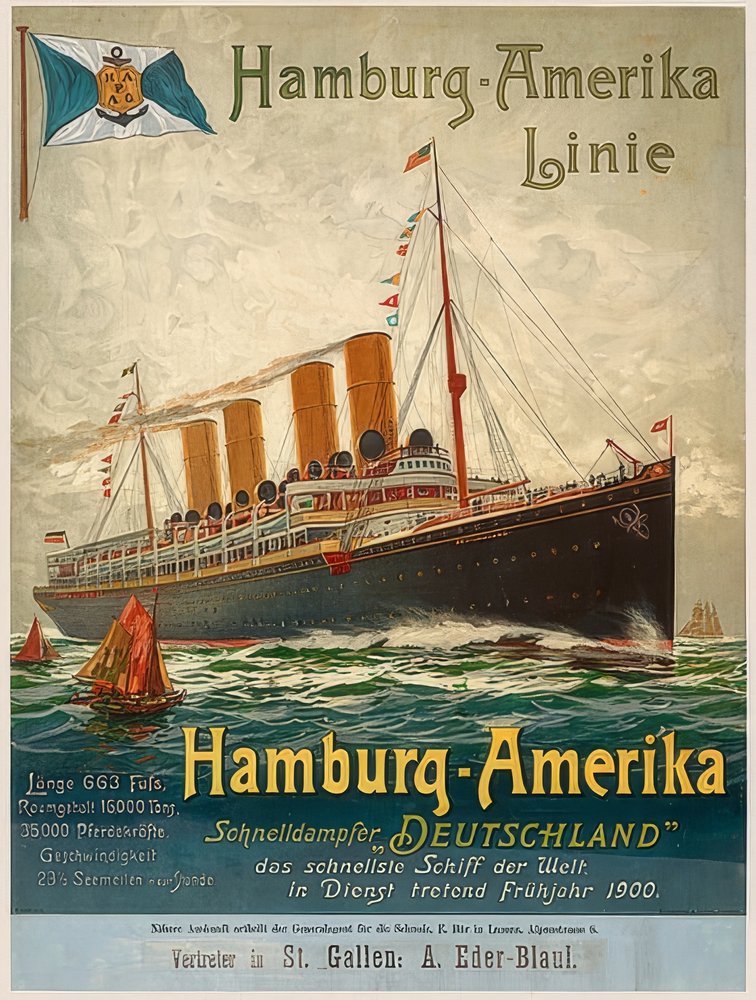
    Hamburg-Amerika_Linie_Deutschland_Hamburg_1899

    Conrad Weiser, the Quakers, and the Price of Freedom

    “I have learned two languagesโ€”
    that of the fathers, who count everything,
    and that of the Iroquois, who tell everything.
    The truth lies somewhere in between.”
    โ€” Conrad Weiser, letter to his wife Anna Eva, ca. 1737

    1. The Legacy of the First Generation

    When the second generation of Germans in Pennsylvania came of age, the wilderness was no longer an enemy, but property. Land was the new gospel. Those who had it were considered blessed; those who lost it were considered punished.

    The first immigrants had received the land as a giftโ€”free, open, boundless. But now every claim had to be documented with papers, seals, and boundary stones. And that’s when a new kind of war began: quiet, legal, fueled by greed, ignorance, and mistrust.

    Johann Conrad Weiser Sr., who had once started out as a simple settler in Germantown, soon found himself in conflict with the Crown of New York. German families were promised land in the Schoharie Valley, but when they arrived, it had already been sold โ€“ to speculators who had obtained their papers from London, The Hague, or even Frankfurt. The German settlers called it the โ€œland of false deeds.โ€

    โ€œThey gave us forest land that we bought with blood, and called us disobedient because we couldn’t read the contract.โ€
    โ€“ From the โ€œSchoharie Petition,โ€ 1718

    1. The dealers in land

    During those years, a name appeared in the colonial administration’s files that soon became a curse word among Germans: Johannes Tschudi. A man from Zurich, once a notary, then a commercial agent, and finally a land commissionerโ€”and, as was later discovered, a skilled forger.

    Tschudi was one of those borderline figures between legitimacy and fraud that the colonial era produced in abundance. He had seals and coats of arms that looked deceptively genuine and issued settlement certificates that purportedly came from the governor of Pennsylvania. For a fee of โ€œtwo Louis d’or per family,โ€ he promised 200 acres of land, plus the right to timber, grazing, and tax exemption for seven years.

    A surviving pamphlet written by him states:

    โ€œNews of the fertile land of Penn-Sylvania, where milk, honey, and justice flow, and every man may be his own king.โ€

    The sheet circulated between Frankfurt, Strasbourg, Ulm, and Zurich. Many believed itโ€”not least because it was printed on parchment with a colonial seal that had been forged in London. Those who registered received a map with plots of land marked on itโ€”often in areas that did not even exist.

    A descendant of the Braun family from the Palatinate wrote in 1751:

    โ€œWe carried the map in our breast pockets across the sea, and when we arrived, we were shown swamps and rubble. But now that we were here, we began to dig โ€“ not for gold, but for truth.โ€

    One day, Tschudi disappeared without a trace. Some reports claim he died in the Caribbean, others that he assumed a new identity in London. What remained was a web of disappointment and mistrust that burned deep into the German community.

    1. The recruiters โ€“ voices of promise

    Not all lies came from individual perpetrators. From the 1720s onwards, a veritable business developed around the dream of a โ€œnew life.โ€ Emigrant agencies opened in Rotterdam and Hamburg, advertising passage to Philadelphia. Their leaflets were titled โ€œReport on the Blessed Land of Pennsylvaniaโ€ or โ€œSimple Description of the Wonderful New World.โ€

    A particularly well-known pamphlet from 1726 promised:

    “There, no one is another’s servant,
    and the earth bears fruit without coercion.
    No tithes, no war, no prince.”

    But what was not disclosed was that most of the ship passages were paid for on credit. Those who could not pay for the crossing in cash signed a contract of โ€œindentured servitudeโ€ โ€“ debt bondage. Many Germans arrived in Philadelphia and had to sell their labor to rich planters or merchants for four to seven years.

    Conrad Weiser noted in one of his early letters:

    “They came as free people and woke up as servants.
    The ships brought no hope, but mortgages.”

    The merchants who organized the crossing called it the โ€œredemptioner system.โ€
    A term that perfidiously turned the word โ€œredemptionโ€ into its opposite.

    1. The governor and the rebels

    British Governor Robert Hunter saw the German settlers as useful subjectsโ€”hardworking, tolerant, and taxable. But when they refused to pay taxes on land that never belonged to them, he said:

    “The Germans are good farmers, but bad subjects.
    They believe in God, but not in laws.”

    Hunter sent troops to โ€œpacifyโ€ Schoharie. But the Germans barricaded themselves in, refused to take the oath, and an open rebellion nearly broke out in the wilderness along the Mohawk River.

    Johann Weiser wrote:

    “We did not rise up against the king, but against deceit.
    Those who promise land and then steal it sin against God, not against the crown.”

    1. Conrad Weiser โ€“ The son between two worlds

    Conrad was the mediatorโ€”between his father and the authorities, between German and English, between settlers and Iroquois. He recognized early on that property was also language. Those who spoke English owned land, while those who spoke only German remained tenants of their dreams.

    In one of his notes, he wrote:

    “I have learned that freedom ends in contracts
    when the other person’s pen has the last word.”

    Conrad became a translator, mediator, and later an advisor to the colonial government.
    He saw how his compatriots were cheated, disenfranchised, but also became greedy themselves. The circle began to close: the victims became property owners, and the next poor people followed.

    1. Land deeds and the new faith

    In 1740, there were more forged than genuine land deeds in circulation in Pennsylvania. German colonists bought them at markets, from wagons, and in taverns. Some knew they were fake โ€“ others did not want to know. Faith became business.

    An entry in the diary of Quaker John Logan, 1741:

    โ€œThe Germans are pious, but their piety is no protection against the temptation of property.โ€

    This gave rise to a culture of justification: it was said that God had given the land โ€“ so no man could deny it. The Bible became a document, the word a title deed. A dangerous idea that ate deep into the colonies’ self-image.

    1. The Return of the Narrator

    Philadelphia, 1887.
    Ecklin is back in the archives.
    He has now read not only Gรผnter’s book, but also Weiser’s letters, Tschudi’s forged documents, pamphlets, and council minutes.
    A mosaic of hopes, deceit, and faith lies before him.

    He notes:

    โ€œPerhaps the biggest mistake was not that they were lied to, but that they believed freedom could be bought.โ€

    Outside, the bells of St. Michael’s German Church are ringing. On the street, a man is selling prints with the inscription: โ€œA piece of land in Dakota โ€“ 100 acres, $10!โ€
    Ecklin closes his eyes.
    Three hundred years have passed, and the language of promise still sounds the same.

    โ€œWe left because we believed the land was free. Now I know: only human beings can be free โ€“ and even then, only for a short time.โ€

  • La Colombe dโ€™Or โ€“ Inn, Myth, Museum

    When you stroll through the medieval village of Saint-Paul-de-Vence today, along the narrow streets, past galleries and bougainvillea-covered facades, a place of almost mythical status opens up at the end of the city wall: La Colombe d’Or. Neither a glamorous grand hotel nor a simple country inn, but a cross between the two โ€“ and at the same time a living museum where art and the art of living have been merging for almost a century.

    The beginnings โ€“ Paul Roux and his โ€œGolden Doveโ€

    The establishment was opened in 1920 by Paul Roux, a former farmer’s son. Initially, it was a small cafรฉ with just a few tables, which quickly became a meeting place for villagers and travelers. Roux, a man of charisma and warmth, knew how to attract people. Together with his wife Titine, he ran the establishment in a family atmosphere, where the food was simple, Provenรงal, and generous. Soon, painters and writers began to discover the Cรดte d’Azur for themselves โ€“ and found in the โ€œGolden Doveโ€ a refuge that was more than just an inn.

    Artists as guests โ€“ from Picasso to Calder

    After World War II in particular, La Colombe d’Or became a center for the avant-garde. Henri Matisse, who worked in Nice and Vence, is said to have stayed there, as did Marc Chagall, who settled in Saint-Paul. Georges Braque, Fernand Lรฉger, and Joan Mirรณ found their place here, as did Alexander Calder, who created the famous mobile sculpture tree in the garden.

    According to legend, some artists paid their bills with drawings or canvases โ€“ not out of poverty, but as a spontaneous gesture. This resulted in a collection that still adorns the walls of the house today: a mosaic of handwriting, colors, and shapes that can be viewed almost casually over dinner.

    The guest book as a chronicle

    The guest book of La Colombe d’Or is less a register than a miniature chronicle of the 20th century. It contains dedications by Pablo Picasso, who left behind sketches of bullfighting scenes, and entries by Jacques Prรฉvert, who lived in Saint-Paul for a long time and expressed his gratitude for the place in poetic words. The American writer James Baldwin, who found refuge in Provence, is also listed.

    The entries oscillate between quickly jotted sketchesโ€”heads, lines, a few birdsโ€”and lyrical messages: Chagall wrote of the โ€œblue air above the olives,โ€ while Calder drew a balance of forms with just a few strokes. The guest book is a mirror of bohemian life: informal but full of intensity, a documented dialogue between guests and host.

    Myth and continuity

    What makes La Colombe d’Or unique to this day is the combination of everyday life and world art. Here, original works hang next to the kitchen, above the tables, on the staircases โ€“ not in a museum with white distance, but in the midst of life. You eat aioli or daube provenรงale under a Mirรณ, you drink wine in the shadow of Lรฉger’s bold colors.

    Film stars and intellectuals also found their place here: Orson Welles, Yves Montand and Simone Signoret, Sophia Loren, later Roger Moore and Charlie Chaplin. In the 1950s and 60s, the establishment became a symbol of the blend of glamour and intimacy that characterized the Cรดte d’Azur.

    To this day, La Colombe d’Or has remained family-owned and run by the descendants of Paul Roux. That’s what makes it so magical: it’s not a sterile hotel chain, but an organism that has grown over generations and remains true to itself.

    Conclusion

    La Colombe d’Or is more than a hotel or restaurant: it is a narrative woven from stone, color, and memory. Its historical development mirrors the evolution of art in the 20th century, and its guests represent the longing for a place where food, friendship, and art merge into one. The guest book remains the intimate heart of this storyโ€”a poetic archive that lifts the โ€œgolden doveโ€ into the skies of cultural history.


    in german:

    La Colombe dโ€™Or โ€“ Gasthaus, Mythos, Museum

    Wenn man heute durch das mittelalterliche Dorf Saint-Paul-de-Vence schreitet, die engen Gassen entlang, vorbei an Galerien und Bougainvillea-bewachsenen Fassaden, รถffnet sich am Ende der Stadtmauer ein Ort, der fast mythischen Rang besitzt: La Colombe dโ€™Or. Weder ein mondรคnes Grandhotel noch ein schlichtes Landgasthaus, sondern eine Kreuzung aus beidem โ€“ und zugleich ein lebendes Museum, in dem Kunst und Lebenskunst seit fast einem Jahrhundert miteinander verschmelzen.

    Die Anfรคnge โ€“ Paul Roux und seine โ€žGoldene Taubeโ€œ

    Das Haus wurde 1920 von Paul Roux, einem ehemaligen Bauernsohn, erรถffnet. Zunรคchst war es ein kleines Cafรฉ mit wenigen Tischen, das schnell zu einem Treffpunkt fรผr Dorfbewohner und Durchreisende wurde. Roux, ein Mann mit Charisma und Wรคrme, verstand es, Menschen anzuziehen. Mit seiner Frau Titine fรผhrte er das Haus in familiรคrer Atmosphรคre, wo das Essen schlicht, provenzalisch und groรŸzรผgig war. Schon bald begannen Maler und Schriftsteller, die Cรดte dโ€™Azur fรผr sich zu entdecken โ€“ und fanden in der โ€žGoldenen Taubeโ€œ ein Refugium, das mehr war als ein Gasthaus.

    Kรผnstler als Gรคste โ€“ von Picasso bis Calder

    Besonders nach dem Zweiten Weltkrieg wurde La Colombe dโ€™Or zu einem Zentrum der Avantgarde. Henri Matisse, der in Nizza und Vence arbeitete, soll ebenso eingekehrt sein wie Marc Chagall, der sich in Saint-Paul niederlieรŸ. Georges Braque, Fernand Lรฉger und Joan Mirรณ fanden hier ebenso ihren Platz wie Alexander Calder, der den berรผhmten mobilen Skulpturenbaum im Garten schuf.

    Der Legende nach bezahlten manche Kรผnstler ihre Rechnungen mit Zeichnungen oder Leinwรคnden โ€“ nicht aus Armut, sondern aus spontaner Geste. So entstand eine Sammlung, die bis heute die Wรคnde des Hauses schmรผckt: ein Mosaik an Handschriften, Farben und Formen, das man beim Abendessen fast beilรคufig betrachten kann.

    Das Gรคstebuch als Chronik

    Das Gรคstebuch von La Colombe dโ€™Or ist weniger ein Register als eine Chronik des 20. Jahrhunderts in Miniatur. Darin finden sich Widmungen von Pablo Picasso, der skizzenhaft Stierkampfszenen hinterlieรŸ, oder Eintrรคge von Jacques Prรฉvert, der lange Zeit in Saint-Paul lebte und in poetischen Worten seine Dankbarkeit fรผr den Ort notierte. Auch der amerikanische Schriftsteller James Baldwin, der in der Provence Zuflucht fand, ist verzeichnet.

    Die Eintrรคge oszillieren zwischen rasch hingeworfenen Skizzen โ€“ Kรถpfe, Linien, ein paar Vรถgel โ€“ und lyrischen Botschaften: Chagall schrieb von der โ€žblauen Luft รผber den Olivenโ€œ, wรคhrend Calder mit wenigen Strichen eine Balance von Formen zeichnete. Das Gรคstebuch ist ein Spiegel der Boheme: informell, aber voller Intensitรคt, ein dokumentierter Dialog zwischen Gรคsten und Gastgeber.

    Mythos und Kontinuitรคt

    Was La Colombe dโ€™Or bis heute einzigartig macht, ist die Verbindung von Alltรคglichkeit und Weltkunst. Hier hรคngen Originalwerke neben der Kรผche, รผber den Tischen, an den Treppenaufgรคngen โ€“ nicht wie in einem Museum mit weiรŸer Distanz, sondern inmitten des Lebens. Man isst Aioli oder Daube provenรงale unter einem Mirรณ, man trinkt Wein im Schatten von Lรฉgers krรคftigen Farben.

    Auch Filmstars und Intellektuelle fanden hier ihren Ort: Orson Welles, Yves Montand und Simone Signoret, Sophia Loren, spรคter Roger Moore oder Charlie Chaplin. In den 1950er- und 60er-Jahren wurde das Haus zu einem Symbol fรผr jene Mischung aus Glamour und Intimitรคt, die die Cรดte dโ€™Azur prรคgte.

    Bis heute ist La Colombe dโ€™Or in Familienbesitz geblieben โ€“ gefรผhrt von den Nachkommen Paul Rouxโ€™. Das macht seinen Zauber aus: keine sterile Hotelkette, sondern ein รผber Generationen gewachsener Organismus, der sich selbst treu bleibt.


    Fazit

    La Colombe dโ€™Or ist mehr als ein Hotel oder Restaurant: Es ist eine Erzรคhlung aus Stein, Farbe und Erinnerung. Seine historische Entwicklung spiegelt die Bewegung der Kunst im 20. Jahrhundert, seine Gรคste reprรคsentieren die Sehnsucht nach einem Ort, an dem Essen, Freundschaft und Kunst zu einer Einheit verschmelzen. Das Gรคstebuch bleibt das intime Herz dieser Geschichte โ€“ ein poetisches Archiv, das die โ€žgoldene Taubeโ€œ in die Lรผfte der Kulturgeschichte hebt.

Sign In

Register

Reset Password

Please enter your username or email address, you will receive a link to create a new password via email.