Category: Côte d’Azur

  • Berliner Tageblatt, “Ten Years of Nice”

    Kurt and Theodor Wolff, the Berliner Tageblatt, “Ten Years of Nice,” and Alfred Neumann—Facets of a Liberal Public Sphere.

    These men were primarily active in the late 19th and first half of the 20th century, with a focus on the period between the German Empire and the Weimar Republic. The history of the German press and intellectual world in the late 19th and early 20th centuries is hardly conceivable without the Berliner Tageblatt. As one of the most important liberal mass-circulation newspapers of the German Empire and the Weimar Republic, it was not only a news medium but also a forum for political debate, literary innovation, and European self-understanding. This environment attracted personalities such as Kurt and Theodor Wolff and authors such as Alfred Neumann, whose contributions exemplify the connection between journalism, literature, and political thought.

    Theodor Wolff, long-time editor-in-chief of the Berliner Tageblatt, had a decisive influence on the newspaper. He understood journalism as a moral and political task. Under his leadership, the newspaper developed into a voice for liberalism, the rule of law, and understanding between European nations. Wolff’s editorials combined analytical acuity with linguistic elegance and made the Berliner Tageblatt a leading medium for the educated public. His work showed that political journalism could be more than mere reporting: it became intellectual intervention.

    Kurt Wolff, although not directly part of the editorial team, represented a similar intellectual attitude. As one of the most important publishers of the 20th century, he promoted authors of literary modernism such as Franz Kafka, Georg Trakl, and Else Lasker-Schüler. The proximity between the press and literature, as evidenced in the environment of the Berliner Tageblatt, points to a common cultural project: the renewal of language, thought, and social sensitivity. Kurt Wolff’s publishing work thus complemented Theodor Wolff’s journalistic work on a different, literary level.

    One example of the Berliner Tageblatt’s European perspective is its review “Ten Years of Nice.” Such articles were typical of the paper: they combined current politics with historical reflection. The reference to Nice—as a venue for international conferences and diplomatic negotiations—symbolizes the paper’s interest in European power relations, peace agreements, and Germany’s role in international politics. Reviews of this kind served not only to inform readers, but also to educate them politically.

    Alfred Neumann, who contributed to the intellectual milieu of the time as a journalist and writer, can also be placed in this context. His texts often combined political analysis with literary ambition, thus fitting in with the profile of the Berliner Tageblatt. Authors such as Neumann embodied the type of writing intellectual who mediated between feature pages, political commentary, and literary form.

    In summary, it can be said that Kurt and Theodor Wolff, the Berliner Tageblatt, articles such as “Ten Years in Nice,” and authors such as Alfred Neumann were part of a shared cultural context. They represent an era in which journalism, literature, and politics were closely intertwined and in which liberal public discourse was understood as a central prerequisite for democratic culture. Looking back, it becomes clear how fragile—and at the same time how significant—this tradition was.

    These men were primarily active in the late 19th and first half of the 20th century, with a focus on the period between the German Empire and the Weimar Republic.

    Theodor Wolff (1868–1943)

    • Active approx. 1900–1933
    • Editor-in-chief of the Berliner Tageblatt from 1906 to 1933
    • A defining figure of left-wing liberal journalism in the German Empire and the Weimar Republic
    • Had to go into exile from the Nazis in 1933

    Kurt Wolff (1887–1963)

    • Active from around 1910 until the 1950s
    • Most important publisher of literary modernism
    • Focus of his work: the 1910s and 1920s
    • Also emigrated after 1933 (USA)

    Alfred Neumann (1895–1952)

    • Active primarily in the 1920s and early 1930s
    • Journalist and writer of the Weimar Republic
    • Wrote political and literary texts
    • Emigration after 1933

    Shared historical context

    • German Empire (1871–1918)
    • First World War
    • Weimar Republic (1919–1933)
    • End of their activities in Germany due to the National Socialists’ seizure of power

    Overall, they belonged to Germany’s liberal intellectual public sphere between 1900 and 1933.

  • Èze Village – History, topography, and cultural transformation of a Mediterranean mountain village

    Èze Village towers above the sparkling ribbon of the Mediterranean Sea like a silent witness to a complex past. Perched on a steep rocky outcrop on the French Riviera, the village uniquely combines traces of early Ligurian cultures, medieval power struggles, modern fortification policies, and the cultural trends of the Belle Époque. Its development is a prime example of the transformation of Mediterranean settlements from strategic strongholds to symbolic cultural landscapes.

    1. The beginnings: Ligurian settlements and Roman spheres of influence

    The earliest traces of human presence in the Èze area can be attributed to the Celto-Ligurian tribes who settled in the region around what is now Mont Bastide. The choice of location was motivated by both defensive and economic considerations: the extremely steep topography offered protection from attackers, while the proximity to the sea facilitated trade.

    With Roman expansion in Provence, the entire coastal region was integrated into a systematic administrative and transportation system. Although Èze itself was not at the center of Roman urbanity, continuous settlement established itself along the coast, particularly in Èze-sur-Mer. The Roman presence also left behind agricultural techniques such as terraced farming and olive cultivation, which shaped the landscape until modern times.

    Eze garden

    2. Medieval consolidation: between Provence and Savoy

    From the High Middle Ages onwards, Èze developed into a fortified village, which was ideal for military purposes due to its location at an altitude of 430 meters. From then on, its history was marked by territorial conflicts: Èze initially belonged to the County of Provence.

    From the 14th century onwards, it fell under the rule of the House of Savoy. The conflict between Savoy and France in the 17th century led to multiple changes in strategy and ultimately to its integration into the Kingdom of France.

    The medieval streets – now home to artists’ studios and boutiques – were originally designed for defensive purposes. The village functioned as a stone labyrinth intended to confuse attackers. The central fortress, the citadel of Èze, was repeatedly expanded, but fell victim to Louis XIV’s strategic order of destruction in 1706. Today’s platform with the “Jardin Exotique” is a relic of this military past.

    3. Modern infrastructure: Fort Révère as part of national defense systems

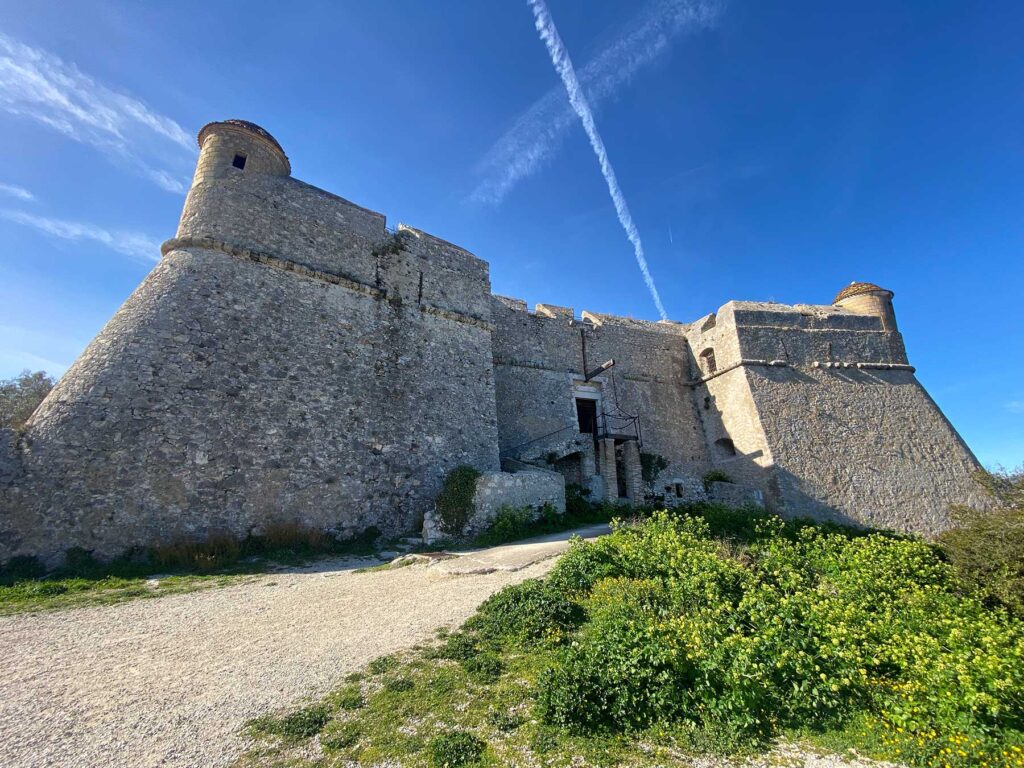
    In the 19th century, Èze once again became the focus of French military planning due to its geographical location. Fort Révère, located in the hinterland above the village, was built after 1870 as part of the so-called Séré de Rivières system – a network of modern fortifications of European significance, created in response to the Franco-Prussian War.

    Fort Révère is characterized by: a polygonal layout with casemates, embrasures in all directions, massive walls made of stone and concrete, devices for communication with neighboring coastal and mountain forts.

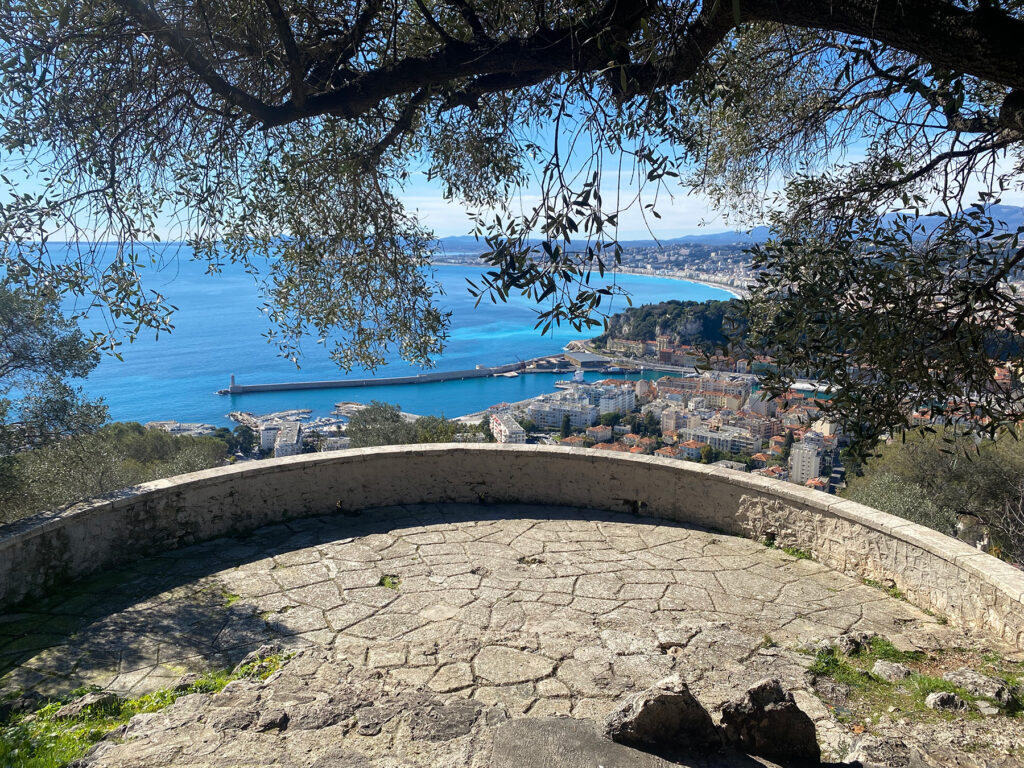
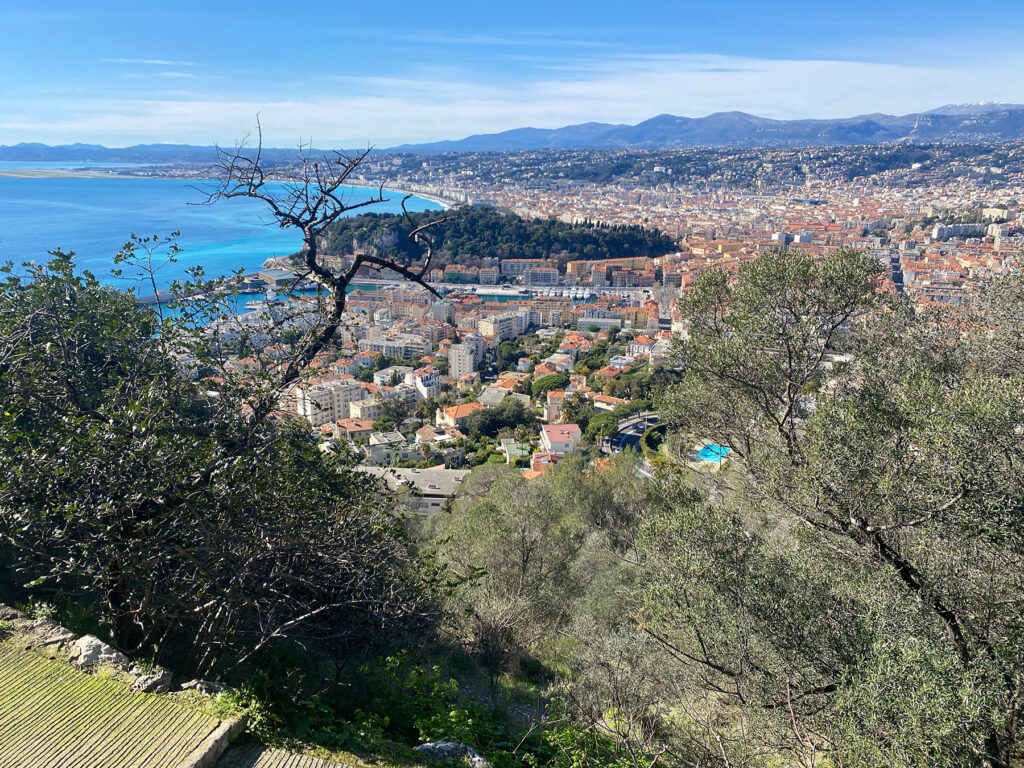
    Although Fort Révère was never involved in combat, it played a role in monitoring the coast and securing the Italian-French border. Today, as a restored monument, it offers one of the most impressive panoramic views of the Riviera and symbolizes an era of European rearmament that changed fundamentally with the First World War.

    4. Château Balsan – Riviera romance and sophisticated

    The advent of Riviera tourism in the 19th century marked the beginning of a new era for Èze. Château Balsan played a special role in this development. Industrialist Émile Balsan, who came from an influential textile family, acquired the estate and transformed it into a sophisticated retreat.

    The château is remarkable for cultural and historical reasons: It was a frequent meeting place for the Parisian and international elite. Coco Chanel, who was closely associated with Émile Balsan in her early life, spent long periods here. It was in Èze that she made the transition from the world of aristocracy and bohemianism to her calling as a designer.

    The subsequent conversion of the building into the exclusive Château de la Chèvre d’Or hotel marked another turning point: the Riviera became a luxury destination, while the historic buildings of Èze were integrated into tourist and cultural contexts.

    Eze Jardin

    5. Continuity and renewal: From an agricultural society to a cultural landscape

    Until the early 20th century, Èze was still heavily agricultural: olive groves, vineyards, terraced farming, and sheep breeding dominated life. It was only with the expansion of modern transport infrastructure—roads, railways along the coast, and later the Corniche Routes—that the village underwent structural change.

    The significant combination of historic buildings, an exceptional location, and romantic aesthetics led to Èze becoming a fixture for: artists and writers, botanists (especially because of the exotic garden), historians, and tourists from all over the world.

    Today, Èze combines the preservation of its medieval identity with a mixture of arts and crafts, luxury hotels and natural landscape typical of the Côte d’Azur.

    6. Concluding remarks

    Èze Village is a prime example of the transformative power of historical sites. Its history encompasses: Ligurian origins, medieval power struggles, French and Savoyard territorial politics, modern fortification systems, the sophisticated culture of the Belle Époque and modern cultural tourism.

    The Château Balsan and Fort Révère serve as striking anchor points: one embodies the aesthetic and social appeal of the Riviera, the other the strategic importance of the region in an era of geopolitical uncertainty.

    Èze is thus not only a picturesque mountain village, but also a living archive of European history—a place where political, cultural, and landscape developments overlap in an extraordinary way.

  • Visit to Villa Kérylos in Beaulieu-sur-Mèr

    A visit to Villa Kérylos on the French Riviera is like traveling back in time to the world of the ancient Greeks—but through the eyes of two passionate scholars of the early 20th century.

    Villa Kérylos -Beaulieu - Côte d'Azur 11

    The visit—atmosphere and impressions

    Upon entering the villa, you are greeted by a light-filled courtyard (peristyle) whose marble columns and water basins are immediately reminiscent of the architecture of classical Greek residences. The rooms are richly decorated with frescoes, mosaics, ornate furniture, and everyday objects—many of which were specially crafted based on ancient models, giving visitors the feeling of being in a living archaeology project.

    From the open balcony, the view extends across the Mediterranean Sea to the Saint-Jean-Cap-Ferrat peninsula—a deliberate part of the concept: as in the homes of the ancient Greeks, the sea should always be present.

    The owner: Théodore Reinach (1860–1928)

    Théodore Reinach was a French scholar, historian, archaeologist, and politician.

    He came from the famous Reinach family of bankers and artists, which belonged to France’s intellectual elite.

    Reinach was deeply in love with Greek culture and philology. For him, Villa Kérylos was a life project—not as a replica, but as a creative reconstruction of a luxurious residence from the Greek Classical period (2nd–1st century BC).

    He used the villa both as a vacation home and as a place of study and representation.

    Villa Kérylos -Beaulieu - Côte d'Azur 1

    The architect: Emmanuel Pontremoli (1865–1956)

    The architect Emmanuel Pontremoli was a graduate of the École des Beaux-Arts and later its director. He won the prestigious Prix de Rome in 1890 and spent years in Greece and the eastern Mediterranean.

    These travels made him a specialist in Hellenistic architecture, which made him the ideal partner for Reinach’s vision. Pontremoli’s approach was extraordinary: he used modern building materials (concrete, iron), but designed each room according to ancient models, and integrated artisans, sculptors, and furniture designers who created new works specifically for the house based on archaeological models.

    Historical background – Construction of the villa

    • Construction period: 1902–1908
    • Style: Hellenistic, inspired by the houses on Delos
    • Goal: An “ideal Greek house” – not a copy, but an authentic reinterpretation
    • Name: Kérylos means “tern,” a symbol of good luck in Greek mythology

    After Reinach’s death in 1928, his family bequeathed the villa to the French Institute, which still manages it today.

    Villa Kérelios Côte d'Azur Beaulieu

    Why it’s worth a visit

    A tour of Villa Kérylos allows visitors to:

    • immerse themselves in the ancient world,
    • understand the interplay between science, art, and architecture around 1900,
    • and gain insight into the visions of two extraordinary personalities:
      a Hellenistic scholar and an architect influenced by Orientalism.

    You leave the villa with the impression that you have visited not so much a museum as an ideal Greek house that – for a moment – is filled with life again.

    Villa Kérylos -Beaulieu - Côte d'Azur 4

    A day at Villa Kérylos

    The morning over Beaulieu-sur-Mer is still young as you walk along the narrow coastal road. The sea glistens in a milky blue, and the first rays of sunshine cast a silvery shimmer on the water’s surface. In the distance, you can see the simple, light silhouette of Villa Kérylos – a house that looks as if it has been blown straight from the spirit of antiquity to the coast of the Côte d’Azur.

    Even the path leading there has something solemn about it. The bay lies calm, as if holding its breath, as you approach the entrance portal. As you cross the threshold, time suddenly seems to slow down.

    In the first courtyard, a feeling of clarity envelops you. The sky above you is like a ceiling painting of pure color, and in the center murmurs a small water basin—the heartbeat of the house. The marble columns cast long shadows that fall across the antique-style mosaics. You feel the noise of the world quietly closing behind you and something else beginning: a silent conversation between you and the spirit of the past.

    You wander through the rooms and notice the care that Théodore Reinach and Emmanuel Pontremoli have lavished on every detail. The Andron – once a place for conversations and banquets – welcomes you with cool walls decorated with mythological scenes. You imagine Reinach receiving guests here, scholars and artists immersed in passionate discussions about Greece, while outside the waves crash against the rocks.

    In the bedroom, your gaze lingers on a golden border that shimmers in the sunlight. You feel as if this is less a room than a thought, artfully materialized. The bed is designed according to ancient models – simple yet sublime. You wonder if Reinach ever felt here that he was living in two worlds at once: the modern Riviera and ancient Greece.

    Bibliothek Villa Kérilos

    The library smells of old wood and a hint of the sea. The shelves—delicately crafted—stand as silent witnesses to his studies. Perhaps it was here that he immersed himself in his books while Pontremoli further refined the lines and proportions of the villa in his mind. Two men, united by a vision that came to fruition in these rooms: the dream of a house that does not copy the past, but embodies it.

    When you finally reach the balcony, the view opens up to a Mediterranean panorama that seems almost unreal in its beauty. The sea lies like a calm cloth before you, and on the Saint-Jean-Cap-Ferrat peninsula, the villas glitter like scattered gems. A gentle breeze brushes your cheek, carrying the scent of salt and pine trees. You lean against the railing, and for a moment, the boundary between now and then seems to blur.

    Perhaps this is the moment when you truly understand the villa: it is not a museum, but a conversation—between cultures, centuries, people. An ideal built with modern materials and an antique soul. A place that carries the longing not only to preserve beauty, but to live it.

    When you leave the villa later and look back once more, it seems to float between the rocks and the sea. Elegant, timeless, a little mysterious. And you know that a part of you remains there, somewhere between the marble columns and the gentle splashing of the fountain, where antiquity came back to life for a moment.

  • Excerpt from “German Exiles on the Côte d’Azur”

    A journey through the 1930s by Klaus Kampe

    HISTORICAL CONTEXT AND EXILE IN SOUTHERN FRANCE

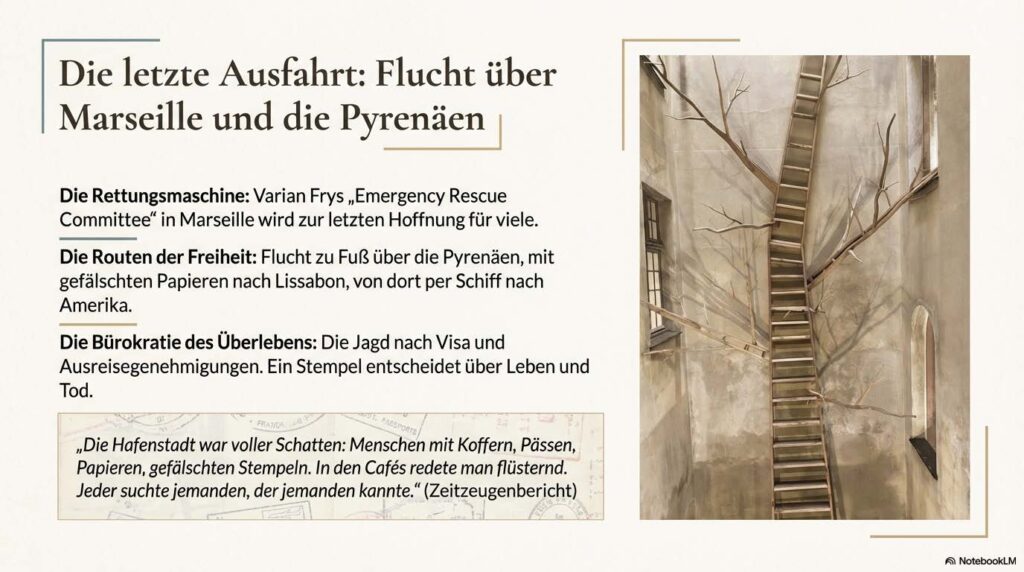
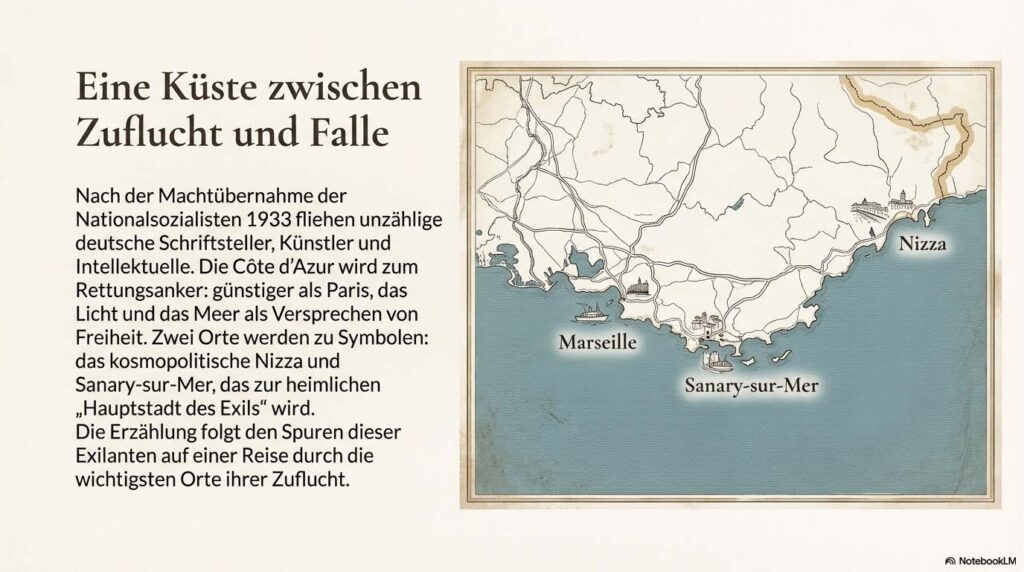
    When the National Socialists seized power in Germany in January 1933, a period of persecution and loss began for many writers, artists, and intellectuals. Theaters were closed, editorial offices purged, books burned. Those who remained risked being banned from their professions, imprisonment, or worse. Those who left had to find a new world. Countless Germans set out on their journey – with suitcases full of manuscripts, sketches, or simply hope.

    The south of France, the Côte d’Azur, became a lifeline for many of them. The light, the vastness of the sea, the olive groves, and pine-covered hills gave the refugees a sense of freedom. The region was also convenient in practical terms: the cost of living was lower than in Paris, and Marseille offered the opportunity to travel further afield if the situation became uncertain. Artists and writers had already discovered the coast, and so in the 1930s it seemed like an old acquaintance that was now showing a new face – that of exile.

    During these years, the great names of German culture gathered here: Thomas Mann wrote in the guesthouses along the coast, while his brother Heinrich lived with Nelly Kröger in Nice. Lion Feuchtwanger created an intellectual hub in his villa in Sanary-sur-Mer, frequented by Franz Werfel, Alma Mahler-Werfel, and many others. Bertolt Brecht wandered restlessly through the south of France, always searching for a place where work and security coincided. Painters such as Walter Bondy and writers such as Annette Kolb further shaped the atmosphere.

    Two places in particular became symbols of this exile: Nice, with its cosmopolitan vibrancy and boulevards where languages and cultures mingled; and Sanary-sur-Mer, a small fishing village whose harbor became the stage for a world in upheaval. There, between simple fishing boats and the facades of white houses, a close-knit community of exiles emerged, trying to preserve their language, their art, and their hope in the shadow of the looming dictatorship.

    Thus, on the Côte d’Azur, the beauty of the landscape was combined with the urgency of survival—leaving traces that are still visible today.


    TABLE OF CONTENTS

    Introduction

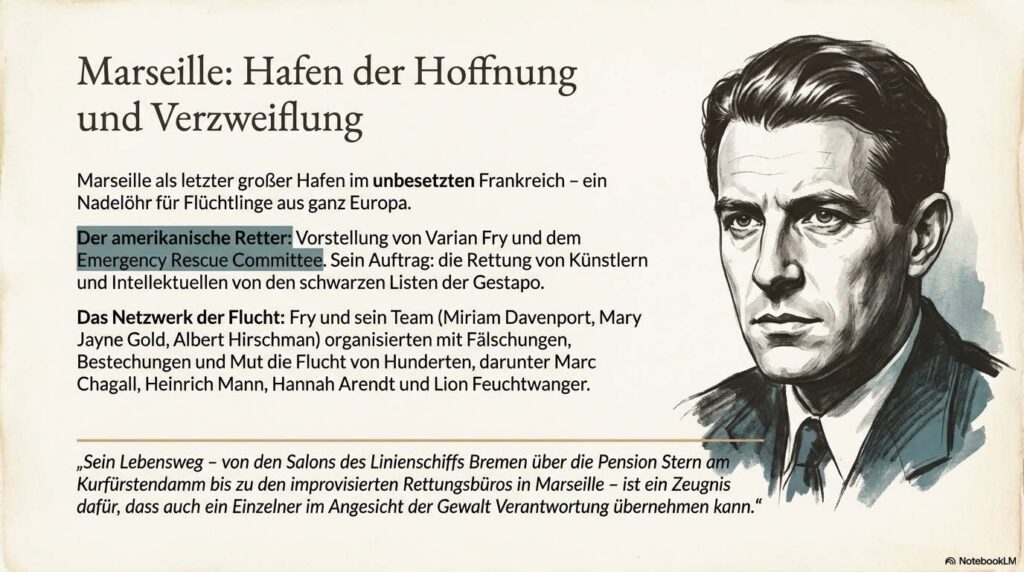
    Varian Fry – From Berlin to Marseille

    Historical Context and Exile in Southern France

    Exiles in Nice – The City of Refuge

    Sanary-sur-Mer – The German Village

    Famous Personalities in Exile

    The Portraits – Faces of a Lost World

    Marta and Lion Feuchtwanger

    Meeting at the Café du Lyon

    Max Colpet

    Thomas Mann and the Art of Exile Salons

    Voices in Exile

    Art, Literature, and the Struggle for Freedom of Speech

    Encounters and Communities

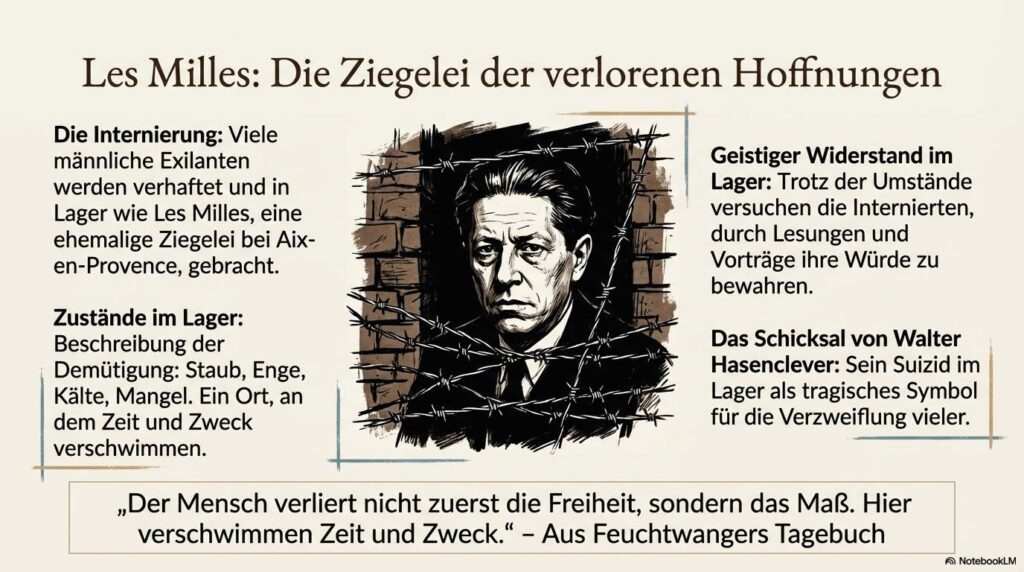
    Threats, Internment, and Escape

    Places of Residence Today – Discovering Historical Sites

    Comparison of Historical Photographs

    Links to Photos and Places

    Image Sources

    Epilogue

    Appendix


    in german:

    Abdruck aus “Deutsche Exilanten an der Côte d’Azur”

    Eine Reise durch die 1930er von Klaus Kampe

    HISTORISCHER KONTEXT UND EXIL IN SÜDFRANKREICH

    Als im Januar 1933 die Nationalsozialisten in Deutschland die Macht übernahmen, begann für viele Schriftsteller, Künstler und Intellektuelle eine Zeit der Verfolgung und des Verlustes. Bühnen wurden geschlossen, Redaktionen gesäubert, Bücher verbrannt. Wer blieb, riskierte Berufsverbot, Haft oder Schlimmeres. Wer ging, musste sich eine neue Welt suchen. So setzten sich unzählige Deutsche in Bewegung – mit Koffern voller Manuskripte, Skizzen oder einfach nur Hoffnung.

    Der Süden Frankreichs, die Côte d’Azur, wurde für viele von ihnen zum Rettungsanker. Das Licht, die Weite des Meeres, die Olivenhaine und Pinienhügel gaben den Flüchtenden eine Ahnung von Freiheit. Auch praktisch war die Region günstig: Die Lebenshaltungskosten waren niedriger als in Paris, und von Marseille aus bot sich die Möglichkeit, weiterzureisen, falls die Lage unsicher wurde. Schon zuvor hatten Künstler und Literaten die Küste entdeckt, und so wirkte sie in den 1930er Jahren wie eine alte Bekannte, die nun ein neues Gesicht zeigte – die eines Exils.

    In diesen Jahren trafen hier die großen Namen der deutschen Kultur zusammen: Thomas Mann schrieb in den Pensionen der Küste, sein Bruder Heinrich lebte mit Nelly Kröger in Nizza. Lion Feuchtwanger schuf in seiner Villa in Sanary-sur-Mer einen geistigen Mittelpunkt, an dem Franz Werfel, Alma Mahler-Werfel und viele andere verkehrten. Bertolt Brecht zog unstet durch Südfrankreich, stets auf der Suche nach einem Ort, an dem Arbeit und Sicherheit zusammenfielen. Maler wie Walter Bondy oder Schriftstellerinnen wie Annette Kolb prägten die Atmosphäre zusätzlich.

    Besonders zwei Orte wurden zu Symbolen dieses Exils: Nizza, mit seiner kosmopolitischen Lebendigkeit und den Boulevards, auf denen sich Sprachen und Kulturen mischten; und Sanary-sur-Mer, ein kleiner Fischerort, dessen Hafenbecken zur Bühne einer Welt im Umbruch wurde. Dort, zwischen einfachen Fischerbooten und den Fassaden weißer Häuser, entstand eine dichte Gemeinschaft von Exilanten, die im Schatten der drohenden Diktatur versuchten, ihre Sprache, ihre Kunst und ihre Hoffnung zu bewahren.

    So verband sich an der Côte d’Azur die Schönheit der Landschaft mit der Dringlichkeit des Überlebens – und hinterließ Spuren, die bis heute sichtbar sind.

  • The French Riviera of yesteryear

    Louis XIV organised the siege of Nice under the command of the Duke of La Feuillade. From 9 to 22 December 1705, the castle of Nice was bombarded relentlessly by 60 cannons and 24 mortars. More than 10,000 bombs and 120,000 cannonballs were fired at the castle during the siege, resulting in between 700 and 800 deaths and injuries. It was not until 4 January 1706 that the Marquis de Caraglio, commander of the citadel of Nice and governor of the county of Nice, surrendered.

    Engraving of Nice and its castleEngraving of Nice and its castle
  • The Life of Pierre Bonnard

    in german below:

    Pierre Bonnard (1867–1947) ranks among the outstanding French painters of the late 19th and early 20th centuries. His work is characterized by a subtle interplay of light, color, and intimacy, which distinguishes him from the Impressionists and at the same time secures him a special position in the transition to modernism.

    Born on October 3, 1867, in Fontenay-aux-Roses near Paris, Bonnard came from a middle-class family. He originally studied law, but was drawn to art from an early age. Together with artist friends such as Maurice Denis, Paul Sérusier, and Édouard Vuillard, he joined the artist group “Les Nabis,” which developed new forms of expression beyond the Impressionists after 1888. There he was given the nickname le Nabi très japonard, as he was strongly inspired by Japanese woodblock printing, which was in vogue in Europe around 1900.

    Bonnard was less interested in monumental historical themes than in everyday life: street scenes, garden scenes, interiors, and intimate moments. His partner and later wife, Marthe de Méligny, in particular, became his lifelong muse. She appears in numerous paintings, often in bathing or toilet scenes, reflecting Bonnard’s interest in intimacy, domesticity, and the depiction of light on skin and water.His painting technique differed from that of many of his contemporaries: Bonnard rarely worked directly in front of his subject. Instead, he sketched scenes, noted down colors, and later created the paintings in his studio from memory. This gave his pictures a dreamlike quality and an almost poetic blurriness, in which colors took precedence over form.

    At the beginning of the 20th century, Bonnard increasingly withdrew from Parisian art life. After stays in Giverny and Vernon, he finally settled on the Côte d’Azur, in Le Cannet near Cannes. There he found inexhaustible motifs in his house and garden. His late works are filled with bright colors, Mediterranean light, and a deep tranquility that expresses his connection to nature.

    Although Bonnard was appreciated during his lifetime, he stood in the shadow of artists such as Matisse and Picasso, who radically renewed modern painting. But today, Bonnard’s work is once again highly regarded: his ability to transform the intimate into the universal and his painterly sensibility are considered unique.

    Pierre Bonnard died on January 23, 1947, in Le Cannet. His work left its mark on modern painting—not through loud provocations, but through quiet, lasting intensity.


    in german:

    Das Leben von Pierre Bonnard

    Pierre Bonnard (1867–1947) zählt zu den herausragenden französischen Malern des späten 19. und frühen 20. Jahrhunderts. Sein Werk ist geprägt von einem subtilen Spiel aus Licht, Farbe und Intimität, das ihn von den Impressionisten unterscheidet und ihm zugleich eine Sonderstellung im Übergang zur Moderne sichert.

    Geboren am 3. Oktober 1867 in Fontenay-aux-Roses bei Paris, stammte Bonnard aus einer bürgerlichen Familie. Ursprünglich studierte er Rechtswissenschaft, doch schon früh zog es ihn zur Kunst. Gemeinsam mit Künstlerfreunden wie Maurice Denis, Paul Sérusier und Édouard Vuillard schloss er sich der Künstlergruppe „Les Nabis“ an, die nach 1888 neue Ausdrucksformen jenseits der Impressionisten entwickelte. Dort erhielt er den Beinamen le Nabi très japonard, da er sich stark von der japanischen Farbholzschnittkunst inspirieren ließ, die in Europa um 1900 in Mode war.

    Bonnard interessierte sich weniger für monumentale historische Themen als für das Alltägliche: Straßenszenen, Gartenbilder, Interieurs und intime Momente. Besonders seine Partnerin und spätere Ehefrau Marthe de Méligny wurde zu seiner lebenslangen Muse. Sie erscheint in zahlreichen Gemälden, oft in Bad- oder Toilettenszenen, was Bonnards Interesse an Intimität, Häuslichkeit und zugleich an der Darstellung von Licht auf Haut und Wasser spiegelt.

    Sein malerisches Verfahren unterschied sich von vielen seiner Zeitgenossen: Bonnard arbeitete selten direkt vor dem Motiv. Stattdessen skizzierte er Szenen, notierte Farben und schuf die Gemälde später im Atelier aus dem Gedächtnis. Das verlieh seinen Bildern eine Traumhaftigkeit und eine beinahe poetische Unschärfe, in der Farben gegenüber der Form Vorrang erhielten.

    Mit Beginn des 20. Jahrhunderts zog Bonnard sich zunehmend aus dem Pariser Kunstleben zurück. Nach Aufenthalten in Giverny und Vernon ließ er sich schließlich an der Côte d’Azur nieder, in Le Cannet bei Cannes. Dort fand er in seinem Haus und Garten unerschöpfliche Motive. Seine späten Werke sind erfüllt von leuchtenden Farben, mediterranem Licht und einer tiefen Ruhe, die seine Verbindung zur Natur ausdrückt.

    Obwohl Bonnard zu Lebzeiten geschätzt wurde, stand er im Schatten von Künstlern wie Matisse und Picasso, die die moderne Malerei radikaler erneuerten. Doch gerade heute wird Bonnards Werk wieder hoch geschätzt: Seine Fähigkeit, das Intime ins Universelle zu überführen, und seine malerische Sensibilität gelten als einzigartig.

    Pierre Bonnard starb am 23. Januar 1947 in Le Cannet. Sein Werk hinterließ Spuren in der modernen Malerei – nicht durch laute Provokationen, sondern durch leise, nachhaltige Intensität.


    Quellen für Bilder von Pierre Bonnard

    Bonnard-Relaxing in the Garden