Tag: Provence

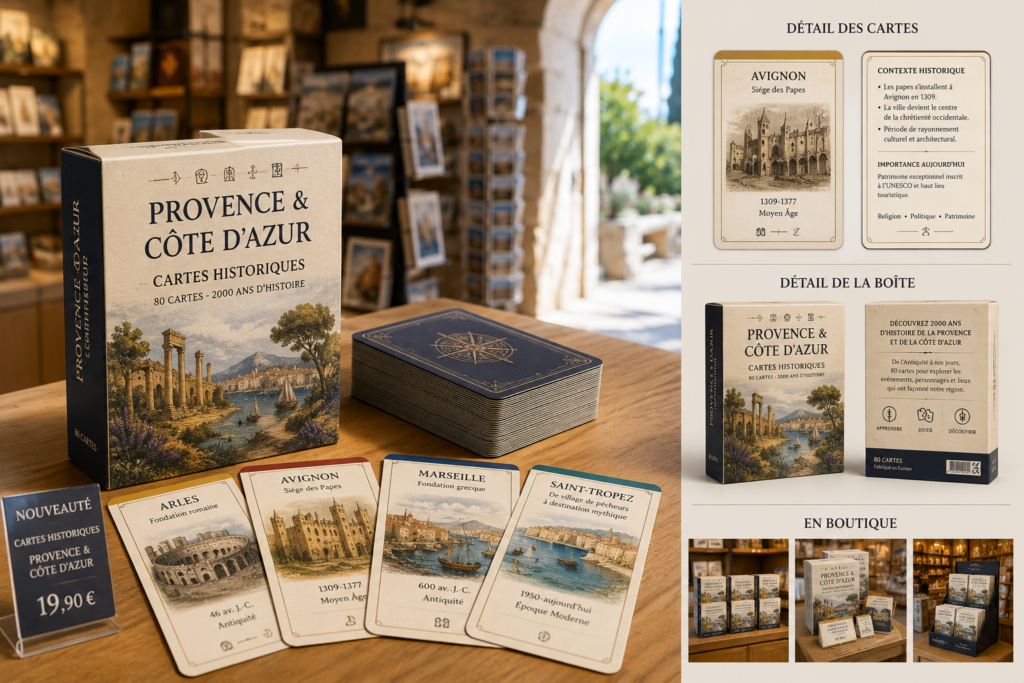
  • Card Game “Provence & Cรดte d’Azur”

    About the cards

    Provence and the Cรดte dโ€™Azur are more than just landscapes. They are the setting for empires, religious wars, artistic revolutions, and economic upheavals.

    It was here that Napoleon Bonaparte marched back to Paris. It was here that Pablo Picassoโ€™s colors and Vincent van Goghโ€™s art took shape. It was here, in Avignon, that popes reshaped the power structure of Europe.

    But behind the beauty of the Riviera lies another story:
    plague epidemics, pirates, secret smuggling routes, and forgotten fortresses.

    “PROVENCE AND THE Cร”TE D’AZUR HISTORICA” brings this world to life as a strategic card gameโ€”playable, collectible, and historically immersive.

    Not as a textbook.
    But as a clash between history and play.
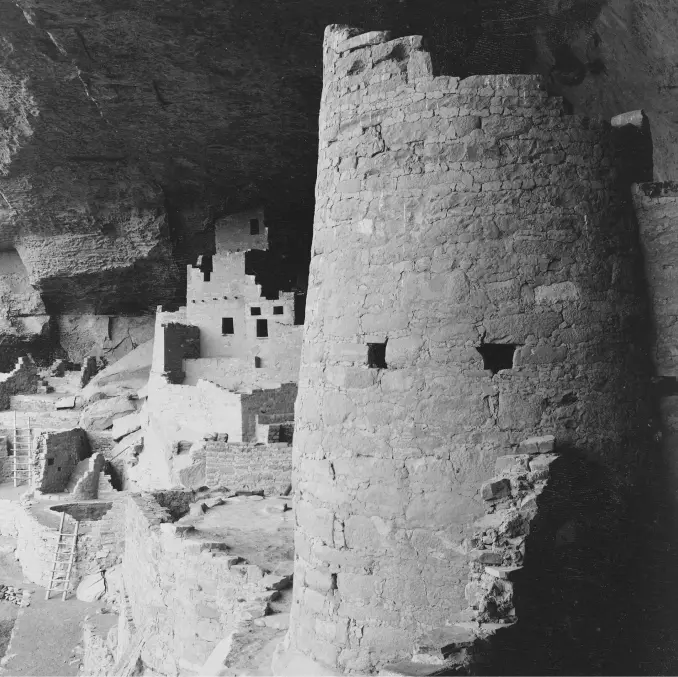
    Cliff Palace, Colorado

    About Us

    Grasse is a city in the Alpes-Maritimes department in southern France. It is considered the world capital of perfume and is located about 15 km north of Cannes on the slopes of the Cรดte dโ€™Azur. It is known for its historic old town and its centuries-old tradition of perfume-making.

    Key Facts

    UNESCO Status: Intangible Cultural Heritage (2018, Art of Perfumery)

    Region: Provence-Alpes-Cรดte dโ€™Azur

    Population: approx. 50,000 (2021)

    Founded: in the Middle Ages

    Economy: Perfume industry, tourism, agriculture
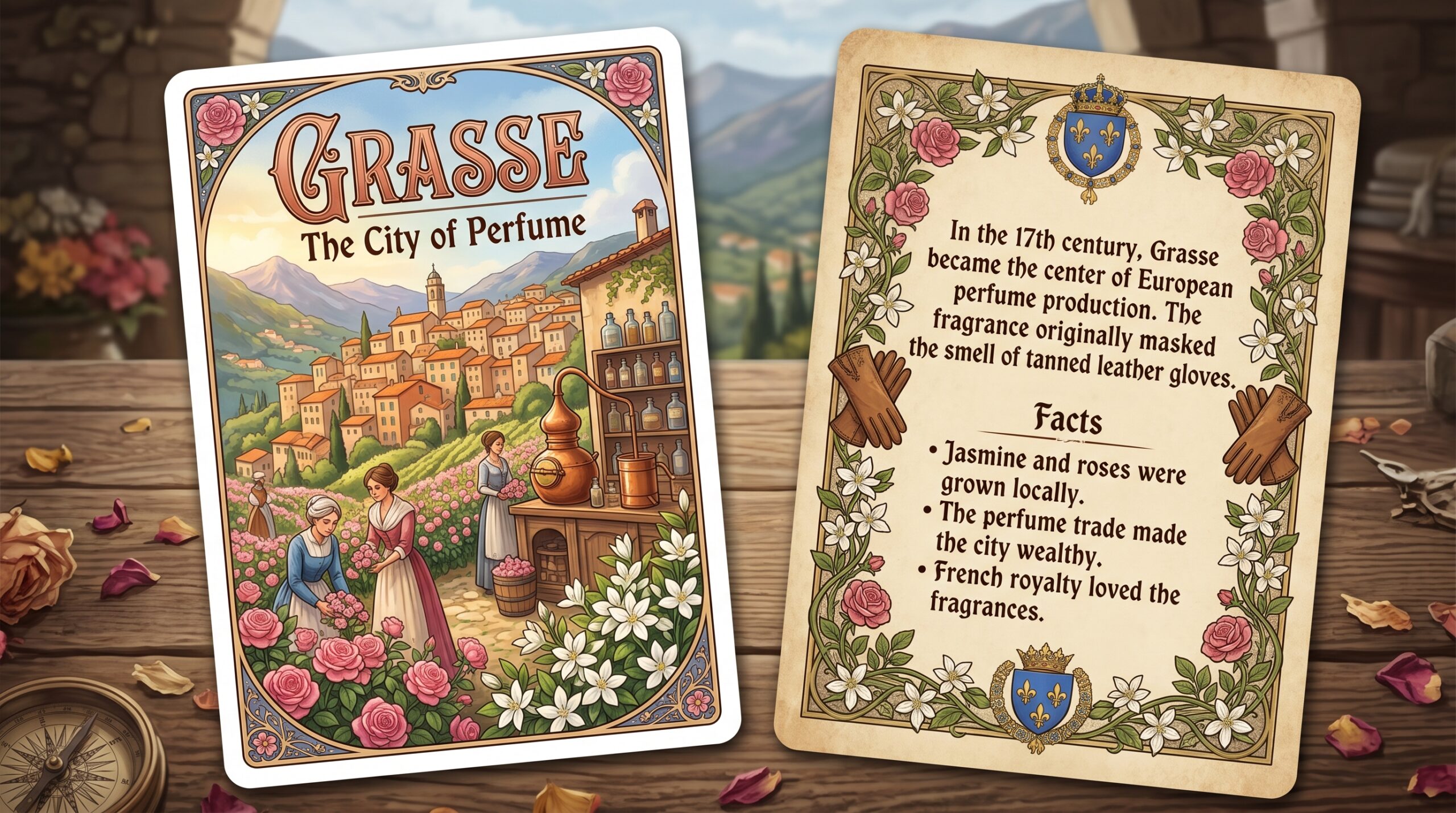
    Grasse - the City of Perfume

    About Us

    Marseille is a city in the Bouches-du-Rhรดne department in southern France. It is the second-largest city in France and the countryโ€™s oldest city, located on the Mediterranean coast in the Provence-Alpes-Cรดte dโ€™Azur region. It is known for its historic Old Port, multicultural atmosphere, and important role as a major maritime hub.

    Key Facts

    UNESCO Status: Part of the โ€œMarseille, European Capital of Cultureโ€ legacy (2013)

    Region: Provence-Alpes-Cรดte dโ€™Azur

    Population: approx. 870,000 (2021)

    Founded: around 600 BC by Greek settlers from Phocaea

    Economy: Port and shipping industry, tourism, trade, culture, fisheries
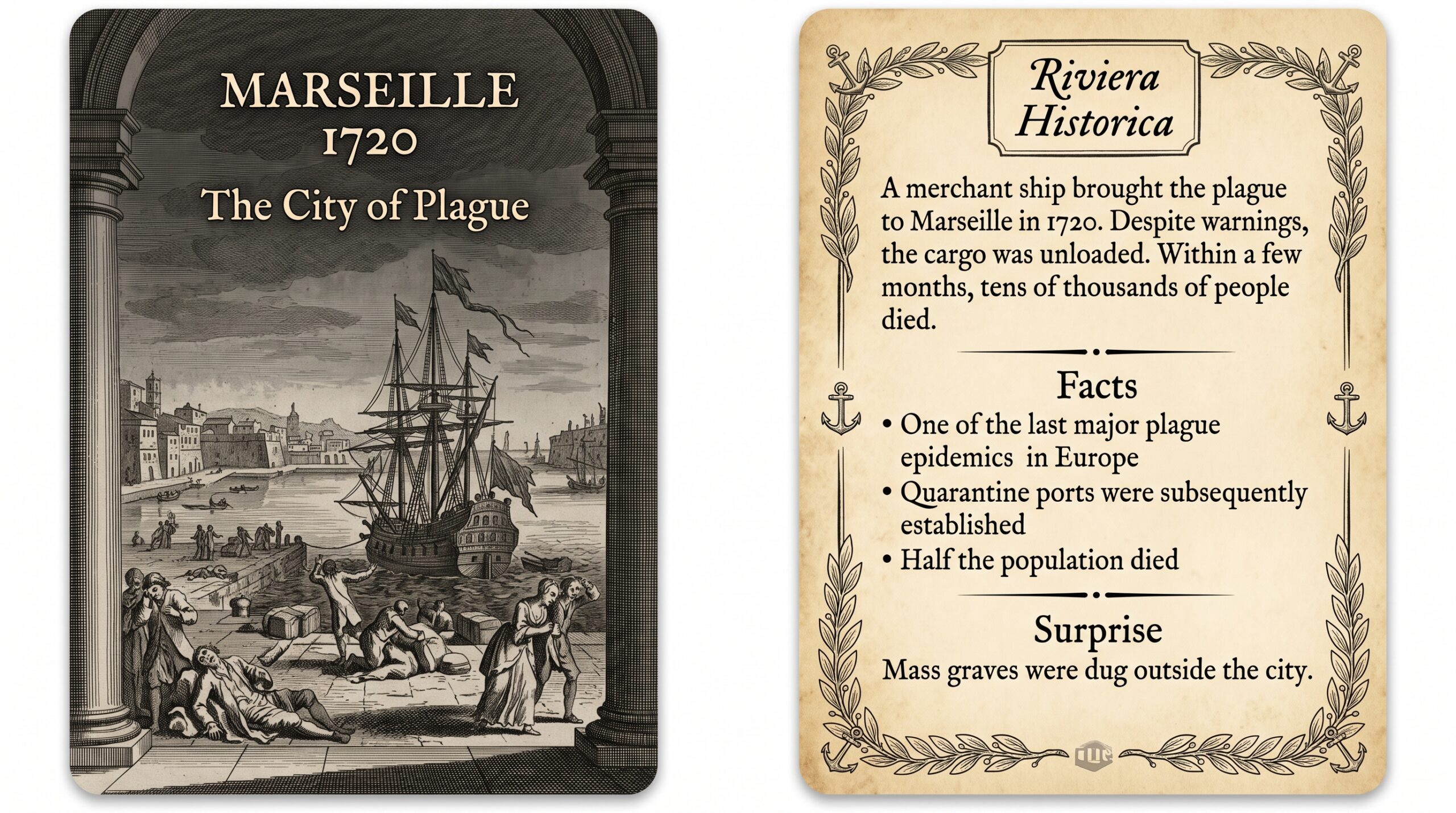
    Kartenset: โ€žGeschichte der Provence โ€“ 2000 Jahre im Sรผden Frankreichsโ€œ

    Kategorie 1: Antike / Rรถmerzeit (1โ€“10)

    1. Grรผndung von Massalia (heutiges Marseille) durch Griechen (ca. 600 v. Chr.)
    2. Ausbau von Aquรคdukten in der Region Provence
    3. Bau des rรถmischen Amphitheaters in Arles
    4. Grรผndung von Nemausus (heutiges Nรฎmes)
    5. Via Aurelia โ€“ rรถmische HandelsstraรŸe entlang der Kรผste
    6. Rรถmische Weinproduktion in der Provence
    7. Triumphbogen von Orange
    8. Integration der Region in die rรถmische Provinz Gallia Narbonensis
    9. Entwicklung von rรถmischen Thermen in Aix
    10. Christianisierung der Stรคdte im 4. Jahrhundert

    Kategorie 2: Mittelalter (11โ€“20)

    1. Grรผndung des Herzogtums Provence
    2. Bau der Festung von Les Baux-de-Provence
    3. Papsttum in Avignon (1309โ€“1377)
    4. Bau des Papstpalasts in Avignon
    5. Pestepidemien im 14. Jahrhundert
    6. Handelsmacht Marseille im Mittelalter
    7. Kreuzzรผge und Beteiligung provenzalischer Ritter
    8. Entwicklung romanischer Kirchenarchitektur
    9. Konflikte zwischen Provence und franzรถsischer Krone
    10. Aufstieg der Grafen von Provence

    Kategorie 3: Renaissance & Frรผhe Neuzeit (21โ€“30)

    1. Integration der Provence in das Kรถnigreich Frankreich (1481)
    2. Entwicklung von Aix als Verwaltungssitz
    3. Bau reprรคsentativer Stadtpalรคste in Aix-en-Provence
    4. Seiden- und Textilhandel in Marseille
    5. Einfluss italienischer Renaissance auf Architektur
    6. Ausbau der Hafenwirtschaft
    7. Religionskriege in Sรผdfrankreich
    8. Kรผnstlerische Blรผte in Aix
    9. Entwicklung lokaler Mรคrkte (marchรฉs provenรงaux)
    10. Einfรผhrung moderner Steuerverwaltung

    Kategorie 4: Franzรถsische Revolution (31โ€“40)

    1. Revolutionรคre Unruhen in Marseille
    2. Bildung von lokalen Jakobiner-Clubs
    3. Abschaffung der Feudalrechte in der Provence
    4. Umbenennung von Kirchen und รถffentlichen Plรคtzen
    5. Beteiligung provenzalischer Truppen an Revolutionskriegen
    6. Widerstand royalistischer Gruppen
    7. Hinrichtungen wรคhrend der Terrorphase
    8. Neue Verwaltungsstruktur (Dรฉpartements)
    9. Aufstieg der Nationalgarde in Sรผdfrankreich
    10. Marseille als Zentrum revolutionรคrer Lieder (โ€žLa Marseillaiseโ€œ)

    Kategorie 5: 19. Jahrhundert / Industrialisierung (41โ€“50)

    1. Ausbau des Hafens von Marseille
    2. Eisenbahnverbindung Parisโ€“Marseille
    3. Industrialisierung der Kรผstenregion
    4. Wachstum der Weinwirtschaft
    5. Urbanisierung von Aix und Marseille
    6. Kolonialhandel รผber Marseille
    7. Entwicklung der Lavendelindustrie
    8. Hafenarbeit und Migration
    9. Bau moderner Boulevards
    10. Erste touristische Reisen an die Cรดte dโ€™Azur

    Kategorie 6: Kunst & Kultur (51โ€“60)

    1. Paul Cรฉzanne in Aix-en-Provence
    2. Vincent van Gogh in Arles
    3. Entwicklung der provenzalischen Malerei
    4. Grรผndung von Kunstakademien in der Region
    5. Einfluss des Lichts der Provence auf Impressionismus
    6. Literatur von Frรฉdรฉric Mistral (Provenzalische Sprache)
    7. Opern- und Theaterkultur in Marseille
    8. Entstehung lokaler Volksfeste
    9. Entwicklung der Lavendel-Ikonografie
    10. Kรผnstlerkolonien in Sรผdfrankreich

    Kategorie 7: 20. Jahrhundert & Kriegszeit (61โ€“70)

    1. Marseille im Ersten Weltkrieg als Hafen fรผr Truppen
    2. Widerstand in der Provence im Zweiten Weltkrieg
    3. Besetzung Sรผdfrankreichs durch Deutschland (1942)
    4. Rรฉsistance in den Alpen und Provence
    5. Befreiung von Marseille 1944
    6. Wiederaufbau nach dem Krieg
    7. Migration aus Nordafrika nach Marseille
    8. Wirtschaftlicher Aufschwung der Nachkriegszeit
    9. Entwicklung des Tourismus an der Cรดte dโ€™Azur
    10. Filmindustrie in Cannes und Umgebung

    Kategorie 8: Moderne Provence & Cรดte dโ€™Azur (71โ€“80)

    1. Entwicklung von Cannes als Filmstadt
    2. Internationalisierung von Marseille als Hafenmetropole
    3. Tourismusboom an der Riviera
    4. Grรผndung des Filmfestivals von Cannes
    5. Ausbau der Autobahnen und Flughรคfen
    6. Schutz von Naturparks (Calanques)
    7. Luxustourismus in der Cรดte dโ€™Azur
    8. Integration europรคischer Kulturprojekte
    9. Wein- und Kulinarik-Tourismus
    10. Moderne Identitรคt der Provence als Kultur- und Reiseziel

  • รˆze Village โ€“ History, topography, and cultural transformation of a Mediterranean mountain village

    รˆze Village towers above the sparkling ribbon of the Mediterranean Sea like a silent witness to a complex past. Perched on a steep rocky outcrop on the French Riviera, the village uniquely combines traces of early Ligurian cultures, medieval power struggles, modern fortification policies, and the cultural trends of the Belle ร‰poque. Its development is a prime example of the transformation of Mediterranean settlements from strategic strongholds to symbolic cultural landscapes.

    1. The beginnings: Ligurian settlements and Roman spheres of influence

    The earliest traces of human presence in the รˆze area can be attributed to the Celto-Ligurian tribes who settled in the region around what is now Mont Bastide. The choice of location was motivated by both defensive and economic considerations: the extremely steep topography offered protection from attackers, while the proximity to the sea facilitated trade.

    With Roman expansion in Provence, the entire coastal region was integrated into a systematic administrative and transportation system. Although รˆze itself was not at the center of Roman urbanity, continuous settlement established itself along the coast, particularly in รˆze-sur-Mer. The Roman presence also left behind agricultural techniques such as terraced farming and olive cultivation, which shaped the landscape until modern times.

    รˆze Village – Cactus Garden

    2. Medieval consolidation: between Provence and Savoy

    From the High Middle Ages onwards, รˆze developed into a fortified village, which was ideal for military purposes due to its location at an altitude of 430 meters. From then on, its history was marked by territorial conflicts: รˆze initially belonged to the County of Provence.

    From the 14th century onwards, it fell under the rule of the House of Savoy. The conflict between Savoy and France in the 17th century led to multiple changes in strategy and ultimately to its integration into the Kingdom of France.

    The medieval streets โ€“ now home to artists’ studios and boutiques โ€“ were originally designed for defensive purposes. The village functioned as a stone labyrinth intended to confuse attackers. The central fortress, the citadel of รˆze, was repeatedly expanded, but fell victim to Louis XIV’s strategic order of destruction in 1706. Today’s platform with the โ€œJardin Exotiqueโ€ is a relic of this military past.

    3. Modern infrastructure: Fort Rรฉvรจre as part of national defense systems

    In the 19th century, รˆze once again became the focus of French military planning due to its geographical location. Fort Rรฉvรจre, located in the hinterland above the village, was built after 1870 as part of the so-called Sรฉrรฉ de Riviรจres system โ€“ a network of modern fortifications of European significance, created in response to the Franco-Prussian War.

    Fort Rรฉvรจre is characterized by: a polygonal layout with casemates, embrasures in all directions, massive walls made of stone and concrete, devices for communication with neighboring coastal and mountain forts.

    Although Fort Rรฉvรจre was never involved in combat, it played a role in monitoring the coast and securing the Italian-French border. Today, as a restored monument, it offers one of the most impressive panoramic views of the Riviera and symbolizes an era of European rearmament that changed fundamentally with the First World War.

    4. Chรขteau Balsan โ€“ Riviera romance and sophisticated

    The advent of Riviera tourism in the 19th century marked the beginning of a new era for รˆze. Chรขteau Balsan played a special role in this development. Industrialist ร‰mile Balsan, who came from an influential textile family, acquired the estate and transformed it into a sophisticated retreat.

    The chรขteau is remarkable for cultural and historical reasons: It was a frequent meeting place for the Parisian and international elite. Coco Chanel, who was closely associated with ร‰mile Balsan in her early life, spent long periods here. It was in รˆze that she made the transition from the world of aristocracy and bohemianism to her calling as a designer.

    The subsequent conversion of the building into the exclusive Chรขteau de la Chรจvre d’Or hotel marked another turning point: the Riviera became a luxury destination, while the historic buildings of รˆze were integrated into tourist and cultural contexts.

    Eze Jardin

    5. Continuity and renewal: From an agricultural society to a cultural landscape

    Until the early 20th century, รˆze was still heavily agricultural: olive groves, vineyards, terraced farming, and sheep breeding dominated life. It was only with the expansion of modern transport infrastructureโ€”roads, railways along the coast, and later the Corniche Routesโ€”that the village underwent structural change.

    The significant combination of historic buildings, an exceptional location, and romantic aesthetics led to รˆze becoming a fixture for: artists and writers, botanists (especially because of the exotic garden), historians, and tourists from all over the world.

    Today, รˆze combines the preservation of its medieval identity with a mixture of arts and crafts, luxury hotels and natural landscape typical of the Cรดte d’Azur.

    6. Concluding remarks

    รˆze Village is a prime example of the transformative power of historical sites. Its history encompasses: Ligurian origins, medieval power struggles, French and Savoyard territorial politics, modern fortification systems, the sophisticated culture of the Belle ร‰poque and modern cultural tourism.

    The Chรขteau Balsan and Fort Rรฉvรจre serve as striking anchor points: one embodies the aesthetic and social appeal of the Riviera, the other the strategic importance of the region in an era of geopolitical uncertainty.

    รˆze is thus not only a picturesque mountain village, but also a living archive of European historyโ€”a place where political, cultural, and landscape developments overlap in an extraordinary way.

Sign In

Register

Reset Password

Please enter your username or email address, you will receive a link to create a new password via email.