Category: Nizza

  • Hike from Col de Villefranche via Fort du Mont Alban to Villefranche-sur-Mer

    This scenic hike on the Cรดte d’Azur combines history, nature and spectacular sea views. Over a relatively short distance, you will encounter Mediterranean vegetation, military architecture and descend into one of the most beautiful bays in the region.
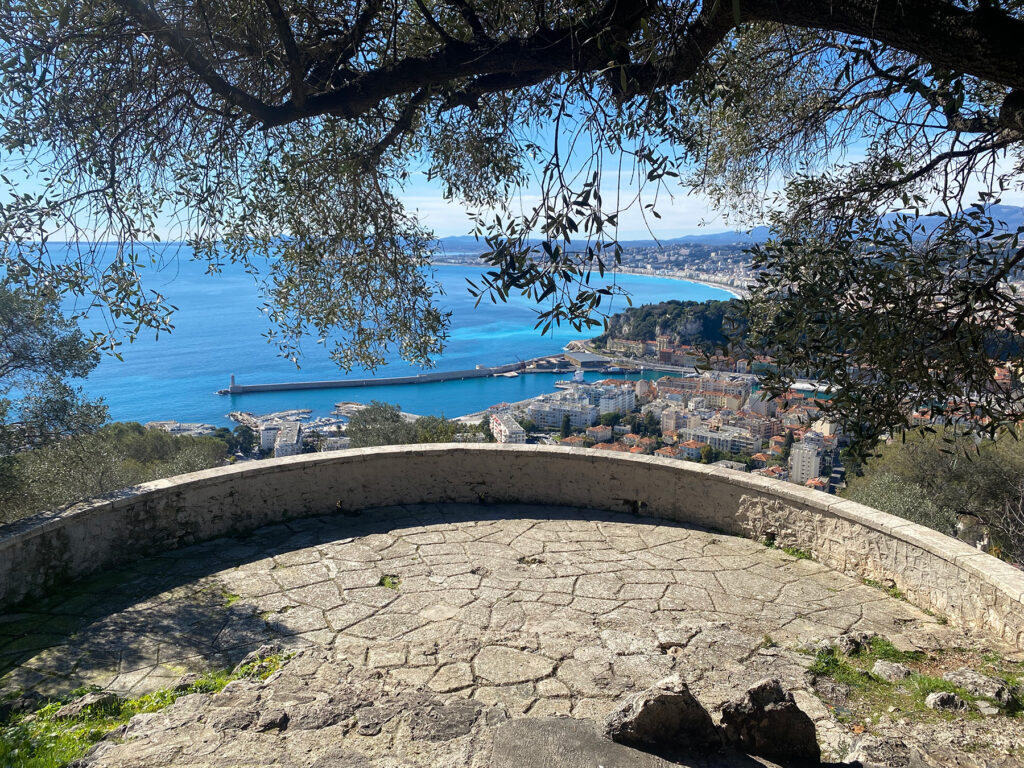
    Mont Alban View to Nice

    Start: Col de Villefranche

    The Col de Villefranche is located at an altitude of about 200 metres between Nice and Villefranche-sur-Mer. From here, several well-signposted paths lead towards Mont Alban. After just a few minutes, the view opens up to the deep blue Rade de Villefranche and the Cap Ferrat peninsula.

    The trail initially runs through a sparse pine forest. The scent of Aleppo pines, rosemary and thyme accompanies you โ€“ typical of the garrigue vegetation of the region. The incline is moderate and easily manageable.
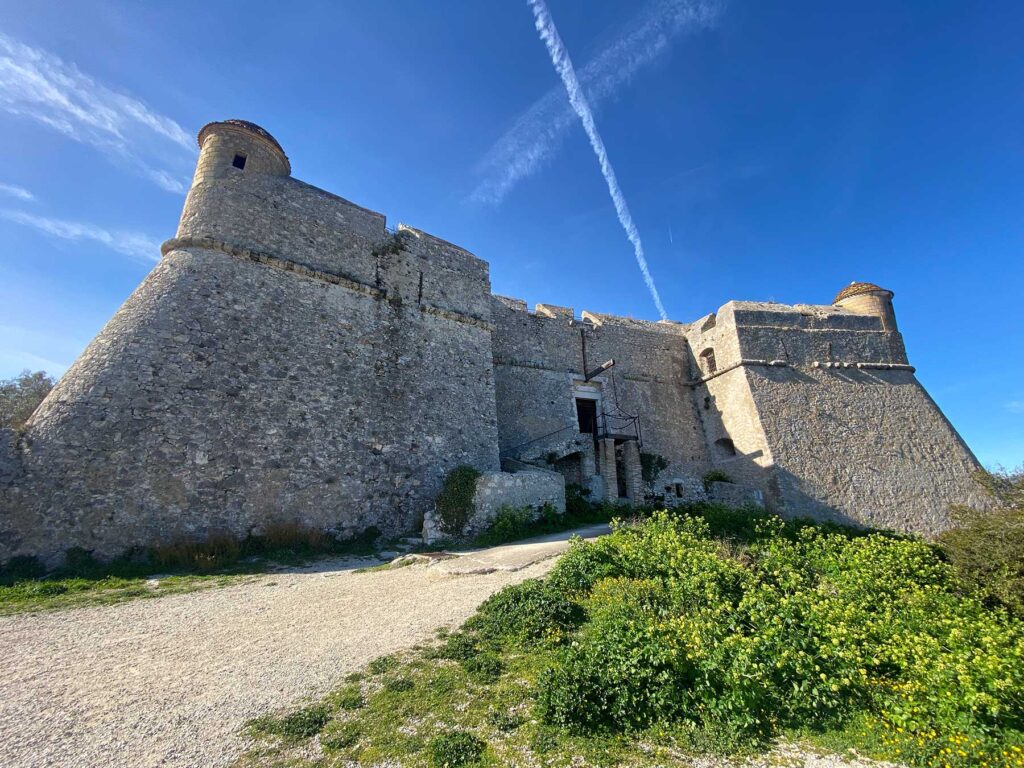
    Fort Alban

    Stage 1: Ascent to the fort

    After about 20โ€“30 minutes, you will reach the Fort du Mont Alban, a 16th-century fortress. The massive structure is perched at an altitude of around 220 metres and offers one of the most beautiful panoramas of the Cรดte d’Azur:

    View westwards over the Bay of Nice

    View eastwards over the roadstead of Villefranche

    On a clear day: the snow-capped Maritime Alps in the hinterland

    It is definitely worth taking a break here. Small paths lead to various vantage points around the fort.

    Stage 2: Descent towards Villefranche

    From the fort, take the path towards Villefranche-sur-Mer. The path winds its way downhill through Mediterranean vegetation. Again and again, new perspectives of the bay open up โ€“ the play of colours between ochre facades, turquoise water and green hills is typical of the region.

    The descent takes about 40โ€“60 minutes, depending on your pace and photo stops. The path is rocky in places, so sturdy shoes are recommended.

    Destination: Villefranche-sur-Mer

    Once you reach the bottom, you will arrive at the old town of Villefranche-sur-Mer with its narrow streets and pastel-coloured houses. The historic Saint-Elme citadel, which also refers to the military importance of the region, is particularly worth seeing.

    You can relax at the harbour or on the beach at the end of your hike โ€“ perhaps with a coffee or a swim in the sea.

    Practical information

    Duration: approx. 1.5โ€“2.5 hours (without long breaks)

    Difficulty: easy to moderate

    Elevation difference: approx. 200 metres

    Best time: spring and autumn (summer can be very hot)

    Equipment: water, sunscreen, sturdy shoes

    Conclusion

    The hike from Col de Villefranche via Fort Vauban (Mont Alban) to Villefranche-sur-Mer is ideal for anyone looking for a short but impressive tour. It combines nature with history and offers some of the most beautiful views on the French Mediterranean coast.
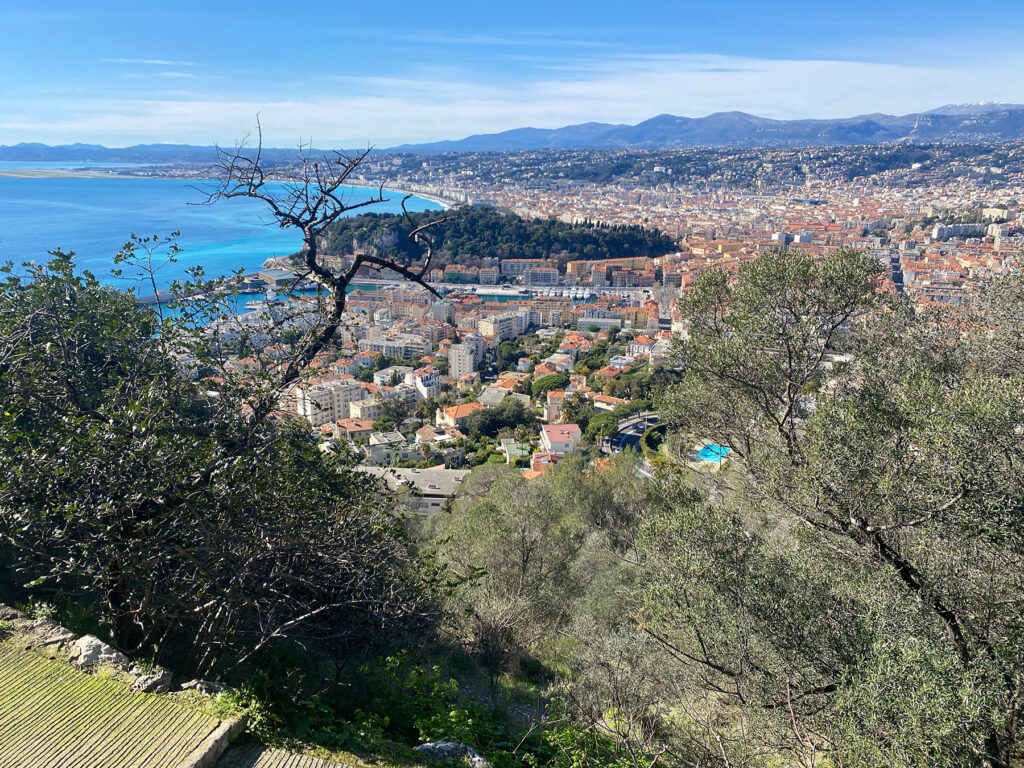

    Mont Boron Nizza


    Places
    Hike from Col de Villefranche via Fort du Mont Alban to Villefranche-sur-Mer with a tour of the Citadelle Saint-Elme

    This varied tour combines nature, spectacular views and impressive military architecture โ€“ an ideal day trip on the Cรดte d’Azur.

    1. Start at Col de Villefranche

    Col de Villefranche is located at an altitude of about 200 metres between Nice and Villefranche-sur-Mer. Several paths lead from the car park or the road towards Mont Alban. After just a few minutes, the first views of the deeply indented bay of Villefranche and Cap Ferrat open up.

    The path climbs gently and leads through a sparse pine forest. Mediterranean plants such as rosemary, thyme and dwarf palms line the path. The climb is moderate and easy to walk.

    Walking time to the fort: approx. 20โ€“30 minutes

    1. Fort du Mont Alban viewpoint (Fort Vauban)

    At an altitude of around 220 metres, you will reach Fort du Mont Alban, a 16th-century fortress. The complex was built under Savoyard rule and served to control the strategically important coastline.

    From up here, you can enjoy a spectacular panorama:

    To the west, the Baie des Anges and Nice

    To the east, the Rade de Villefranche

    In the background, the Maritime Alps

    The view is one of the most beautiful in the entire region. It is worth taking a longer break to enjoy the different perspectives around the complex.

    1. Descent to Villefranche-sur-Mer

    From the fort, the path winds downhill towards Villefranche. The path is partly rocky but easy to follow. During the descent, wooded areas alternate with open viewpoints that offer ever-changing perspectives of the sea.

    As you get closer to the village, the ochre-coloured houses and small harbour of Villefranche-sur-Mer come into view. The descent takes about 45-60 minutes.

    1. Destination: The Citadelle Saint-Elme in Villefranche

    Once you arrive at the harbour, you will reach the impressive Citadelle Saint-Elme. Built in the 16th century, this fortress served to secure the bay and was part of a comprehensive defence system for the region.

    Today, the citadel is the cultural centre of the city and houses several museums and exhibitions:

    Museums and galleries in the citadel

    Musรฉe Volti โ€“ sculptures by the artist Antoniucci Volti

    Musรฉe Goetz-Boumeester โ€“ works of modern art

    Collections on the history of the city โ€“ historical documents and models

    The inner courtyards, vaulted corridors and bastions can be explored freely. The thick walls and the view of the bay from the bastions are particularly impressive.

    Visiting time: approx. 1โ€“1.5 hours

    1. Practical information

    Total duration (including visit): approx. 3โ€“4 hours

    Elevation difference: approx. 200 metres

    Difficulty: easy to moderate

    Equipment: sturdy shoes, water, sun protection

    Best season: spring and autumn (very hot in summer)

    Conclusion

    This hike impressively combines nature, history and culture. From the panorama at Fort du Mont Alban to the atmospheric tour of the Citadelle Saint-Elme, you will experience the strategic importance of the bay of Villefranche up close. The alternation between Mediterranean landscape and historical architecture makes this tour one of the most beautiful half-day excursions on the Cรดte d’Azur.


    Fort du Mont Alban

    High above the Bay of Nice, between Nice and Villefranche-sur-Mer, stands the Fort du Mont Alban โ€“ usually referred to simply as โ€˜Fort Albanโ€™. This striking 16th-century fortress is not only an impressive example of early modern military architecture, but also a landmark that shapes the identity of the Cรดte d’Azur region.

    Historical background

    The fort was built in the 16th century under the rule of Emmanuel Philibert. At that time, Nice did not yet belong to France, but to the Duchy of Savoy. The aim of the construction was to secure the strategically important coastline against attacks, especially from the sea. Its exposed location at an altitude of around 220 metres allowed a wide view over the Bay of Nice and the port of Villefranche.

    The massive, star-shaped structure with its thick walls and bastions was in line with the most modern defence principles of its time. Together with the citadel of Villefranche, the fort formed an effective defence system that could control both sea and land attacks.

    Strategic importance

    Its location between present-day Nice and Villefranche-sur-Mer made the fort a key point for regional security. From here, troops could detect movements along the coast at an early stage. Especially in an era when Mediterranean ports were of great importance for trade and the military, control of the sea routes was a decisive factor of power.

    The fort retained its military relevance in later centuries. It continued to be used and adapted during various conflicts. Its solid construction has contributed to its good state of preservation to this day.

    Significance for the surrounding area

    Today, the fort no longer fulfils a military function, but is an important cultural and tourist attraction. It symbolises the region’s turbulent history โ€“ from Savoyard rule to integration into France and the modern development of the Cรดte d’Azur.

    The fort is a popular destination for the inhabitants of Nice. The surrounding park offers walking trails with spectacular panoramic views of the Mediterranean, the foothills of the Alps and the coastal towns. Especially at sunset, the viewpoint is one of the most beautiful in the region.

    The fort also contributes to the local identity: it is a reminder of the time when Nice was not yet French and illustrates the city’s historical role as a border and port city between different political powers.

    Architecture and current condition

    The compact, rectangular structure with its bastions is an example of Renaissance military architecture. Although the interior of the fort is not permanently open to the public, the complex can be viewed from the outside. The massive stone walls still convey an impression of the strategic importance of the building.

    Conclusion

    Fort Alban is much more than an old fortress. It is a historical testimony to power politics in the Mediterranean region, a symbol of regional identity and a viewpoint of exceptional beauty. Its presence above the Bay of Nice connects the past and the present โ€“ and highlights how closely history, landscape and urban development are intertwined on the Cรดte d’Azur.


    in german:

    Diese aussichtsreiche Wanderung an der Cรดte dโ€™Azur verbindet Geschichte, Natur und spektakulรคre Meerblicke. Auf relativ kurzer Strecke erlebst du mediterrane Vegetation, militรคrische Architektur und den Abstieg in eine der schรถnsten Buchten der Region.


    Start: Col de Villefranche

    Der Col de Villefranche liegt auf etwa 200 Metern Hรถhe zwischen Nizza und Villefranche-sur-Mer. Von hier aus fรผhren mehrere gut ausgeschilderte Wege in Richtung Mont Alban. Schon nach wenigen Minuten รถffnet sich der Blick auf die tiefblaue Rade de Villefranche und die Halbinsel Cap Ferrat.

    Der Weg verlรคuft zunรคchst durch lichten Pinienwald. Der Duft von Aleppokiefern, Rosmarin und Thymian begleitet dich โ€“ typisch fรผr die Garrigue-Vegetation der Region. Die Steigung ist moderat und gut machbar.


    Etappe 1: Aufstieg zum Fort

    Nach etwa 20โ€“30 Minuten erreichst du das Fort du Mont Alban, eine Festung aus dem 16. Jahrhundert. Die massive Anlage thront auf rund 220 Metern Hรถhe und bietet eines der schรถnsten Panoramen der Cรดte dโ€™Azur:

    • Blick westwรคrts รผber die Bucht von Nizza
    • Blick ostwรคrts รผber die Reede von Villefranche
    • Bei klarer Sicht: die schneebedeckten Seealpen im Hinterland

    Eine Pause lohnt sich hier unbedingt. Rund um das Fort fรผhren kleine Wege zu verschiedenen Aussichtspunkten.


    Etappe 2: Abstieg Richtung Villefranche

    Vom Fort aus nimmst du den Weg in Richtung Villefranche-sur-Mer. Der Pfad schlรคngelt sich in Serpentinen bergab durch mediterrane Vegetation. Immer wieder erรถffnen sich neue Perspektiven auf die Bucht โ€“ das Farbspiel zwischen Ockerfassaden, tรผrkisfarbenem Wasser und grรผnen Hรผgeln ist typisch fรผr die Region.

    Der Abstieg dauert etwa 40โ€“60 Minuten, je nach Tempo und Fotostopps. Der Weg ist stellenweise steinig, daher sind feste Schuhe empfehlenswert.


    Ziel: Villefranche-sur-Mer

    Unten angekommen erreichst du die Altstadt von Villefranche-sur-Mer mit ihren engen Gassen und pastellfarbenen Hรคusern. Besonders sehenswert ist die historische Zitadelle Saint-Elme, die ebenfalls auf die militรคrische Bedeutung der Region verweist.

    Am Hafen oder am Strand kannst du die Wanderung entspannt ausklingen lassen โ€“ vielleicht mit einem Kaffee oder einem Bad im Meer.


    Praktische Hinweise

    • Dauer: ca. 1,5โ€“2,5 Stunden (ohne lange Pausen)
    • Schwierigkeit: leicht bis mittel
    • Hรถhenunterschied: etwa 200 Meter
    • Beste Zeit: Frรผhjahr und Herbst (Sommer kann sehr heiรŸ sein)
    • Ausrรผstung: Wasser, Sonnenschutz, feste Schuhe

    Fazit

    Die Wanderung vom Col de Villefranche รผber das Fort Vauban (Mont Alban) nach Villefranche-sur-Mer ist ideal fรผr alle, die eine kurze, aber eindrucksvolle Tour suchen. Sie verbindet Naturerlebnis mit Geschichte und bietet einige der schรถnsten Ausblicke an der franzรถsischen Mittelmeerkรผste.

    Beschreibe mir bitte eine Wanderung vom Col de Villefranche รผber das Fort Vauban nach Villefranche und abschlieรŸender Besichtung des Fort von Villefranche mit Besichtigung der Galerien und Museen im Fort.

    Wanderung vom Col de Villefranche รผber das Fort du Mont Alban nach Villefranche-sur-Mer mit Besichtigung der Citadelle Saint-Elme

    Diese abwechslungsreiche Tour verbindet Natur, spektakulรคre Ausblicke und eindrucksvolle Militรคrarchitektur โ€“ ein idealer Tagesausflug an der Cรดte dโ€™Azur.


    1. Start am Col de Villefranche

    Der Col de Villefranche liegt auf etwa 200 Metern Hรถhe zwischen Nizza und Villefranche-sur-Mer. Vom Parkplatz bzw. der StraรŸe aus fรผhren mehrere Wege in Richtung Mont Alban. Schon nach wenigen Minuten erรถffnen sich erste Blicke auf die tief eingeschnittene Bucht von Villefranche und das Cap Ferrat.

    Der Weg steigt sanft an und fรผhrt durch lichten Pinienwald. Mediterrane Pflanzen wie Rosmarin, Thymian und Zwergpalmen sรคumen den Pfad. Der Anstieg ist moderat und gut begehbar.

    Gehzeit bis zum Fort: ca. 20โ€“30 Minuten


    2. Aussichtspunkt Fort du Mont Alban (Fort Vauban)

    Auf rund 220 Metern Hรถhe erreichst du das Fort du Mont Alban, eine Festung aus dem 16. Jahrhundert. Die Anlage wurde unter savoyischer Herrschaft erbaut und diente der Kontrolle der strategisch wichtigen Kรผste.

    Von hier oben bietet sich ein spektakulรคres Panorama:

    • Westwรคrts die Baie des Anges und Nizza
    • Ostwรคrts die Rade de Villefranche
    • Im Hintergrund die Seealpen

    Die Aussicht gehรถrt zu den schรถnsten der gesamten Region. Eine lรคngere Pause lohnt sich, um die verschiedenen Blickwinkel rund um die Anlage zu genieรŸen.


    3. Abstieg nach Villefranche-sur-Mer

    Vom Fort fรผhrt der Weg in Serpentinen bergab Richtung Villefranche. Der Pfad ist teils steinig, aber gut erkennbar. Wรคhrend des Abstiegs wechseln sich Waldstรผcke mit offenen Aussichtspunkten ab, die immer neue Perspektiven auf das Meer erรถffnen.

    Mit zunehmender Nรคhe zum Ort erscheinen die ockerfarbenen Hรคuser und der kleine Hafen von Villefranche-sur-Mer. Der Abstieg dauert etwa 45โ€“60 Minuten.


    4. Ziel: Die Citadelle Saint-Elme in Villefranche

    Am Hafen angekommen erreichst du die beeindruckende Citadelle Saint-Elme. Diese im 16. Jahrhundert errichtete Festung diente der Sicherung der Bucht und war Teil eines umfassenden Verteidigungssystems der Region.

    Heute ist die Zitadelle kulturelles Zentrum der Stadt und beherbergt mehrere Museen und Ausstellungen:

    Museen und Galerien in der Zitadelle

    • Musรฉe Volti โ€“ Skulpturen des Kรผnstlers Antoniucci Volti
    • Musรฉe Goetz-Boumeester โ€“ Werke moderner Kunst
    • Sammlungen zur Stadtgeschichte โ€“ historische Dokumente und Modelle

    Die Innenhรถfe, Gewรถlbegรคnge und Bastionen kรถnnen frei erkundet werden. Besonders eindrucksvoll sind die dicken Mauern und die Aussicht von den Bastionen auf die Bucht.

    Besichtigungszeit: ca. 1โ€“1,5 Stunden


    5. Praktische Hinweise

    • Gesamtdauer (inkl. Besichtigung): ca. 3โ€“4 Stunden
    • Hรถhenunterschied: ca. 200 Meter
    • Schwierigkeit: leicht bis mittel
    • Ausrรผstung: feste Schuhe, Wasser, Sonnenschutz
    • Beste Jahreszeit: Frรผhjahr und Herbst (im Sommer sehr heiรŸ)

    Fazit

    Diese Wanderung verbindet eindrucksvoll Natur, Geschichte und Kultur. Vom Panorama am Fort du Mont Alban bis zur atmosphรคrischen Besichtigung der Citadelle Saint-Elme erlebst du die strategische Bedeutung der Bucht von Villefranche aus nรคchster Nรคhe. Der Wechsel zwischen mediterraner Landschaft und historischer Architektur macht diese Tour zu einem der schรถnsten Halbtagesausflรผge an der Cรดte dโ€™Azur.

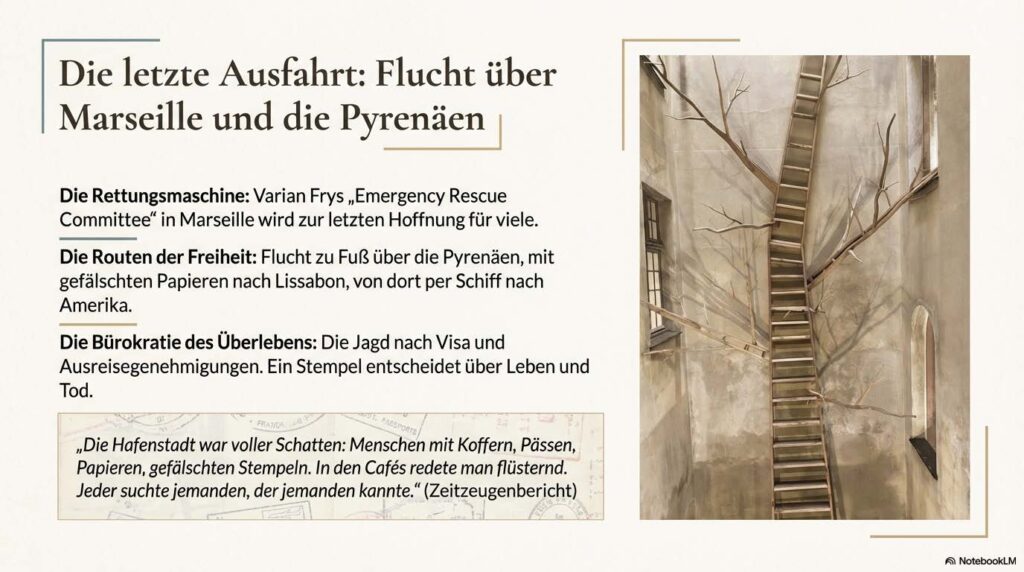
  • Buchbesprechung “Deutsche Exilanten”

    Podcast von Arcoplexus zum Buch “Deutsche Exilanten an der Cรดte d’Azur” von Klaus Kampe. Das Werk dokumentiert das bewegte Leben deutscher Exilanten an der Cรดte dโ€™Azur wรคhrend der 1930er Jahre. Im Fokus stehen Zufluchtsorte wie Sanary-sur-Mer und Nizza, wo bedeutende Intellektuelle wie Thomas Mann, Lion Feuchtwanger und Hannah Arendt versuchten, ihre kulturelle Identitรคt gegen das NS-Regime zu verteidigen. Die Texte beleuchten zudem die mutigen Rettungsaktionen von Varian Fry in Marseille sowie die kรผnstlerische Arbeit des Fotografen Walter Bondy. Neben literarischen Analysen und historischen Fakten flieรŸen persรถnliche Anekdoten und fiktive Dialoge ein, die das Spannungsfeld zwischen mediterraner Idylle und existenzieller Bedrohung spรผrbar machen. Letztlich dient das Buch als Hommage an die schรถpferische Kraft einer Generation, die trotz Verfolgung und Internierung an Humanismus und Freiheit festhielt. Es verbindet dabei die historische Spurensuche mit dem kollektiven Gedรคchtnis einer verlorenen Welt. Zum Buch:


    Deutsche Exilanten an der Cรดte d'Azur von Klaus Kampe
    Deutsche Exilanten an der Cรดte d'Azur von Klaus Kampe
    Deutsche Exilanten an der Cรดte d'Azur von Klaus Kampe
    Deutsche Exilanten an der Cรดte d'Azur von Klaus Kampe
    Deutsche Exilanten an der Cรดte d'Azur von Klaus Kampe

    by Klaus Kampe

  • Berliner Tageblatt, โ€œTen Years of Niceโ€

    Kurt and Theodor Wolff, the Berliner Tageblatt, โ€œTen Years of Nice,โ€ and Alfred Neumannโ€”Facets of a Liberal Public Sphere.

    These men were primarily active in the late 19th and first half of the 20th century, with a focus on the period between the German Empire and the Weimar Republic. The history of the German press and intellectual world in the late 19th and early 20th centuries is hardly conceivable without the Berliner Tageblatt. As one of the most important liberal mass-circulation newspapers of the German Empire and the Weimar Republic, it was not only a news medium but also a forum for political debate, literary innovation, and European self-understanding. This environment attracted personalities such as Kurt and Theodor Wolff and authors such as Alfred Neumann, whose contributions exemplify the connection between journalism, literature, and political thought.

    Theodor Wolff, long-time editor-in-chief of the Berliner Tageblatt, had a decisive influence on the newspaper. He understood journalism as a moral and political task. Under his leadership, the newspaper developed into a voice for liberalism, the rule of law, and understanding between European nations. Wolff’s editorials combined analytical acuity with linguistic elegance and made the Berliner Tageblatt a leading medium for the educated public. His work showed that political journalism could be more than mere reporting: it became intellectual intervention.

    Kurt Wolff, although not directly part of the editorial team, represented a similar intellectual attitude. As one of the most important publishers of the 20th century, he promoted authors of literary modernism such as Franz Kafka, Georg Trakl, and Else Lasker-Schรผler. The proximity between the press and literature, as evidenced in the environment of the Berliner Tageblatt, points to a common cultural project: the renewal of language, thought, and social sensitivity. Kurt Wolff’s publishing work thus complemented Theodor Wolff’s journalistic work on a different, literary level.

    One example of the Berliner Tageblatt’s European perspective is its review โ€œTen Years of Nice.โ€ Such articles were typical of the paper: they combined current politics with historical reflection. The reference to Niceโ€”as a venue for international conferences and diplomatic negotiationsโ€”symbolizes the paper’s interest in European power relations, peace agreements, and Germany’s role in international politics. Reviews of this kind served not only to inform readers, but also to educate them politically.

    Alfred Neumann, who contributed to the intellectual milieu of the time as a journalist and writer, can also be placed in this context. His texts often combined political analysis with literary ambition, thus fitting in with the profile of the Berliner Tageblatt. Authors such as Neumann embodied the type of writing intellectual who mediated between feature pages, political commentary, and literary form.

    In summary, it can be said that Kurt and Theodor Wolff, the Berliner Tageblatt, articles such as โ€œTen Years in Nice,โ€ and authors such as Alfred Neumann were part of a shared cultural context. They represent an era in which journalism, literature, and politics were closely intertwined and in which liberal public discourse was understood as a central prerequisite for democratic culture. Looking back, it becomes clear how fragileโ€”and at the same time how significantโ€”this tradition was.

    These men were primarily active in the late 19th and first half of the 20th century, with a focus on the period between the German Empire and the Weimar Republic.

    Theodor Wolff (1868โ€“1943)

    • Active approx. 1900โ€“1933
    • Editor-in-chief of the Berliner Tageblatt from 1906 to 1933
    • A defining figure of left-wing liberal journalism in the German Empire and the Weimar Republic
    • Had to go into exile from the Nazis in 1933

    Kurt Wolff (1887โ€“1963)

    • Active from around 1910 until the 1950s
    • Most important publisher of literary modernism
    • Focus of his work: the 1910s and 1920s
    • Also emigrated after 1933 (USA)

    Alfred Neumann (1895โ€“1952)

    • Active primarily in the 1920s and early 1930s
    • Journalist and writer of the Weimar Republic
    • Wrote political and literary texts
    • Emigration after 1933

    Shared historical context

    • German Empire (1871โ€“1918)
    • First World War
    • Weimar Republic (1919โ€“1933)
    • End of their activities in Germany due to the National Socialists’ seizure of power

    Overall, they belonged to Germany’s liberal intellectual public sphere between 1900 and 1933.

  • Excerpt from โ€œGerman Exiles on the Cรดte dโ€™Azurโ€

    A journey through the 1930s by Klaus Kampe

    HISTORICAL CONTEXT AND EXILE IN SOUTHERN FRANCE

    When the National Socialists seized power in Germany in January 1933, a period of persecution and loss began for many writers, artists, and intellectuals. Theaters were closed, editorial offices purged, books burned. Those who remained risked being banned from their professions, imprisonment, or worse. Those who left had to find a new world. Countless Germans set out on their journey โ€“ with suitcases full of manuscripts, sketches, or simply hope.

    The south of France, the Cรดte d’Azur, became a lifeline for many of them. The light, the vastness of the sea, the olive groves, and pine-covered hills gave the refugees a sense of freedom. The region was also convenient in practical terms: the cost of living was lower than in Paris, and Marseille offered the opportunity to travel further afield if the situation became uncertain. Artists and writers had already discovered the coast, and so in the 1930s it seemed like an old acquaintance that was now showing a new face โ€“ that of exile.

    During these years, the great names of German culture gathered here: Thomas Mann wrote in the guesthouses along the coast, while his brother Heinrich lived with Nelly Krรถger in Nice. Lion Feuchtwanger created an intellectual hub in his villa in Sanary-sur-Mer, frequented by Franz Werfel, Alma Mahler-Werfel, and many others. Bertolt Brecht wandered restlessly through the south of France, always searching for a place where work and security coincided. Painters such as Walter Bondy and writers such as Annette Kolb further shaped the atmosphere.

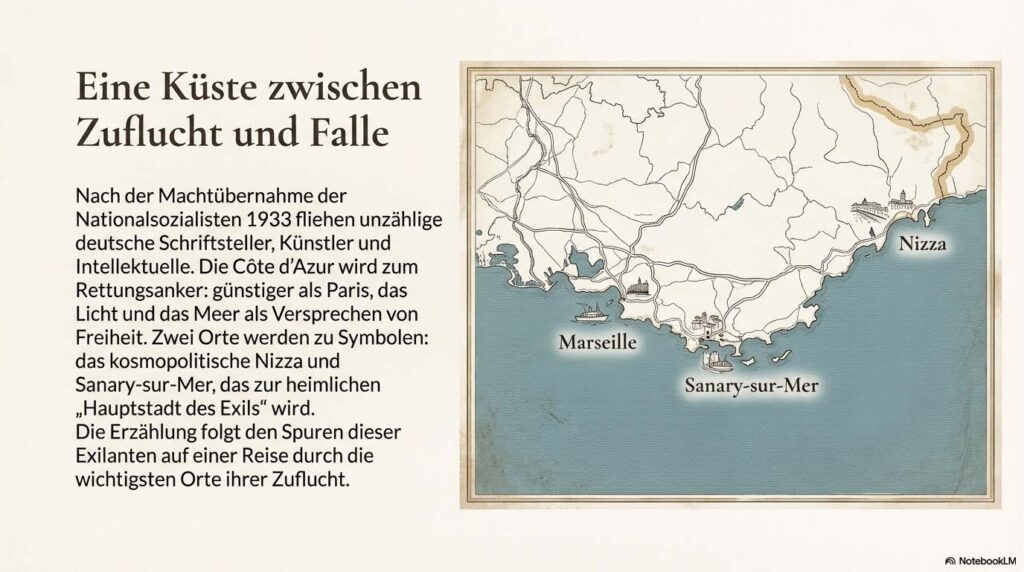
    Two places in particular became symbols of this exile: Nice, with its cosmopolitan vibrancy and boulevards where languages and cultures mingled; and Sanary-sur-Mer, a small fishing village whose harbor became the stage for a world in upheaval. There, between simple fishing boats and the facades of white houses, a close-knit community of exiles emerged, trying to preserve their language, their art, and their hope in the shadow of the looming dictatorship.

    Thus, on the Cรดte d’Azur, the beauty of the landscape was combined with the urgency of survivalโ€”leaving traces that are still visible today.


    TABLE OF CONTENTS

    Introduction

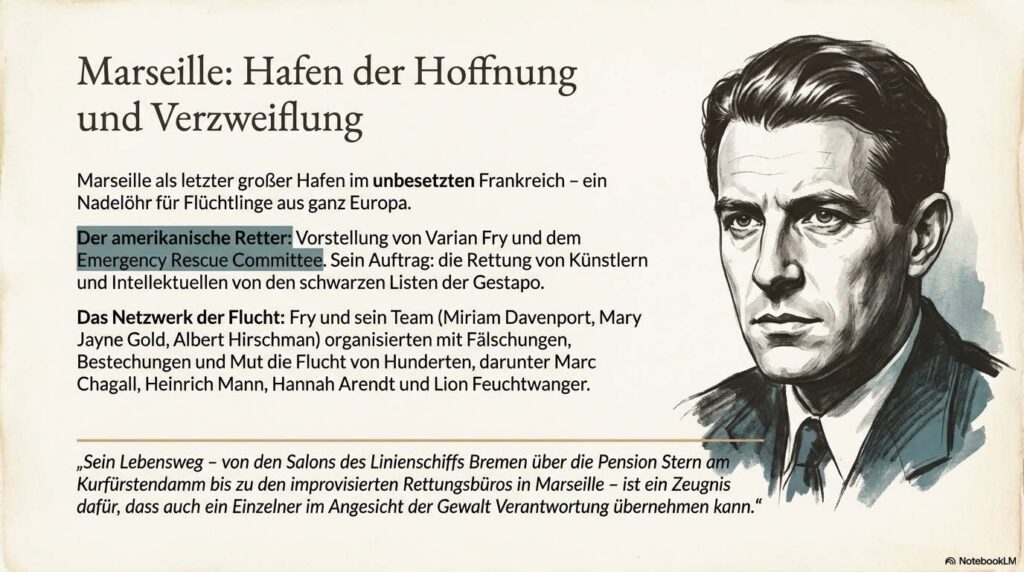
    Varian Fry โ€“ From Berlin to Marseille

    Historical Context and Exile in Southern France

    Exiles in Nice โ€“ The City of Refuge

    Sanary-sur-Mer โ€“ The German Village

    Famous Personalities in Exile

    The Portraits โ€“ Faces of a Lost World

    Marta and Lion Feuchtwanger

    Meeting at the Cafรฉ du Lyon

    Max Colpet

    Thomas Mann and the Art of Exile Salons

    Voices in Exile

    Art, Literature, and the Struggle for Freedom of Speech

    Encounters and Communities

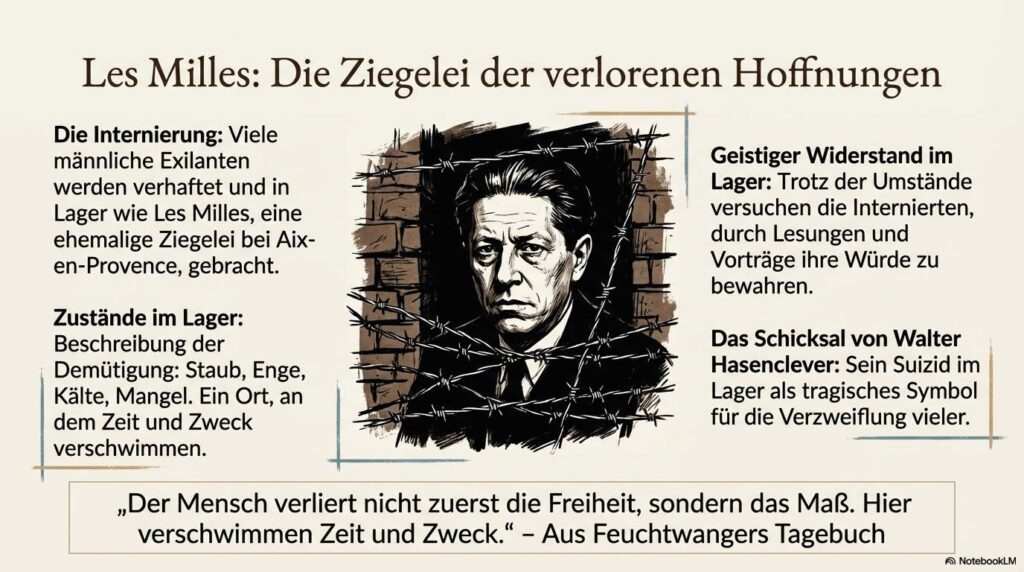
    Threats, Internment, and Escape

    Places of Residence Today – Discovering Historical Sites

    Comparison of Historical Photographs

    Links to Photos and Places

    Image Sources

    Epilogue

    Appendix


    in german:

    Abdruck aus “Deutsche Exilanten an der Cรดte d’Azur”

    Eine Reise durch die 1930er von Klaus Kampe

    HISTORISCHER KONTEXT UND EXIL IN SรœDFRANKREICH

    Als im Januar 1933 die Nationalsozialisten in Deutschland die Macht รผbernahmen, begann fรผr viele Schriftsteller, Kรผnstler und Intellektuelle eine Zeit der Verfolgung und des Verlustes. Bรผhnen wurden geschlossen, Redaktionen gesรคubert, Bรผcher verbrannt. Wer blieb, riskierte Berufsverbot, Haft oder Schlimmeres. Wer ging, musste sich eine neue Welt suchen. So setzten sich unzรคhlige Deutsche in Bewegung โ€“ mit Koffern voller Manuskripte, Skizzen oder einfach nur Hoffnung.

    Der Sรผden Frankreichs, die Cรดte dโ€™Azur, wurde fรผr viele von ihnen zum Rettungsanker. Das Licht, die Weite des Meeres, die Olivenhaine und Pinienhรผgel gaben den Flรผchtenden eine Ahnung von Freiheit. Auch praktisch war die Region gรผnstig: Die Lebenshaltungskosten waren niedriger als in Paris, und von Marseille aus bot sich die Mรถglichkeit, weiterzureisen, falls die Lage unsicher wurde. Schon zuvor hatten Kรผnstler und Literaten die Kรผste entdeckt, und so wirkte sie in den 1930er Jahren wie eine alte Bekannte, die nun ein neues Gesicht zeigte โ€“ die eines Exils.

    In diesen Jahren trafen hier die groรŸen Namen der deutschen Kultur zusammen: Thomas Mann schrieb in den Pensionen der Kรผste, sein Bruder Heinrich lebte mit Nelly Krรถger in Nizza. Lion Feuchtwanger schuf in seiner Villa in Sanary-sur-Mer einen geistigen Mittelpunkt, an dem Franz Werfel, Alma Mahler-Werfel und viele andere verkehrten. Bertolt Brecht zog unstet durch Sรผdfrankreich, stets auf der Suche nach einem Ort, an dem Arbeit und Sicherheit zusammenfielen. Maler wie Walter Bondy oder Schriftstellerinnen wie Annette Kolb prรคgten die Atmosphรคre zusรคtzlich.

    Besonders zwei Orte wurden zu Symbolen dieses Exils: Nizza, mit seiner kosmopolitischen Lebendigkeit und den Boulevards, auf denen sich Sprachen und Kulturen mischten; und Sanary-sur-Mer, ein kleiner Fischerort, dessen Hafenbecken zur Bรผhne einer Welt im Umbruch wurde. Dort, zwischen einfachen Fischerbooten und den Fassaden weiรŸer Hรคuser, entstand eine dichte Gemeinschaft von Exilanten, die im Schatten der drohenden Diktatur versuchten, ihre Sprache, ihre Kunst und ihre Hoffnung zu bewahren.

    So verband sich an der Cรดte dโ€™Azur die Schรถnheit der Landschaft mit der Dringlichkeit des รœberlebens โ€“ und hinterlieรŸ Spuren, die bis heute sichtbar sind.

  • The French Riviera of yesteryear

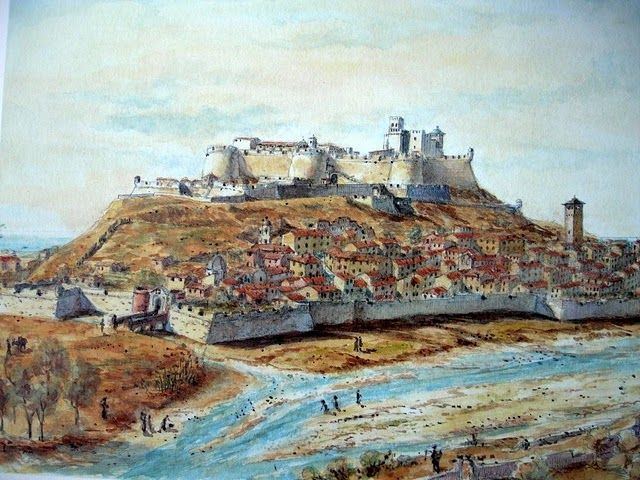
    Louis XIV organised the siege of Nice under the command of the Duke of La Feuillade. From 9 to 22 December 1705, the castle of Nice was bombarded relentlessly by 60 cannons and 24 mortars. More than 10,000 bombs and 120,000 cannonballs were fired at the castle during the siege, resulting in between 700 and 800 deaths and injuries. It was not until 4 January 1706 that the Marquis de Caraglio, commander of the citadel of Nice and governor of the county of Nice, surrendered.

    Engraving of Nice and its castleEngraving of Nice and its castle
  • Nietzsche in Nice and รˆze

    Nietzsche in Nice and รˆze โ€“ A Portrait

    When Friedrich Nietzsche traveled to Nice in the winter of 1883/84, he was not only seeking the mild climate of the Cรดte d’Azur. He was seeking relief for his pain-ridden body, the rhythm of the sea, the clarity of the sky. What opened up for him here was more than just a โ€œspa stayโ€: it was an aesthetic experience, a new topography of thought.

    In a letter to his sister Elisabeth, he wrote from Nice:
    “I have never seen such a sky, such brightness in the air, which lies like a light cloak over everything. Here one lives in a world of colors that gives birth not to intoxication but to clarity. Blue, the inexhaustible blue, permeates my entire thinking.”

    This view is significant: Nietzsche sees in the colors of Nice not a decorative idyll, but an existential reinforcement. Unlike in Turin or Genoa, where winter always brought him heaviness and illness, Nice opens up the possibility for him to experience the body not as an enemy, but as a resonance chamber of perception. Here he does not speak contemptuously of the body, but recognizes it as part of that โ€œgreat yesโ€ that his philosophy seeks.

    The road to รˆze โ€“ philosophy on the move

    From Nice, an old mule track leads along the coast up to รˆze, the eagle’s nest above the sea. Nietzsche often walked this path. The steep steps, the shimmer of light on the olive leaves, the play of shadows and rocks accompanied him like a silent choir.

    He notes:
    โ€œIt is as if with every step you enter another world of thoughts. The ascent is difficult, but it resembles what thinking itself demands: difficulty in order to reach the heights.โ€

    During these walks, the seed of that great unfinished work that would later become known as The Will to Power began to mature. Nietzsche’s notes from this period reveal a shift away from pure criticism of morality toward a philosophy of creation, of shaping, of โ€œaffirming life.โ€

    For Nietzsche, the will to power was not an abstract metaphor. He understood it as the dynamic energy that drives all living things, not only the spirit, but also nature, colors, the power of the sea, which he felt so directly in Nice. The body was no longer a burden to be overcome, but the place where this power manifests itself.

    Letters from a world of colors

    In another letter to his sister, he writes:
    โ€œHere in Nice, one learns how easy life can be when it speaks only through colors. Everything is bright, not in the way of dazzling snow, but like the most delicate music.โ€

    These words are not merely private enthusiasm. They mark a turning point: Nietzsche develops a way of thinking that affirms the richness of appearances, that does not despise the body but recognizes it as a mediator of experience. For him, the world of colors is not an illusion but an expression of a depth that constitutes life itself.

    Nice as a place of affirmation

    Thus, Nice becomes a symbolic place of affirmation for Nietzsche. The road to รˆze, the Mediterranean light, the bright facades of the old town, the vastness of the skyโ€”all this is not a backdrop, but an active part of his thinking. It shapes the tone that can later be described as the โ€œDionysianโ€ aspect of his late work: a way of thinking that is born not of contempt, but of affirmative power.

    The sea, the stones, the olive treesโ€”they appear in his philosophy not as romantic scenery, but as allies. The concept of the will to power is not abstract here, but concrete: the sea shows it in its waves, the body in pain, the colors in their brilliance.

    Conclusion

    Nietzsche’s Nice is not a place of escape, but a space for thought. By walking the Cรดte d’Azur, by talking about colors in his letters, by experiencing the body as a resonance of the world, he opens up a new possibility for philosophy: a philosophy without contempt for the body.

    On the path to รˆze, high above the sea, it seemed as if his thoughts were connected to the lightโ€”as if philosophy itself had become a walk, a path on which thought seeks altitude step by step.


    in german:

    Nietzsche in Nizza und รˆze โ€“ Ein Portrรคt

    Wenn Friedrich Nietzsche im Winter 1883/84 nach Nizza reist, sucht er nicht allein das milde Klima der Cรดte dโ€™Azur. Er sucht die Erleichterung fรผr seinen schmerzgeplagten Kรถrper, den Rhythmus des Meeres, die Klarheit des Himmels. Was sich hier fรผr ihn erรถffnet, ist mehr als ein bloรŸes โ€žKuraufenthaltโ€œ: es ist eine รคsthetische Erfahrung, eine neue Topographie des Denkens.

    In einem Brief an seine Schwester Elisabeth schreibt er aus Nizza:
    โ€žIch habe noch nie einen solchen Himmel gesehen, eine solche Helle der Luft, die sich wie ein lichter Mantel รผber alles legt. Man lebt hier in einer Welt der Farben, die nicht den Rausch, sondern die Klarheit gebiert. Blau, das unerschรถpfliche Blau, wie es mein ganzes Denken durchdringt.โ€œ

    Dieser Blick ist bezeichnend: Nietzsche sieht in den Farben Nizzas nicht die dekorative Idylle, sondern eine existentielle Verstรคrkung. Anders als in Turin oder Genua, wo der Winter fรผr ihn immer wieder Schwere und Krankheit brachte, รถffnet Nizza ihm die Mรถglichkeit, den Leib nicht als Feind, sondern als Resonanzraum der Wahrnehmung zu erfahren. Hier spricht er nicht verรคchtlich vom Kรถrper, sondern anerkennt ihn als Teil jenes โ€žgroรŸen Jaโ€œ, das seine Philosophie sucht.

    Der Weg nach รˆze โ€“ Philosophie im Gehen

    Von Nizza aus fรผhrt ein alter Saumpfad die Kรผste entlang hinauf nach รˆze, das Adlernest รผber dem Meer. Nietzsche ging diesen Weg hรคufig. Die steilen Stufen, das Flimmern des Lichts auf den Olivenblรคttern, das Spiel von Schatten und Felsen begleiteten ihn wie ein stiller Chor.

    Er notiert:
    โ€žEs ist, als ob man mit jedem Schritt in eine andere Welt von Gedanken trete. Der Aufstieg ist schwer, doch er gleicht dem, was das Denken selbst verlangt: Schwere, um zur Hรถhe zu gelangen.โ€œ

    In diesen Spaziergรคngen reifte der Keim zu jenem groรŸen unvollendeten Werk, das spรคter unter dem Titel Der Wille zur Macht bekannt werden sollte. Nietzsches Aufzeichnungen aus dieser Zeit zeigen eine Bewegung: weg von der reinen Kritik an der Moral hin zu einer Philosophie der Schรถpfung, des Gestaltens, der โ€žBejahung des Lebensโ€œ.

    Der Wille zur Macht war fรผr Nietzsche keine abstrakte Metapher. Er verstand ihn als jene dynamische Energie, die alles Lebendige antreibt, nicht nur den Geist, sondern auch die Natur, die Farben, die Kraft des Meeres, die er in Nizza so unmittelbar empfand. Der Leib war nicht mehr die Last, die man รผberwinden muss, sondern der Ort, an dem sich diese Macht zeigt.

    Briefe aus einer Welt der Farben

    In einem anderen Brief an seine Schwester findet sich der Satz:
    โ€žHier in Nizza lernt man, wie leicht das Leben sein kann, wenn es nur durch Farben spricht. Alles ist hell, nicht in der Weise des blendenden Schnees, sondern wie die zarteste Musik.โ€œ

    Diese Worte sind nicht bloรŸ private Schwรคrmerei. Sie markieren einen Wendepunkt: Nietzsche entwirft ein Denken, das den Reichtum der Erscheinungen bejaht, das den Kรถrper nicht verachtet, sondern ihn als Mittler der Erfahrung anerkennt. Die Welt der Farben ist ihm nicht Illusion, sondern Ausdruck einer Tiefe, die das Leben selbst ausmacht.

    Nizza als Ort der Affirmation

    So wird Nizza fรผr Nietzsche zum symbolischen Ort der Affirmation. Der Weg nach รˆze, das mediterrane Licht, die leuchtenden Fassaden der Altstadt, die Weite des Himmels โ€“ all dies ist kein Hintergrund, sondern aktiver Teil seines Denkens. Es prรคgt jenen Ton, den man spรคter als das โ€žDionysischeโ€œ seines Spรคtwerks beschreiben kann: ein Denken, das nicht aus der Verachtung, sondern aus der bejahenden Kraft geboren wird.

    Das Meer, die Steine, die Olivenbรคume โ€“ sie treten in seine Philosophie nicht als romantische Staffage, sondern als Verbรผndete. Das Konzept des Willens zur Macht ist hier nicht abstrakt, sondern konkret: das Meer zeigt es im Wogen, der Kรถrper im Schmerz, die Farben im Glanz.

    Schluss

    Nietzsches Nizza ist kein Fluchtort, sondern ein Denkraum. Indem er die Cรดte dโ€™Azur ergeht, indem er in Briefen von den Farben spricht, indem er den Kรถrper als Resonanz der Welt erfรคhrt, รถffnet er eine neue Mรถglichkeit der Philosophie: eine Philosophie ohne Verachtung des Leibes.

    Auf dem Pfad nach รˆze, hoch รผber dem Meer, schien es, als ob sich seine Gedanken mit dem Licht verbanden โ€“ als ob die Philosophie selbst zum Spaziergang geworden wรคre, ein Weg, auf dem das Denken Schritt fรผr Schritt die Hรถhe sucht.


    Einige Originalzitate und ihre Bedeutung

    1. Brief aus Genua, Ende November 1883 โ€ž[โ€ฆ] morgen geht es fort, meine Herzenslieben, ich will etwas Neues, nรคmlich Nizza, versuchen, denn Genua hat mir diesesmal nicht gutgetan. Auch war ich inzwischen hier zu bekannt geworden โ€“ ich konnte nicht mehr leben, wie ich wollte. Genua ist mir eine ausgezeichnete Schule harter, einfacher Lebensweise gewesen; ich weiรŸ jetzt, daรŸ ich wie ein Arbeiter und Mรถnch leben kann. [โ€ฆ] Sobald ich mich fest fรผr Nizza entschlossen habe, schreibe ich.โ€œ Projekt Gutenberg Hier zeigt sich deutlich sein Sehnen nach Nizza, nicht nur als Ort kรถrperlicher Erleichterung, sondern als Ort, an dem er โ€žleben, wie er wollteโ€œ kann โ€“ frei von dem Beklemmenden, das er in Genua empfand.
    2. Brief an Schwester aus Nizza, 26. Januar 1887 โ€žโ€ฆ bisher noch kein Stรคubchen Schnee; und wenn auch die ferneren Berge um Nizza herum sich weiรŸ gepudert haben, so mรถchte dies mehr unter die Toilettenkรผnste dieser sรผdlรคndischen Schรถnheit und Zauberin gehรถren als unter ihre Bรถsartigkeiten โ€ฆ Tatsรคchlich fehlt noch viel an der wirklichen Gesundheit; ich erinnere mich aber eines ganzen Nachmittags, wo ich mir gesund vorkam,โ€ฆโ€œ Projekt Gutenberg Dieses Zitat vermittelt, wie Nietzsche das milde Klima, das Licht und die Schรถnheit der Umgebung positiv erlebt โ€“ und wie diese Umgebung mit seiner Gesundheit, seiner Wahrnehmung und seinem Kรถrperempfinden verbunden ist. Man merkt: Der Kรถrper ist nicht Objekt der Verachtung, sondern Teil seiner Erfahrung.
    3. Brief an Schwester, Nizza, โ€žes wimmelt โ€ฆโ€œ (spรคter Winter) โ€žDie Tage kommen hier mit einer unverschรคmten Schรถnheit daher; es gab nie einen vollkommneren Winter. Und diese Farben Nizzas: ich mรถchte sie Dir schicken. Alle Farben mit einem leuchtenden Silbergrau durchgesiebt; geistige, geistreiche Farben; nicht ein Rest mehr von der Brutalitรคt der Grundtรถne. Der Vorzug dieses kleinen Stรผcks Kรผste zwischen Alassio und Nizza ist eine Erlaubnis zum Afrikanismus in Farbe, Pflanze und Lufttrockenheit: das kommt im รผbrigen Europa nicht vor.โ€œ Projekt Gutenberg Das ist wohl einer der besten Belege dafรผr, wie Nietzsche die Farben und das Licht empfindet, wie er Nizza selbst als fast einzigartigen Erfahrungsraum malt. โ€žNicht ein Rest mehr von der Brutalitรคt der Grundtรถneโ€œ โ€“ hier klingt durch, dass die Umgebung ihn sensibilisiert, lasst Kรถrper und Sinne in positiver Weise wirken.
    4. Brief vom 23. Mรคrz 1887 โ€žIch wรผnsche etwas mehr Geld zu haben, so daรŸ ich โ€ฆ eine eigene Kรผche haben kรถnnte. โ€ฆ Es ist auch eine Sache des Stolzes: ich mรถchte ein Leben fรผhren, das wirklich mir gemรครŸ ist und nicht derartig schablonenmรครŸig erscheint โ€ฆโ€œ Projekt Gutenberg In diesem Zitat kommt heraus: Nietzsche wรผnscht sich Bedingungen, unter denen Leben und Leib in einem Einklang stehen, ohne fremde Zwรคnge, mรถglichst im Einklang mit eigenem Wesen. Auch das spricht gegen Verachtung des Leibes und fรผr eine Philosophie, die Kรถrper, Sinne und รคuรŸere Umgebung ernst nimmt.