Category: Legends

  • Selling Germany by the EURO

    These sources deal with the fifth studio album by the rock band Genesis and its cultural and political context. The focus is on the title “Selling England by the Pound”, which plays on the British currency and units of weight to criticise the sell-out of English identity and increasing Americanisation. The texts provide a detailed analysis of the opening track “Dancing with the Moonlit Knight”, which, through its blend of Arthurian legend and modern critique of consumerism, is regarded as a commentary on social decline. In addition, Peter Gabriel’s theatrical live performances and the band’s musical development within the progressive rock genre are examined. Finally, the documents contain references to cultural institutions in Berlin that focus on surrealist art and avant-garde projects.

    [Intro] (Stimme mit Hall, fast flüsternd) „Kannst du mir sagen, wo mein Land liegt?“, fragte der Faun. Die Königin lacht nur. „Es liegt bei mir.“ Willkommen im Land von „Vielleicht“. Check das… [Part 1] Der Einhorn-Faun sucht die Heimat in den Augen seiner Lady, Doch die Welt ist grau geworden, alles wirkt wie schattig-shady. Die Königin von „Vielleicht“ hält die Zügel fest in ihrer Hand, Er zahlt den Preis für Träume, doch er kriegt nur leeren Sand. „Die Zeitung kommt zu spät!“, schreit ein Typ aus der Masse, Die Schlagzeile brennt, während er wartet an der Kasse. Der alte Mann ist weg, nur ein Zettel blieb am Ende, „Alter Vater Themse“ – er spülte sich durch die Wände. Er ist ertrunken im System, zwischen Profit und Gier, England wird verkauft nach Gewicht – wir sind alle hier. [Hook] Bürger der Hoffnung, Bürger voll Ruhm, Die Uhr tickt laut, was wirst du tun? Die Zeit vergeht, es ist die Zeit deines Lebens, Doch du suchst den Sinn in den Ruinen vergebens. Wir tanzen hinaus mit dem Ritter im Mondschein, In einer Welt aus Plastik, wir wollen nur frei sein. [Part 2] Ganz ruhig jetzt, setzt euch hin, schluckt die bittere Pille, Eure Wimpey-Träume zerkauen – das ist der Wille. Sie fressen lautlos, verdauen das Land Pfund für Pfund, Ein Land auf dem Teller, ein fetter, gieriger Schlund. Der Junge sagt: „Du bist, was du isst“, also iss gesund, Der Alte sagt: „Trag nur das Beste“, sonst gehst du vor die Hund’. Doch du weißt, was du bist – und es ist dir scheißegal, Dein Gürtel platzt vor Hochmut, eine selbstgemachte Qual. Das ist die Farce, die wir leben, ein Theaterstück aus Schrott, Der Kapitän tanzt voran – unser neuer, falscher Gott. [Bridge] Folge mir! Bis die Gralssonne im Schimmel versinkt. Folge mit! Bis das Gold in deinen Händen nicht mehr klingt. Die Ritter vom Grünen Schild stampfen den Boden platt, Während die Hoffnung in den Gassen langsam Abschied nimmt. [Part 3] Draußen vor dem Saloon sitzt die Dame, alt und schwer, Sie legt die Kreditkarten aus, doch der Beutel ist leer. Sie spielt die Wahrsagerin, zieht die Karten aus dem Dreck, Doch das Blatt ist gezinkt, der Sinn ist längst weg. Jeder spielt für sich allein, keine Einigkeit im Spiel, Wir reden uns runter an der Tafel – ohne Ziel. Du bist die Show, du spielst das Steckenpferd im Kreis, Ich spiel den Narren für einen viel zu hohen Preis. Wir necken den Stier, wir drehen uns rund, Die Welt ist ein Karussell und wir fallen in den Schlund. [Outro] Mach mit beim Tanz, bis das Gold kalt wird… Tanzend mit dem Ritter, im fahlen Licht der Nacht. Die Ritter stampfen… sie rufen… England… verkauft nach Gewicht. (Beat blendet aus mit dem Sound einer tickenden Standuhr).

  • The long shadow of war

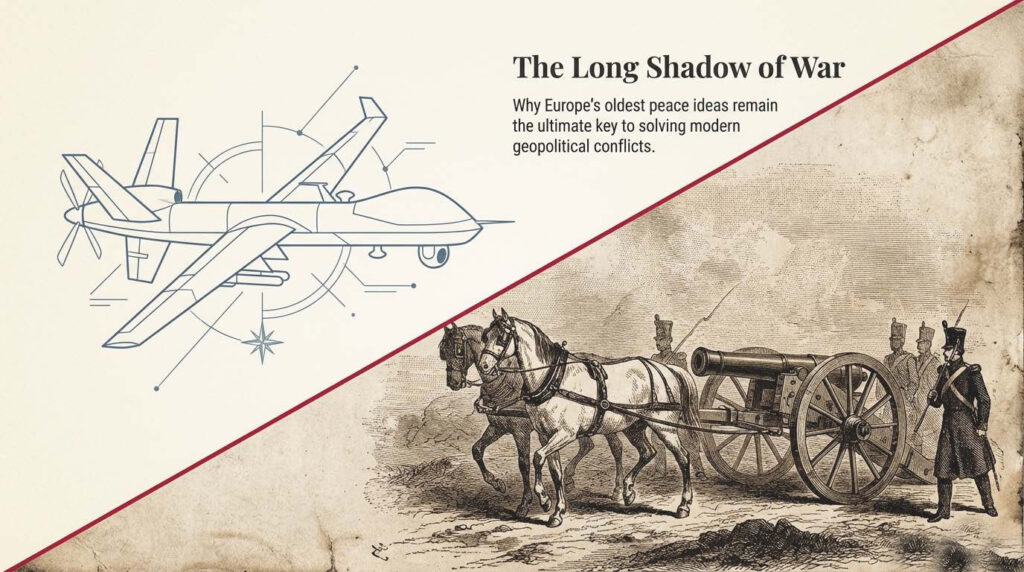
    Why a conflict like the one between America and Iran is bringing Europe’s old ideas of peace back into focus.

    This article by Radio-Nice.Club addresses the timeless relevance of historical concepts of peace in light of modern global tensions, such as the conflict between the US and Iran. The text highlights influential thinkers such as Bertha von Suttner, Bertrand Russell, and Alfred Nobel, who understood war not as a heroic epic, but as an irrational human failure. Despite technological advances in weapons systems, political dynamics often remain trapped in outdated patterns of escalation and deterrence. The source argues for reviving the diplomatic traditions of the 19th century in order to replace military logic with institutional negotiations. Ultimately, it emphasizes that lasting stability can only be achieved by overcoming warlike thinking itself, not by mere force of arms. European history serves as a cautionary example of the need for civilized conflict resolution.

    There are moments in history when the world suddenly seems old again. The current conflict between the United States and Iran is one such moment. Missiles, drones, air strikes – the technical forms have changed, but the political drama seems familiar: mistrust, power projection, escalation. And yet it is a strange irony of history that it is precisely at such moments that the voices of the past become audible again. Voices from a time when Europe itself was a continent of permanent war – and at the same time began to think about peace.

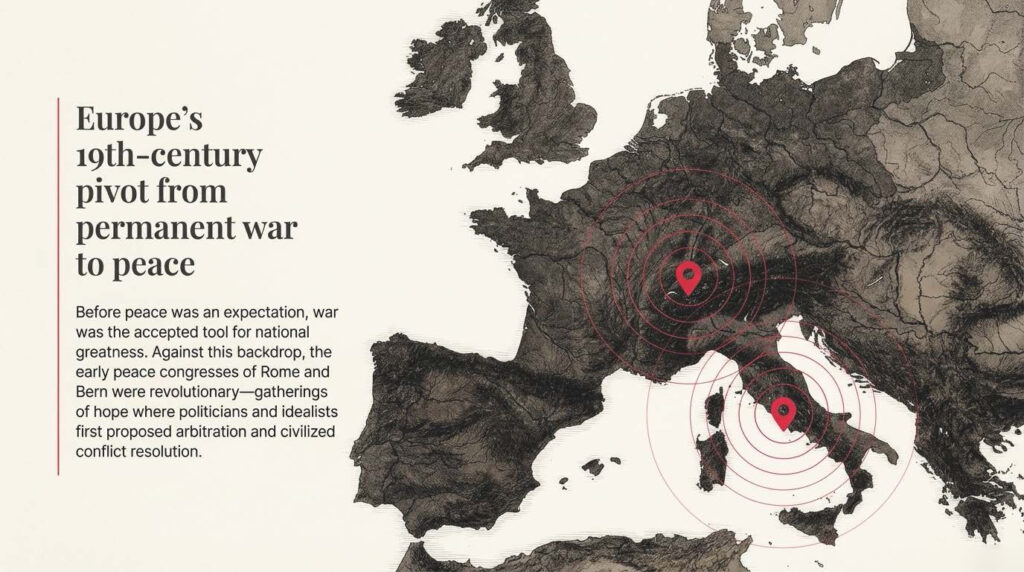
    In the late 19th century, politicians, lawyers, writers, and idealists met at international peace congresses in Rome, Bern, and elsewhere. These were not summits of power. They were rather gatherings of hope. They discussed arbitration tribunals between states, diplomatic mediation, and the possibility of civilizing conflicts. Today, such ideas seem almost self-evident. But at the time, they were revolutionary.

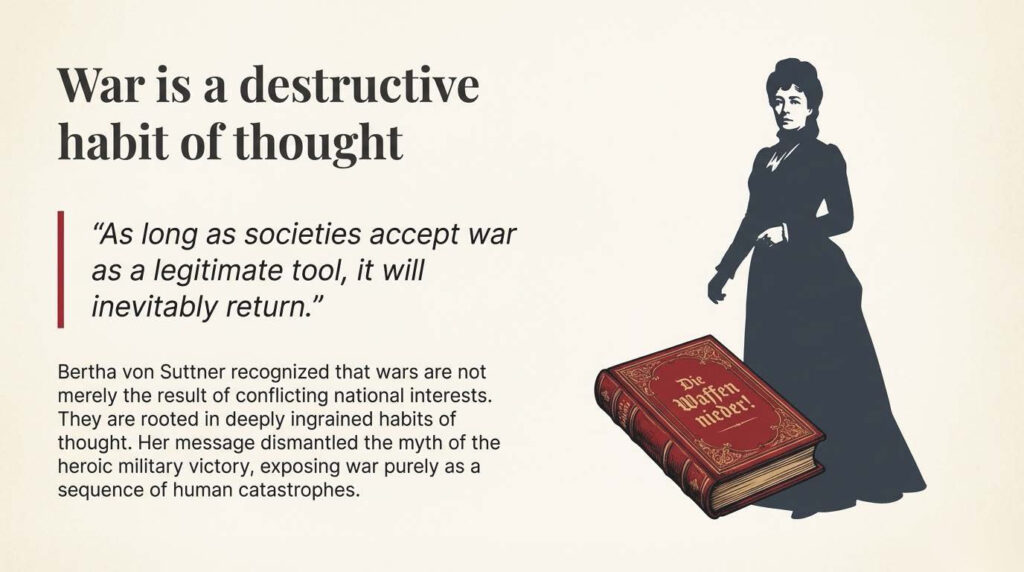
    The idea that war did not have to be the natural means of politics was by no means a consensus in 19th-century Europe. Many considered war a legitimate instrument of national greatness. Military victories established states, shifted borders, and created national myths. It was into this world that the Austrian pacifist Bertha von Suttner wrote her novel Die Waffen nieder! (Lay Down Your Arms!). The book was less literature than a political statement. Suttner did not portray war as a heroic event, but as a series of human catastrophes. Her central idea was remarkably modern: wars arise not only from interests, but also from habits of thought. As long as societies accept war as a legitimate means, it will always return.

    Defeating the Logic of War

    Today, this statement sounds almost self-evident. But it was provocative at a time when military parades were part of political normality. As we know, history took a different course. A few decades after the peace congresses, Europe plunged into the First World War. The catastrophe of 1914 was also the failure of that early peace movement. But its ideas did not disappear.

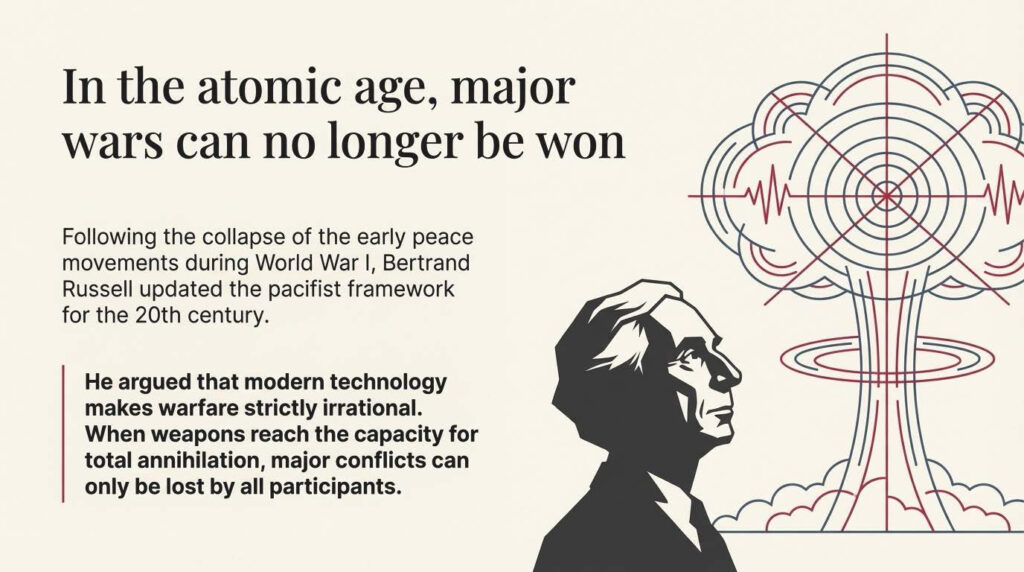
    The British philosopher Bertrand Russell revisited this idea in the 20th century. For Russell, war in the age of modern technology was not only morally questionable, but simply irrational. The more powerful weapons become, the more senseless their use becomes. In the atomic age, Russell argued, a major war could no longer be won. It could only be lost – by all parties involved. One might think that this insight is self-evident today. But international politics seems to forget it time and again.

    In the current conflict between Washington and Tehran, too, the dynamics follow the familiar logic of deterrence. Each side tries to demonstrate strength. Every military action is intended to deter the other side from taking further steps. But it is precisely this logic that often leads to escalation.

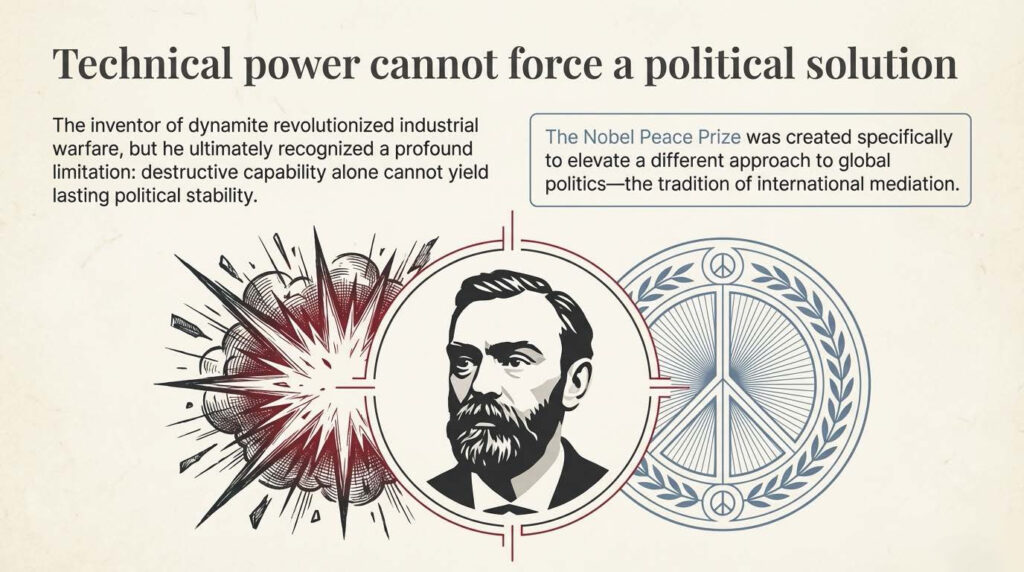
    Another figure from the history of the peace movement seems almost paradoxical today: Alfred Nobel. The man who invented dynamite and thus revolutionized industrial warfare also became the founder of the world’s most famous peace prize. Nobel recognized that technical power alone is not a political solution. His peace prize was intended to honor those who strive for understanding between nations. It was a symbolic attempt to highlight a different tradition in politics—a tradition of mediation.

    Defeating the Logic of War

    Today, this tradition sometimes seems to be falling into oblivion. Military options are discussed more quickly than diplomatic ones. Sanctions replace talks, threats replace negotiations. But history shows that wars are rarely ended by military superiority. They usually end through negotiations, often after long detours. The Cold War, for example, was not decided by military victory, but by a slow political détente. Treaties, summit meetings, diplomatic channels – all of these created a fragile but functioning order.

    Such an order is still lacking in the Middle East today. The conflict between the US and Iran is therefore more than a regional dispute. It is a symptom of a world in which international institutions have become weaker and geopolitical rivalries stronger again. That is precisely why it would be a mistake to view the conflict exclusively in military terms.

    Bertha von Suttner - Die Waffen Nieder - Defeating the Logic of War

    The real challenge lies in creating a political structure that prevents escalation. A new nuclear agreement, regional security guarantees, and international mediation would be possible steps. Europe could play an important role in this. Throughout its history, the continent has learned that lasting stability cannot be achieved through power politics alone. European unification itself is a result of this insight—an attempt to replace conflicts with institutions. Perhaps this is one of the quiet lessons of history: peace agreements rarely emerge in times of calm. They usually arise after crises, when the alternatives become apparent.

    The conflict between America and Iran is still a long way from producing such insight. But that is precisely why it is worth remembering those voices that were already thinking about peace more than a hundred years ago. The peace congresses in Rome and Bern were not spectacular events. They did not prevent war and did not immediately change world politics. But they planted an idea in the political culture: the idea that conflicts between states do not necessarily have to be decided on the battlefield. This idea is perhaps more relevant today than ever before. For in a world where wars are becoming increasingly efficient in technical terms, one old truth remains: the most difficult victory is not the military one. It is the victory over the logic of war itself.

    KK

    Alfred Nobel Peace Price - Defeating_the_Logic_of_War
    Bertrand Russel Tribunal - Defeating the Logic of War

    by Klaus Kampe

  • Sacred Lore and Legends of Provence

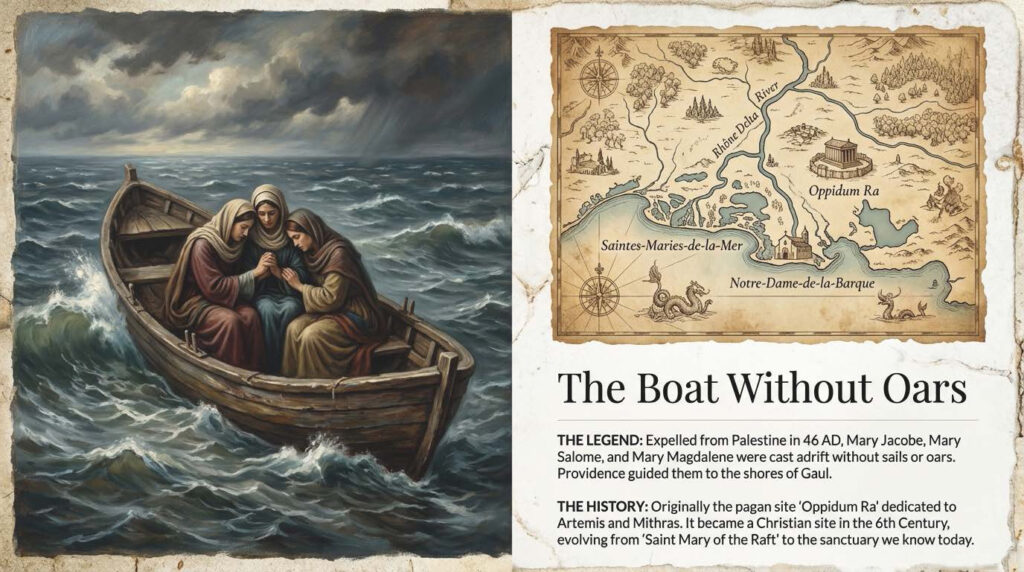
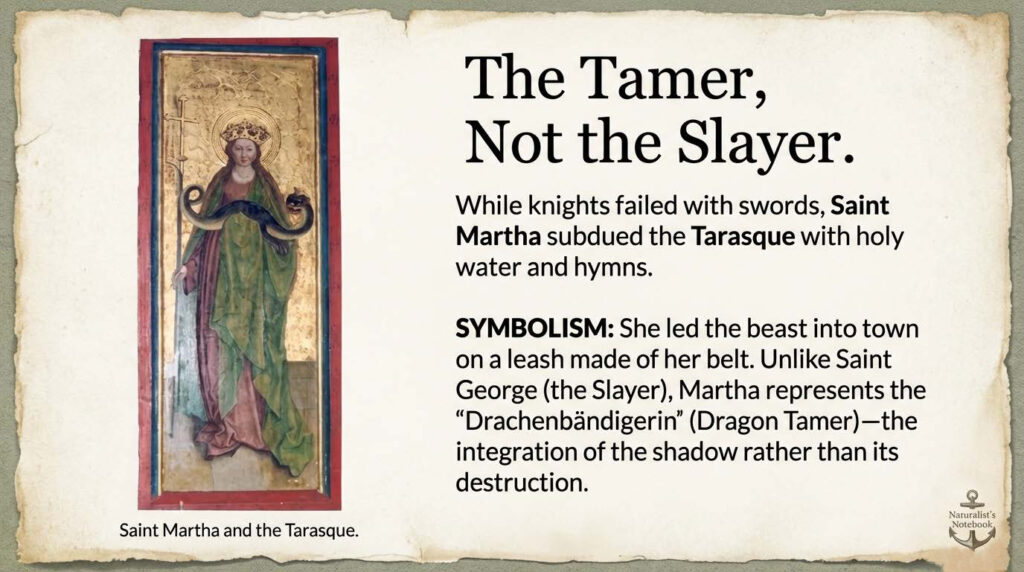
    These sources offer an in-depth examination of Provençal folklore, which combines ancient myths, Christian legends, and the rugged nature of southern France. The focus is on stories about Saint Martha, who tamed the river monster Tarasque, and the arrival of the three Marys in the Camargue. The texts analyze how archaic symbols of female power and natural phenomena such as the Mistral wind were transformed by religious traditions. In addition to regional symbols of identity such as cicadas and lavender, darker aspects such as werewolf beliefs and witch legends are also examined. Overall, the documents show that these myths serve as cultural memory and continue to live on in vibrant customs and festivities to this day.

    Mythic Provence
    Saint Martha and Tarasque

    by Klaus Kampe

Sign In

Register

Reset Password

Please enter your username or email address, you will receive a link to create a new password via email.