These sources deal with the fifth studio album by the rock band Genesis and its cultural and political context. The focus is on the title “Selling England by the Pound”, which plays on the British currency and units of weight to criticise the sell-out of English identity and increasing Americanisation. The texts provide a detailed analysis of the opening track “Dancing with the Moonlit Knight”, which, through its blend of Arthurian legend and modern critique of consumerism, is regarded as a commentary on social decline. In addition, Peter Gabriel’s theatrical live performances and the band’s musical development within the progressive rock genre are examined. Finally, the documents contain references to cultural institutions in Berlin that focus on surrealist art and avant-garde projects.
Author: Patrick
-
The Art of Seal Carving in Japan
The Art of Stamps in Japan – Travel Culture, Graphic Design, and Memories Japan has a unique form of visual travel culture: stamp collecting. What at first glance appears to be a simple souvenir is actually a distinct art form that blends graphic design, tourism marketing, and cultural tradition. Particularly well-known are the so-called eki-bengoshi, or station stamps, which travelers in Japan have been collecting for nearly a century.

Their designs tell stories about places, landscapes, temples, and local identity—and turn a journey into a visual chronicle.
Origins of the Japanese stamp tradition
The modern tradition of collecting travel stamps has two roots.
- Religious pilgrimage stamps (Goshuin)
For centuries, pilgrims have received so-called Goshuin—calligraphic stamps in red ink—at Buddhist temples and Shinto shrines. They serve as proof of a visit and are collected in special books. - Station Stamps (Eki Stamps)
The first station stamp was introduced in Fukui in 1931. The idea was to encourage travelers to collect commemorative stamps along the way and thus visit more places.
Today, there are thousands of such stamps—at train stations, airports, museums, tourist attractions, and even in department stores.
Typical Design of Japanese Travel Stamps
Japanese stamps have their own graphic language:
- mostly circular composition
- place name in Kanji script
- local symbols or landmarks
- often vermilion color (traditional temple red)
- combination of illustration and characters
The stamp is thus a kind of graphic “emblem” of the respective location.
Many designs are even based on kamon, the traditional Japanese family crests.
Examples of Japanese stamps
1. Train station stamps
Train stations are among the most common places for collecting stamps.
Typical motifs::
- famous local buildings
- local specialties
- mascots or historical figures
Examples:
- Tokyo Station
A stamp featuring the kanji 東 (“East”) and Tokyo Tower. - Ryōgoku Station
Depiction of a sumo wrestler – a symbol of the neighborhood’s traditional sumo wrestling. - Enoshima Station
Depiction of the coastline and a surfing mascot.
These stamps are usually free and are available on small tables next to the ticket counters.
2. Stamps from Tourist Attractions
Tourist attractions also have their own stamps.
Typical motifs:
- historical buildings
- landscapesn
- cultural symbols
Examples:
- Aizu-Wakamatsu Castle
Aizu-Wakamatsu Castle - Stamp featuring the castle and the legendary red cow figure Akabeko.
- Jigokudani Monkey Park
Stamp featuring the famous snow monkeys.
These stamps combine tourism with the region’s visual identity.
3. Airport Stamps
Airports also participate in this stamp-collecting culture.
Example:
- Narita International Airport
Stempel zeigen häufig Flugzeuge, Terminalgebäude oder das Wahrzeichen der Region.
Airport stamps are particularly popular among international travelers.
4. Temple and Shrine Stamps
Religious stamps are a particularly artistic variation.
Example:
- Kongobu-ji
Stamps featuring calligraphic characters, temple seals, and the date.
These goshuin are often handwritten by monks and therefore possess an almost calligraphic quality.
Stamp rallies – collecting as a game
Japanese railway companies regularly organize so-called stamp rallies.
In these events, travelers receive:
- a collection card
- several stamp stations
- small prizes upon completing the collection
These events combine travel with playful exploration of the cities.
Comparison with Europe
Stamp culture also exists in Europe—though in a different form.
Aspect Japan Europe Prevalence very widespread (train stations, museums, temples) rare Design artistic graphic illustrations mostly simple text stamps Tradition religious pilgrimage stamps for centuries more of a modern tourist practice Collecting culture socially accepted hobby more of a niche interest Accessibility mostly freely accessible often only at tourist offices Examples in Europe
- Pilgrimage stamps on the Camino de Santiago
- Museum and visitor center stamps
- Special stamps from post offices
The European variants, however, are often functional—less graphically elaborate.
Cultural significance
Japanese stamp art reflects three cultural principles:
1. Culture of remembrance
Travel is understood as a collection of visual moments.2. Local identity
Each stamp is a graphic portrait of a city.3. Democratic art
Unlike museum exhibits, these mini-prints are freely accessible and available to every traveler.This creates a kind of graphic atlas of Japan that exists not in a museum, but in thousands of small notebooks.
Conclusion
While stamps in Europe mostly serve administrative functions, Japan has developed them into a distinct art form. The small round prints combine graphic design, local culture, and the travel experience—and turn every trip into a personal art archive.
- Religious pilgrimage stamps (Goshuin)
-
The long shadow of war
Why a conflict like the one between America and Iran is bringing Europe’s old ideas of peace back into focus.
This article by Radio-Nice.Club addresses the timeless relevance of historical concepts of peace in light of modern global tensions, such as the conflict between the US and Iran. The text highlights influential thinkers such as Bertha von Suttner, Bertrand Russell, and Alfred Nobel, who understood war not as a heroic epic, but as an irrational human failure. Despite technological advances in weapons systems, political dynamics often remain trapped in outdated patterns of escalation and deterrence. The source argues for reviving the diplomatic traditions of the 19th century in order to replace military logic with institutional negotiations. Ultimately, it emphasizes that lasting stability can only be achieved by overcoming warlike thinking itself, not by mere force of arms. European history serves as a cautionary example of the need for civilized conflict resolution.
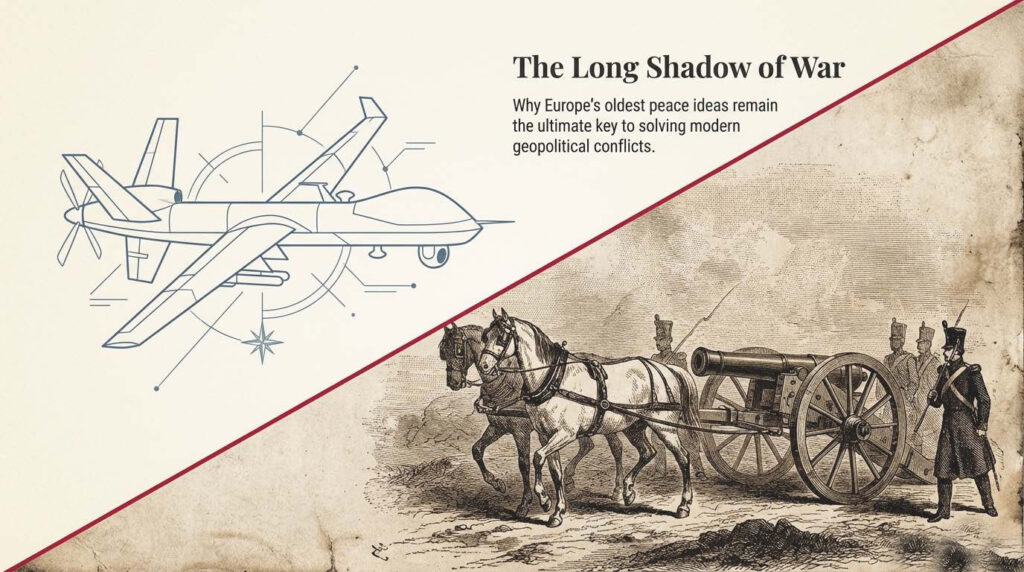
There are moments in history when the world suddenly seems old again. The current conflict between the United States and Iran is one such moment. Missiles, drones, air strikes – the technical forms have changed, but the political drama seems familiar: mistrust, power projection, escalation. And yet it is a strange irony of history that it is precisely at such moments that the voices of the past become audible again. Voices from a time when Europe itself was a continent of permanent war – and at the same time began to think about peace.
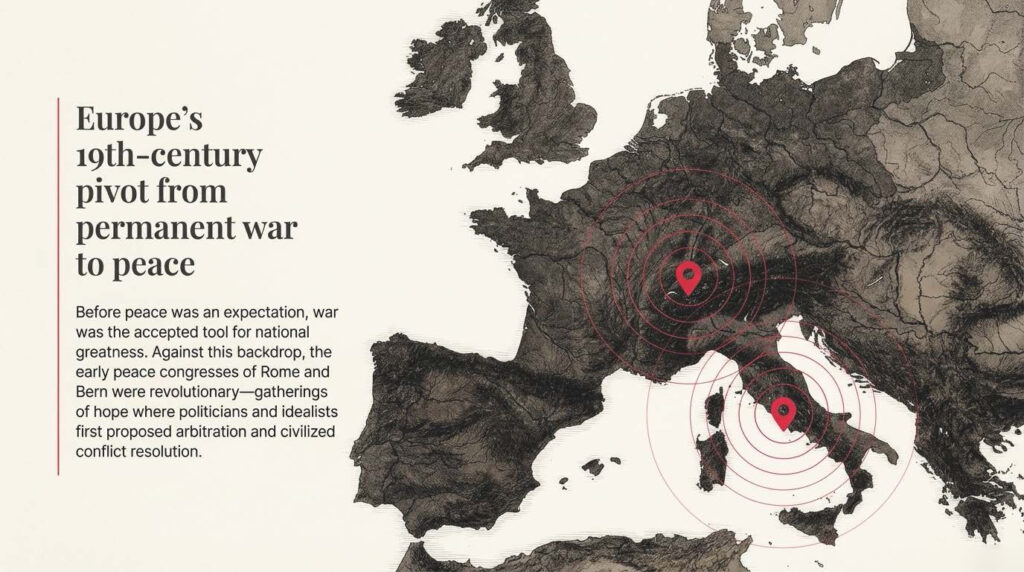
In the late 19th century, politicians, lawyers, writers, and idealists met at international peace congresses in Rome, Bern, and elsewhere. These were not summits of power. They were rather gatherings of hope. They discussed arbitration tribunals between states, diplomatic mediation, and the possibility of civilizing conflicts. Today, such ideas seem almost self-evident. But at the time, they were revolutionary.
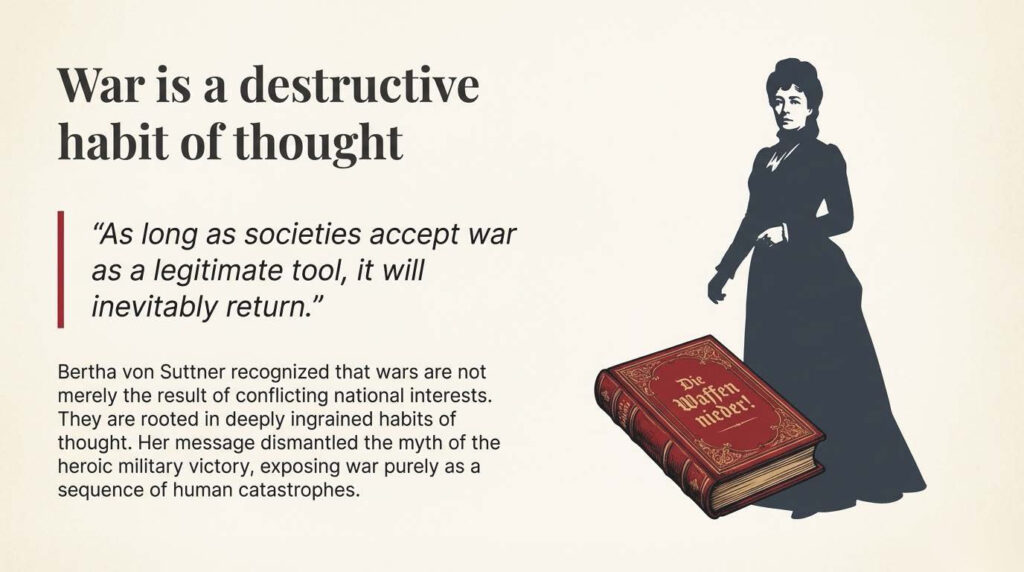
The idea that war did not have to be the natural means of politics was by no means a consensus in 19th-century Europe. Many considered war a legitimate instrument of national greatness. Military victories established states, shifted borders, and created national myths. It was into this world that the Austrian pacifist Bertha von Suttner wrote her novel Die Waffen nieder! (Lay Down Your Arms!). The book was less literature than a political statement. Suttner did not portray war as a heroic event, but as a series of human catastrophes. Her central idea was remarkably modern: wars arise not only from interests, but also from habits of thought. As long as societies accept war as a legitimate means, it will always return.
Today, this statement sounds almost self-evident. But it was provocative at a time when military parades were part of political normality. As we know, history took a different course. A few decades after the peace congresses, Europe plunged into the First World War. The catastrophe of 1914 was also the failure of that early peace movement. But its ideas did not disappear.
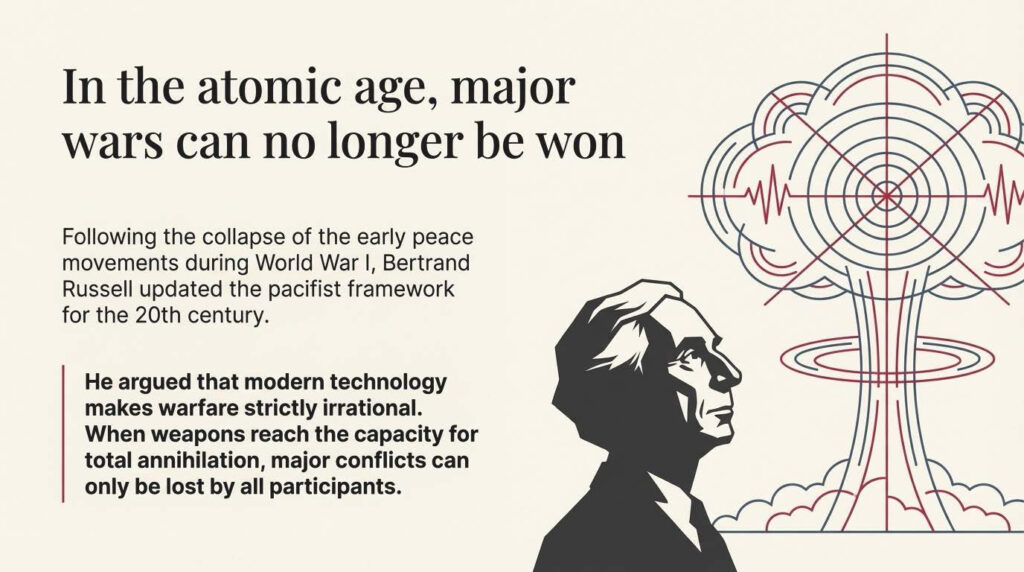
The British philosopher Bertrand Russell revisited this idea in the 20th century. For Russell, war in the age of modern technology was not only morally questionable, but simply irrational. The more powerful weapons become, the more senseless their use becomes. In the atomic age, Russell argued, a major war could no longer be won. It could only be lost – by all parties involved. One might think that this insight is self-evident today. But international politics seems to forget it time and again.
In the current conflict between Washington and Tehran, too, the dynamics follow the familiar logic of deterrence. Each side tries to demonstrate strength. Every military action is intended to deter the other side from taking further steps. But it is precisely this logic that often leads to escalation.
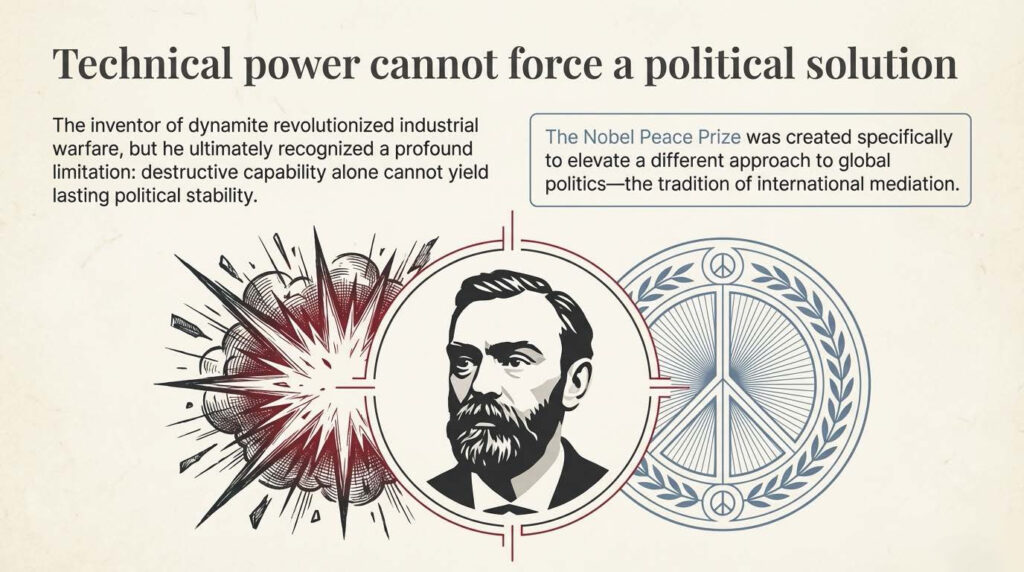
Another figure from the history of the peace movement seems almost paradoxical today: Alfred Nobel. The man who invented dynamite and thus revolutionized industrial warfare also became the founder of the world’s most famous peace prize. Nobel recognized that technical power alone is not a political solution. His peace prize was intended to honor those who strive for understanding between nations. It was a symbolic attempt to highlight a different tradition in politics—a tradition of mediation.
Today, this tradition sometimes seems to be falling into oblivion. Military options are discussed more quickly than diplomatic ones. Sanctions replace talks, threats replace negotiations. But history shows that wars are rarely ended by military superiority. They usually end through negotiations, often after long detours. The Cold War, for example, was not decided by military victory, but by a slow political détente. Treaties, summit meetings, diplomatic channels – all of these created a fragile but functioning order.
Such an order is still lacking in the Middle East today. The conflict between the US and Iran is therefore more than a regional dispute. It is a symptom of a world in which international institutions have become weaker and geopolitical rivalries stronger again. That is precisely why it would be a mistake to view the conflict exclusively in military terms.
The real challenge lies in creating a political structure that prevents escalation. A new nuclear agreement, regional security guarantees, and international mediation would be possible steps. Europe could play an important role in this. Throughout its history, the continent has learned that lasting stability cannot be achieved through power politics alone. European unification itself is a result of this insight—an attempt to replace conflicts with institutions. Perhaps this is one of the quiet lessons of history: peace agreements rarely emerge in times of calm. They usually arise after crises, when the alternatives become apparent.
The conflict between America and Iran is still a long way from producing such insight. But that is precisely why it is worth remembering those voices that were already thinking about peace more than a hundred years ago. The peace congresses in Rome and Bern were not spectacular events. They did not prevent war and did not immediately change world politics. But they planted an idea in the political culture: the idea that conflicts between states do not necessarily have to be decided on the battlefield. This idea is perhaps more relevant today than ever before. For in a world where wars are becoming increasingly efficient in technical terms, one old truth remains: the most difficult victory is not the military one. It is the victory over the logic of war itself.
KK
-
When the Riviera was still an artists’ paradise
Today, the Côte d’Azur is synonymous with yachts, film festivals, and luxury resorts. Places like Saint-Tropez, Cannes, and Antibes are among the most glamorous destinations in Europe. But long before movie stars and oligarchs filled the harbors, the Riviera was a retreat for painters—a quiet laboratory of modernism.
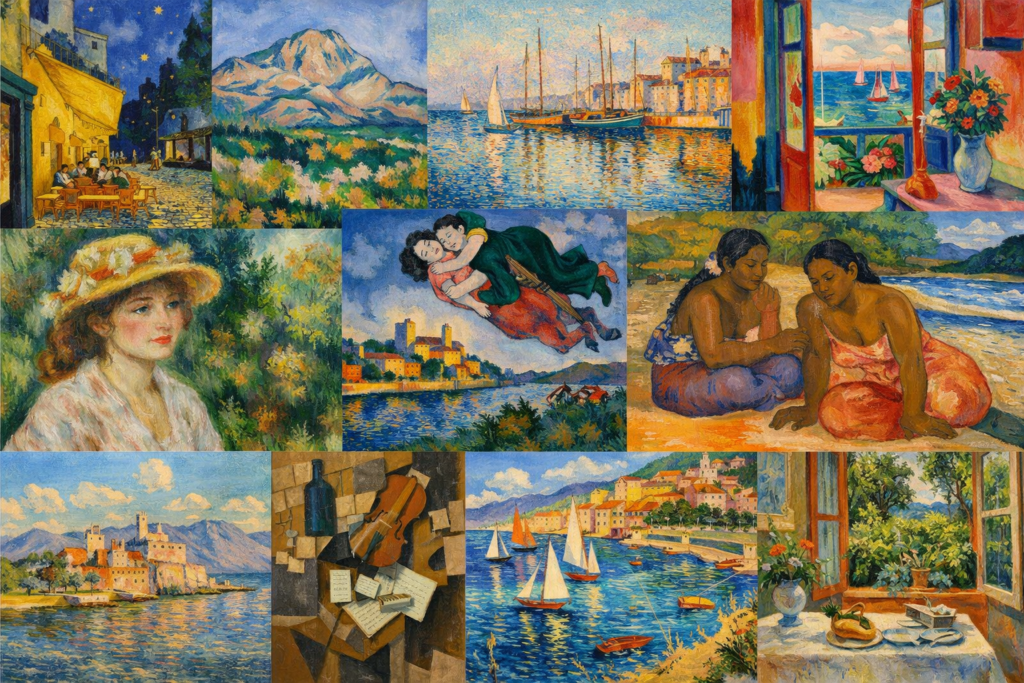
In the late 19th century, the coast between Italy and Marseille was still a relatively quiet region of fishing villages, olive groves, and small port towns. The railway line along the Mediterranean coast, built in the 1860s, made the landscape easily accessible to travelers and artists for the first time.
With these new connections, a cultural movement began that would change the history of art.
The discovery of the south
Among the first painters to be attracted by the Mediterranean light were Impressionists such as Claude Monet and Pierre-Auguste Renoir.
They were looking for new motifs beyond the gray boulevards of Paris. The Riviera offered them something they could hardly find in the north: clear air, intense colors, and a light that bathed the landscape in sharp contrasts.
Renoir eventually settled permanently in Cagnes-sur-Mer. His house, surrounded by old olive trees, became a quiet open-air studio.
Other artists also began to discover the region—not as a fashionable vacation destination, but as a place of artistic freedom.
Van Gogh and the search for the south
For Vincent van Gogh, the south was almost a mythological place. When he arrived in Arles in 1888, he believed he could establish a new artistic community here—an “atelier of the south.”
Arles seemed to him like a European version of Japan: bright light, clear colors, simple landscapes.
In less than two years, he created some of his most famous works there. The sunflowers, the starry night over the Rhône, and the yellow houses of the city became icons of modern painting.
But Van Gogh’s vision of an artists’ collective failed. His mental crisis and famous quarrel with Paul Gauguin meant that the dream of the studio of the south never became reality.
And yet the idea remained: the South as a place for a new art.
Cézanne and the architecture of the landscape
While Van Gogh painted the South as an emotional experience, Paul Cézanne viewed his native landscape with almost scientific concentration.
Living in Aix-en-Provence, he repeatedly hiked to a mountain that would later become world-famous: Montagne Sainte-Victoire.
Cézanne painted it dozens of times. But he didn’t just want to depict the appearance of the mountain; he wanted to make its structure visible. He broke down houses, trees, and hills into geometric shapes.
This seemingly simple idea became the foundation of modern art.
Later artists such as Georges Braque and Pablo Picasso developed Cubism from it.
Artists’ colonies by the sea
At the turn of the century, the Riviera slowly began to transform into an international artists’ landscape.
In 1892, the Neo-Impressionist Paul Signac discovered the small port of Saint-Tropez. Enthused by the light and colors of the sea, he bought a house there.
His studio soon became a meeting place for artists. Signac worked with the technique of pointillism – tiny dots of color that combine from a distance to form luminous landscapes.
In his paintings, the port of Saint-Tropez appeared as a shimmering mosaic of blue, yellow, and orange.
The explosion of color
In 1905, another decisive moment in art history occurred.
Two young painters, Henri Matisse and André Derain, were working together in the small Catalan port of Collioure.
The two decided to radically repaint the landscape. They used pure, unmixed colors – violet shadows, green skies, red trees.
When these paintings were exhibited at the Paris Autumn Salon, critics reacted with shock. One mockingly called the artists “les fauves” – the wild beasts.
But it was precisely this “wildness” that made the movement famous.
A quiet retreat
Not all artists were looking for revolutionary manifestos. Some found peace and quiet on the Riviera.
Pierre Bonnard lived for many years in Le Cannet above Cannes. His paintings depict intimate scenes: a laid table, a bathroom, a garden in the afternoon light.
Marc Chagall also moved to the medieval village of Saint-Paul-de-Vence after the Second World War. It was there that he created his poetic paintings full of floating figures and bright colors.
From artists’ paradise to myth
Over the course of the 20th century, the Riviera underwent fundamental changes. Tourism boomed, large hotels were built, and later film festivals, marinas, and luxury villas followed.
The landscape remained the same, but its significance shifted.
Where painters once sought new forms and colors, visitors now came in search of sun and glamour.
Nevertheless, some of the old atmosphere has been preserved. In the alleys of Arles, in the hills of Aix, or in the quiet streets of Saint-Paul-de-Vence, you can still sense why this region once attracted artists from all over Europe.
Because before the Riviera became the stage for the international jet set, it was one thing above all else:
a place where modern art was born.
Heute ist die Côte d’Azur ein Synonym für Yachten, Filmfestivals und Luxusresorts. Orte wie Saint-Tropez, Cannes oder Antibes gehören zu den glamourösesten Destinationen Europas. Doch lange bevor Filmstars und Oligarchen die Häfen füllten, war die Riviera ein Rückzugsort für Maler – ein stilles Labor der Moderne.
Im späten 19. Jahrhundert war die Küste zwischen Italien und Marseille noch eine vergleichsweise ruhige Region aus Fischerdörfern, Olivenhainen und kleinen Hafenstädten. Die Eisenbahnlinie entlang der Mittelmeerküste, die in den 1860er Jahren gebaut wurde, machte die Landschaft erstmals für Reisende und Künstler leicht erreichbar.
Mit den neuen Verbindungen begann eine kulturelle Bewegung, die die Kunstgeschichte verändern sollte.
Die Entdeckung des Südens
Zu den ersten Malern, die sich vom mediterranen Licht angezogen fühlten, gehörten Impressionisten wie Claude Monet und Pierre-Auguste Renoir.
Sie suchten nach neuen Motiven jenseits der grauen Pariser Boulevards. Die Riviera bot ihnen etwas, das sie im Norden kaum fanden: klare Luft, intensive Farben und ein Licht, das die Landschaft in scharfe Kontraste tauchte.
Renoir ließ sich schließlich dauerhaft in Cagnes-sur-Mer nieder. Sein Haus inmitten alter Olivenbäume wurde zu einem stillen Atelier unter freiem Himmel.
Auch andere Künstler begannen, die Region zu entdecken – nicht als mondäne Ferienlandschaft, sondern als Ort künstlerischer Freiheit.
Van Gogh und die Suche nach dem Süden
Für Vincent van Gogh war der Süden fast ein mythologischer Ort. Als er 1888 nach Arles kam, glaubte er, hier eine neue künstlerische Gemeinschaft gründen zu können – ein „Atelier des Südens“.
Arles erschien ihm wie eine europäische Version Japans: grelles Licht, klare Farben, einfache Landschaften.
In weniger als zwei Jahren schuf er dort einige seiner berühmtesten Werke. Die Sonnenblumen, die Sternennacht über der Rhône oder die gelben Häuser der Stadt wurden zu Ikonen der modernen Malerei.
Doch Van Goghs Vision eines Künstlerkollektivs scheiterte. Seine psychische Krise und der berühmte Streit mit Paul Gauguin führten dazu, dass der Traum vom Atelier des Südens nie Wirklichkeit wurde.
Und doch blieb die Idee bestehen: Der Süden als Ort einer neuen Kunst.
Cézanne und die Architektur der Landschaft
Während Van Gogh den Süden als emotionales Erlebnis malte, betrachtete Paul Cézanne seine Heimatlandschaft mit fast wissenschaftlicher Konzentration.
In Aix-en-Provence lebend, wanderte er immer wieder zu einem Berg, der später weltberühmt werden sollte: der Montagne Sainte-Victoire.
Cézanne malte ihn dutzende Male. Doch er wollte nicht nur die Erscheinung des Berges darstellen, sondern seine Struktur sichtbar machen. Häuser, Bäume und Hügel zerlegte er in geometrische Formen.
Diese scheinbar einfache Idee wurde zum Fundament der modernen Kunst.
Spätere Künstler wie Georges Braque und Pablo Picasso entwickelten daraus den Kubismus.
Künstlerkolonien am Meer
Um die Jahrhundertwende begann sich die Riviera langsam in eine internationale Künstlerlandschaft zu verwandeln.
Der Neoimpressionist Paul Signac entdeckte 1892 den kleinen Hafen von Saint-Tropez. Begeistert vom Licht und den Farben des Meeres kaufte er dort ein Haus.
Sein Atelier wurde bald zu einem Treffpunkt für Künstler. Signac arbeitete mit der Technik des Pointillismus – winzige Farbpunkte, die sich aus der Entfernung zu leuchtenden Landschaften verbinden.
Der Hafen von Saint-Tropez erschien in seinen Bildern wie ein flimmerndes Mosaik aus Blau, Gelb und Orange.
Die Explosion der Farbe
1905 ereignete sich ein weiterer entscheidender Moment der Kunstgeschichte.
Im kleinen katalanischen Hafen Collioure arbeiteten zwei junge Maler zusammen: Henri Matisse und André Derain.
Die beiden beschlossen, die Landschaft radikal neu zu malen. Sie verwendeten reine, ungemischte Farben – violette Schatten, grüne Himmel, rote Bäume.
Als diese Bilder im Pariser Herbstsalon ausgestellt wurden, reagierten Kritiker schockiert. Einer nannte die Künstler spöttisch „les fauves“ – die wilden Tiere.
Doch genau diese „Wildheit“ machte die Bewegung berühmt.
Ein stiller Rückzugsort
Nicht alle Künstler suchten nach revolutionären Manifesten. Manche fanden an der Riviera vor allem Ruhe.
So lebte Pierre Bonnard viele Jahre in Le Cannet oberhalb von Cannes. Seine Bilder zeigen intime Szenen: einen gedeckten Tisch, ein Badezimmer, einen Garten im Nachmittaglicht.
Auch Marc Chagall zog nach dem Zweiten Weltkrieg in das mittelalterliche Dorf Saint-Paul-de-Vence. Dort entstanden seine poetischen Bilder voller schwebender Figuren und leuchtender Farben.
Vom Künstlerparadies zum Mythos
Im Laufe des 20. Jahrhunderts veränderte sich die Riviera grundlegend. Der Tourismus boomte, große Hotels entstanden, später folgten Filmfestivals, Yachthäfen und Luxusvillen.
Die Landschaft blieb zwar dieselbe – doch ihre Bedeutung verschob sich.
Wo einst Maler nach neuen Formen und Farben suchten, kamen nun Besucher auf der Suche nach Sonne und Glamour.
Dennoch hat sich ein Teil der alten Atmosphäre erhalten. In den Gassen von Arles, in den Hügeln von Aix oder in den stillen Straßen von Saint-Paul-de-Vence kann man noch immer erahnen, warum diese Region einst Künstler aus ganz Europa anzog.
Denn bevor die Riviera zur Bühne des internationalen Jetsets wurde, war sie vor allem eines:
Ein Ort, an dem die moderne Kunst geboren wurde.
Heute ist die Côte d’Azur ein Synonym für Yachten, Filmfestivals und Luxusresorts. Orte wie Saint-Tropez, Cannes oder Antibes gehören zu den glamourösesten Destinationen Europas. Doch lange bevor Filmstars und Oligarchen die Häfen füllten, war die Riviera ein Rückzugsort für Maler – ein stilles Labor der Moderne.
Im späten 19. Jahrhundert war die Küste zwischen Italien und Marseille noch eine vergleichsweise ruhige Region aus Fischerdörfern, Olivenhainen und kleinen Hafenstädten. Die Eisenbahnlinie entlang der Mittelmeerküste, die in den 1860er Jahren gebaut wurde, machte die Landschaft erstmals für Reisende und Künstler leicht erreichbar.
Mit den neuen Verbindungen begann eine kulturelle Bewegung, die die Kunstgeschichte verändern sollte.
Die Côte d’Azur und Südfrankreich wurden im späten 19. und frühen 20. Jahrhundert zu einem einzigartigen Magneten für Künstler. Das Licht, die Farben des Meeres und die besondere Atmosphäre zwischen Mittelmeer und Hügeln wirkten wie ein Labor der Moderne. Maler aus unterschiedlichen Strömungen – Impressionismus, Fauvismus, Postimpressionismus und frühe Moderne – fanden hier neue Ausdrucksformen. Zu den bedeutendsten gehören André Derain, Henri Matisse, Pierre-Auguste Renoir, Raoul Dufy, Georges Braque, Marc Chagall, Paul Signac, Pierre Bonnard, Claude Monet, Paul Gauguin, Paul Cézanne und Vincent van Gogh. Ihre Werke markieren den Übergang von der klassischen Landschaftsmalerei zur radikalen Bildsprache der Moderne.
Das Licht des Südens – Wie die Moderne entstand
Bereits im 19. Jahrhundert zog das außergewöhnliche Licht des Mittelmeerraums Künstler an. Die klaren Farben, das intensive Blau des Himmels und die scharfen Schatten unterschieden sich stark vom diffusen Licht Nordfrankreichs oder der Pariser Ateliers.
Der Impressionist Claude Monet suchte in seinen Landschaften genau diese flüchtigen Momente des Lichts. Seine Malweise löste die festen Konturen auf und verwandelte die Natur in vibrierende Farbflächen. Monet bereitete damit den Boden für eine neue Generation von Künstlern.
Auch Pierre-Auguste Renoir zog es später an die Riviera. In seinem Haus in Cagnes-sur-Mer entstanden spätimpressionistische Bilder voller Wärme und mediterraner Helligkeit. Seine Figuren wirken weicher, ruhiger und fast zeitlos – als hätte das Licht des Südens auch die Malerei selbst beruhigt.
Cézanne und van Gogh – Die Revolution der Form
Eine entscheidende Brücke zwischen Impressionismus und Moderne bildet Paul Cézanne aus Aix-en-Provence. Während Monet die flüchtige Erscheinung der Natur malte, suchte Cézanne nach ihrer inneren Struktur. Berge, Bäume und Häuser zerlegte er in geometrische Formen. Besonders seine Darstellungen der Montagne Sainte-Victoire wurden zu einem Schlüsselwerk der modernen Malerei.
Auch Vincent van Gogh erlebte im Süden Frankreichs eine künstlerische Explosion. Während seiner Zeit in Arles malte er Sonnenblumen, Sternennächte und glühende Landschaften mit einer Intensität, die weit über den Impressionismus hinausging. Farbe wurde bei ihm zum Ausdruck innerer Emotionen.
Die Explosion der Farbe – Fauvismus
Zu Beginn des 20. Jahrhunderts radikalisierte eine neue Künstlergeneration den Umgang mit Farbe. Die sogenannten „Fauves“ („wilde Tiere“) verwendeten reine, ungemischte Farbtöne.
Im Sommer 1905 arbeiteten Henri Matisse und André Derain im kleinen Hafen von Collioure. Dort entstanden Landschaften mit grellen Orangen, intensiven Grüntönen und violetten Schatten. Farbe wurde nicht mehr zur Beschreibung der Natur verwendet – sie wurde selbst zum Ausdrucksmittel.
Diese Befreiung der Farbe prägte auch den Maler Raoul Dufy. Seine Bilder zeigen Segelboote, Strände und Städte der Riviera mit leichten,
-
Heinrich Heine – Deutschland
Ein Wintermärchen
Im traurigen Monat November war’s,
Die Tage wurden trüber,
Der Wind riß von den Bäumen das Laub,
Da reist ich nach Deutschland hinüber.Und als ich an die Grenze kam,
Da fühlt ich ein stärkeres Klopfen
In meiner Brust, ich glaube sogar
Die Augen begannen zu tropfen.Und als ich die deutsche Sprache vernahm,
Da ward mir seltsam zumute;
Ich meinte nicht anders, als ob das Herz
Recht angenehm verblute.Ein kleines Harfenmädchen sang.
Sie sang mit wahrem Gefühle
Und falscher Stimme, doch ward ich sehr
Gerühret von ihrem Spiele.Sie sang von Liebe und Liebesgram,
Aufopfrung und Wiederfinden
Dort oben, in jener besseren Welt,
Wo alle Leiden schwinden.Sie sang vom irdischen Jammertal,
Von Freuden, die bald zerronnen,
Vom jenseits, wo die Seele schwelgt
Verklärt in ew’gen Wonnen.Sie sang das alte Entsagungslied,
Das Eiapopeia vom Himmel,
Womit man einlullt, wenn es greint,
Das Volk, den großen Lümmel.Ich kenne die Weise, ich kenne den Text,
Ich kenn auch die Herren Verfasser;
Ich weiß, sie tranken heimlich Wein
Und predigten öffentlich Wasser.Ein neues Lied, ein besseres Lied,
O Freunde, will ich euch dichten!
Wir wollen hier auf Erden schon
Das Himmelreich errichten.Wir wollen auf Erden glücklich sein,
Und wollen nicht mehr darben;
Verschlemmen soll nicht der faule Bauch,
Was fleißige Hände erwarben.Es wächst hienieden Brot genug
Für alle Menschenkinder,
Auch Rosen und Myrten, Schönheit und Lust,
Und Zuckererbsen nicht minder.Ja, Zuckererbsen für jedermann,
Sobald die Schoten platzen!
Den Himmel überlassen wir
Den Engeln und den Spatzen.Und wachsen uns Flügel nach dem Tod,
So wollen wir euch besuchen
Dort oben, und wir, wir essen mit euch
Die seligsten Torten und Kuchen.Ein neues Lied, ein besseres Lied!
Es klingt wie Flöten und Geigen!
Das Miserere ist vorbei,
Die Sterbeglocken schweigen.Die Jungfer Europa ist verlobt
Mit dem schönen Geniusse
Der Freiheit, sie liegen einander im Arm,
Sie schwelgen im ersten Kusse.Und fehlt der Pfaffensegen dabei,
Die Ehe wird gültig nicht minder –
Es lebe Bräutigam und Braut,
Und ihre zukünftigen Kinder!Ein Hochzeitkarmen ist mein Lied,
Das bessere, das neue!
In meiner Seele gehen auf
Die Sterne der höchsten Weihe –Begeisterte Sterne, sie lodern wild,
Zerfließen in Flammenbächen –
Ich fühle mich wunderbar erstarkt,
Ich könnte Eichen zerbrechen!Seit ich auf deutsche Erde trat,
Durchströmen mich Zaubersäfte –
Der Riese hat wieder die Mutter berührt,
Und es wuchsen ihm neu die Kräfte.Während die Kleine von Himmelslust
Getrillert und musizieret,
Ward von den preußischen Douaniers
Mein Koffer visitieret.Beschnüffelten alles, kramten herum
In Hemden, Hosen, Schnupftüchern;
Sie suchten nach Spitzen, nach Bijouterien,
Auch nach verbotenen Büchern.Ihr Toren, die ihr im Koffer sucht!
Hier werdet ihr nichts entdecken!
Die Konterbande, die mit mir reist,
Die hab ich im Kopfe stecken.Hier hab ich Spitzen, die feiner sind
Als die von Brüssel und Mecheln,
Und pack ich einst meine Spitzen aus,
Sie werden euch sticheln und hecheln.Im Kopfe trage ich Bijouterien,
Der Zukunft Krondiamanten,
Die Tempelkleinodien des neuen Gotts,
Des großen Unbekannten.Und viele Bücher trag ich im Kopf!
Ich darf es euch versichern,
Mein Kopf ist ein zwitscherndes Vogelnest
Von konfiszierlichen Büchern.Glaubt mir, in Satans Bibliothek
Kann es nicht schlimmere geben;
Sie sind gefährlicher noch als die
Von Hoffmann von Fallersleben! –Ein Passagier, der neben mir stand,
Bemerkte, ich hätte
Jetzt vor mir den preußischen Zollverein,
Die große Douanenkette.»Der Zollverein« – bemerkte er –
»Wird unser Volkstum begründen,
Er wird das zersplitterte Vaterland
Zu einem Ganzen verbinden.Er gibt die äußere Einheit uns,
Die sogenannt materielle;
Die geistige Einheit gibt uns die Zensur,
Die wahrhaft ideelle –Sie gibt die innere Einheit uns,
Die Einheit im Denken und Sinnen;
Ein einiges Deutschland tut uns not,
Einig nach außen und innen.«Zu Aachen, im alten Dome, liegt
Carolus Magnus begraben.
(Man muß ihn nicht verwechseln mit Karl
Mayer, der lebt in Schwaben.)Ich möchte nicht tot und begraben sein
Als Kaiser zu Aachen im Dome;
Weit lieber lebt’ ich als kleinster Poet
Zu Stukkert am Neckarstrome.Zu Aachen langweilen sich auf der Straß’
Die Hunde, sie flehn untertänig:
»Gib uns einen Fußtritt, o Fremdling, das wird
Vielleicht uns zerstreuen ein wenig.«Ich bin in diesem langweil’gen Nest
Ein Stündchen herumgeschlendert.
Sah wieder preußisches Militär,
Hat sich nicht sehr verändert.Es sind die grauen Mäntel noch
Mit dem hohen, roten Kragen –
(Das Rot bedeutet Franzosenblut,
Sang Körner in früheren Tagen.)Noch immer das hölzern pedantische Volk,
Noch immer ein rechter Winkel
In jeder Bewegung, und im Gesicht
Der eingefrorene Dünkel.Sie stelzen noch immer so steif herum,
So kerzengerade geschniegelt,
Als hätten sie verschluckt den Stock,
Womit man sie einst geprügelt.Ja, ganz verschwand die Fuchtel nie,
Sie tragen sie jetzt im Innern;
Das trauliche Du wird immer noch
An das alte Er erinnere.Der lange Schnurrbart ist eigentlich nur
Des Zopftums neuere Phase:
Der Zopf, der ehmals hinten hing,
Der hängt jetzt unter der Nase.Nicht übel gefiel mir das neue Kostüm
Der Reuter, das muß ich loben,
Besonders die Pickelhaube, den Helm
Mit der stählernen Spitze nach oben.Das ist so rittertümlich und mahnt
An der Vorzeit holde Romantik,
An die Burgfrau Johanna von Montfaucon,
An den Freiherrn Fouqué, Uhland, Tieck.Das mahnt an das Mittelalter so schön,
An Edelknechte und Knappen,
Die in dem Herzen getragen die Treu
Und auf dem Hintern ein Wappen.Das mahnt an Kreuzzug und Turnei,
An Minne und frommes Dienen,
An die ungedruckte Glaubenszeit,
Wo noch keine Zeitung erschienen.Ja, ja, der Helm gefällt mir, er zeugt
Vom allerhöchsten Witze!
Ein königlicher Einfall war’s!
Es fehlt nicht die Pointe, die Spitze!Nur fürcht ich, wenn ein Gewitter entsteht,
Zieht leicht so eine Spitze
Herab auf euer romantisches Haupt
Des Himmels modernste Blitze! – –Zu Aachen, auf dem Posthausschild,
Sah ich den Vogel wieder,
Der mir so tief verhaßt! Voll Gift
Schaute er auf mich nieder.Du häßlicher Vogel, wirst du einst
Mir in die Hände fallen;
So rupfe ich dir die Federn aus
Und hacke dir ab die Krallen.Du sollst mir dann, in luft’ger Höh’,
Auf einer Stange sitzen,
Und ich rufe zum lustigen Schießen herbei
Die rheinischen Vogelschützen.Wer mir den Vogel herunterschießt,
Mit Zepter und Krone belehn ich
Den wackern Mann! Wir blasen Tusch
Und rufen: »Es lebe der König!«Zu Köllen kam ich spätabends an,
Da hörte ich rauschen den Rheinfluß,
Da fächelte mich schon deutsche Luft,
Da fühlt ich ihren Einfluß –Auf meinen Appetit. Ich aß
Dort Eierkuchen mit Schinken,
Und da er sehr gesalzen war,
Mußt ich auch Rheinwein trinken.Der Rheinwein glänzt noch immer wie Gold
Im grünen Römerglase,
Und trinkst du etwelche Schoppen zuviel,
So steigt er dir in die Nase.In die Nase steigt ein Prickeln so süß,
Man kann sich vor Wonne nicht lassen!
Es trieb mich hinaus in die dämmernde Nacht,
In die widerhallenden Gassen.Die steinernen Häuser schauten mich an,
Als wollten sie mir berichten
Legenden aus altverschollener Zeit,
Der heil’gen Stadt Köllen Geschichten.Ja, hier hat einst die Klerisei
Ihr frommes Wesen getrieben,
Hier haben die Dunkelmänner geherrscht,
Die Ulrich von Hutten beschrieben.Der Cancan des Mittelalters ward hier
Getanzt von Nonnen und Mönchen;
Hier schrieb Hochstraaten, der Menzel von Köln,
Die gift’gen Denunziatiönchen.Die Flamme des Scheiterhaufens hat hier
Bücher und Menschen verschlungen;
Die Glocken wurden geläutet dabei
Und Kyrie eleison gesungen.Dummheit und Bosheit buhlten hier
Gleich Hunden auf freier Gasse;
Die Enkelbrut erkennt man noch heut
An ihrem Glaubenshasse. –Doch siehe! dort im Mondenschein
Den kolossalen Gesellen!
Er ragt verteufelt schwarz empor,
Das ist der Dom von Köllen.Er sollte des Geistes Bastille sein,
Und die listigen Römlinge dachten:
In diesem Riesenkerker wird
Die deutsche Vernunft verschmachten!Da kam der Luther, und er hat
Sein großes »Halt!« gesprochen –
Seit jenem Tage blieb der Bau
Des Domes unterbrochen.Er ward nicht vollendet – und das ist gut.
Denn eben die Nichtvollendung
Macht ihn zum Denkmal von Deutschlands Kraft
Und protestantischer Sendung.Ihr armen Schelme vom Domverein,
Ihr wollt mit schwachen Händen
Fortsetzen das unterbrochene Werk,
Und die alte Zwingburg vollenden!O törichter Wahn! Vergebens wird
Geschüttelt der Klingelbeutel,
Gebettelt bei Ketzern und Juden sogar;
Ist alles fruchtlos und eitel.Vergebens wird der große Franz Liszt
Zum Besten des Doms musizieren,
Und ein talentvoller König wird
Vergebens deklamieren!Er wird nicht vollendet, der Kölner Dom,
Obgleich die Narren in Schwaben
Zu seinem Fortbau ein ganzes Schiff
Voll Steine gesendet haben.Er wird nicht vollendet, trotz allem Geschrei
Der Raben und der Eulen,
Die, altertümlich gesinnt, so gern
In hohen Kirchtürmen weilen.Ja, kommen wird die Zeit sogar,
Wo man, statt ihn zu vollenden,
Die inneren Räume zu einem Stall
Für Pferde wird verwenden.»Und wird der Dom ein Pferdestall,
Was sollen wir dann beginnen
Mit den Heil’gen Drei Kön’gen, die da ruhn
Im Tabernakel da drinnen?«So höre ich fragen. Doch brauchen wir uns
In unserer Zeit zu genieren?
Die Heil’gen Drei Kön’ge aus Morgenland,
Sie können woanders logieren.Folgt meinem Rat und steckt sie hinein
In jene drei Körbe von Eisen,
Die hoch zu Münster hängen am Turm,
Der Sankt Lamberti geheißen.Der Schneiderkönig saß darin
Mit seinen beiden Räten,
Wir aber benutzen die Körbe jetzt
Für andre Majestäten.Zur Rechten soll Herr Balthasar,
Zur Linken Herr Melchior schweben,
In der Mitte Herr Gaspar – Gott weiß, wie einst
Die drei gehaust im Leben!Die Heil’ge Allianz des Morgenlands,
Die jetzt kanonisieret,
Sie hat vielleicht nicht immer schön
Und fromm sich aufgeführet.Der Balthasar und der Melchior,
Das waren vielleicht zwei Gäuche,
Die in der Not eine Konstitution
Versprochen ihrem Reiche,Und später nicht Wort gehalten – Es hat
Herr Gaspar, der König der Mohren,
Vielleicht mit schwarzem Undank sogar
Belohnt sein Volk, die Toren!Und als ich an die Rheinbrück’ kam,
Wohl an die Hafenschanze,
Da sah ich fließen den Vater Rhein
Im stillen Mondenglanze.»Sei mir gegrüßt, mein Vater Rhein,
Wie ist es dir ergangen?
Ich habe oft an dich gedacht
Mit Sehnsucht und Verlangen.«So sprach ich, da hört ich im Wasser tief
Gar seltsam grämliche Töne,
Wie Hüsteln eines alten Manns,
Ein Brümmeln und weiches Gestöhne:»Willkommen, mein Junge, das ist mir lieb,
Daß du mich nicht vergessen;
Seit dreizehn Jahren sah ich dich nicht,
Mir ging es schlecht unterdessen.Zu Biberich hab ich Steine verschluckt,
Wahrhaftig, sie schmeckten nicht lecker!
Doch schwerer liegen im Magen mir
Die Verse von Niklas Becker.Er hat mich besungen, als ob ich noch
Die reinste Jungfer wäre,
Die sich von niemand rauben läßt
Das Kränzlein ihrer Ehre.Wenn ich es höre, das dumme Lied,
Dann möcht ich mir zerraufen
Den weißen Bart, ich möchte fürwahr
Mich in mir selbst ersaufen!Daß ich keine reine Jungfer bin,
Die Franzosen wissen es besser,
Sie haben mit meinem Wasser so oft
Vermischt ihr Siegergewässer.Das dumme Lied und der dumme Kerl!
Er hat mich schmählich blamieret,
Gewissermaßen hat er mich auch
Politisch kompromittieret.Denn kehren jetzt die Franzosen zurück,
So muß ich vor ihnen erröten,
Ich, der um ihre Rückkehr so oft
Mit Tränen zum Himmel gebeten.Ich habe sie immer so liebgehabt,
Die lieben kleinen Französchen –
Singen und springen sie noch wie sonst?
Tragen noch weiße Höschen?Ich möchte sie gerne wiedersehn,
Doch fürcht ich die Persiflage,
Von wegen des verwünschten Lieds,
Von wegen der Blamage.Der Alfred de Musset, der Gassenbub’,
Der kommt an ihrer Spitze
Vielleicht als Tambour, und trommelt mir vor
All seine schlechten Witze.«So klagte der arme Vater Rhein,
Konnt sich nicht zufriedengeben.
Ich sprach zu ihm manch tröstendes Wort,
Um ihm das Herz zu heben:»O fürchte nicht, mein Vater Rhein,
Den spöttelnden Scherz der Franzosen;
Sie sind die alten Franzosen nicht mehr,
Auch tragen sie andere Hosen.Die Hosen sind rot und nicht mehr weiß,
Sie haben auch andere Knöpfe,
Sie singen nicht mehr, sie springen nicht mehr,
Sie senken nachdenklich die Köpfe.Sie philosophieren und sprechen jetzt
Von Kant, von Fichte und Hegel,
Sie rauchen Tabak, sie trinken Bier,
Und manche schieben auch Kegel.Sie werden Philister ganz wie wir,
Und treiben es endlich noch ärger;
Sie sind keine Voltairianer mehr,
Sie werden Hengstenberger.Der Alfred de Musset, das ist wahr,
Ist noch ein Gassenjunge;
Doch fürchte nichts, wir fesseln ihm
Die schändliche Spötterzunge.Und trommelt er dir einen schlechten Witz,
So pfeifen wir ihm einen schlimmern,
Wir pfeifen ihm vor, was ihm passiert
Bei schönen Frauenzimmern.Gib dich zufrieden, Vater Rhein,
Denk nicht an schlechte Lieder,
Ein besseres Lied vernimmst du bald –
Leb wohl, wir sehen uns wieder.«
Vorwort
Das nachstehende Gedicht schrieb ich im diesjährigen Monat Januar zu Paris, und die freie Luft des Ortes wehete in manche Strophe weit schärfer hinein, als mir eigentlich lieb war. Ich unterließ nicht, schon gleich zu mildern und auszuscheiden, was mit dem deutschen Klima unverträglich schien. Nichtsdestoweniger, als ich das Manuskript im Monat März an meinen Verleger nach Hamburg schickte, wurden mir noch mannigfache Bedenklichkeiten in Erwägung gestellt. Ich mußte mich dem fatalen Geschäfte des Umarbeitens nochmals unterziehen, und da mag es wohl geschehen sein, daß die ernsten Töne mehr als nötig abgedämpft oder von den Schellen des Humors gar zu heiter überklingelt wurden. Einigen nackten Gedanken habe ich im hastigen Unmut ihre Feigenblätter wieder abgerissen, und zimperlich spröde Ohren habe ich vielleicht verletzt. Es ist mir leid, aber ich tröste mich mit dem Bewußtsein, daß größere Autoren sich ähnliche Vergehen zuschulden kommen ließen. Des Aristophanes will ich zu solcher Beschönigung gar nicht erwähnen, denn der war ein blinder Heide, und sein Publikum zu Athen hatte zwar eine klassische Erziehung genossen, wußte aber wenig von Sittlichkeit. Auf Cervantes und Molière könnte ich mich schon viel besser berufen; und ersterer schrieb für den hohen Adel beider Kastilien, letzterer für den großen König und den großen Hof von Versailles! Ach, ich vergesse, daß wir in einer sehr bürgerlichen Zeit leben, und ich sehe leider voraus, daß viele Töchter gebildeter Stände an der Spree, wo nicht gar an der Alster, über mein armes Gedicht die mehr oder minder gebogenen Näschen rümpfen werden! Was ich aber mit noch größerem Leidwesen voraussehe, das ist das Zetern jener Pharisäer der Nationalität, die jetzt mit den Antipathien der Regierungen Hand in Hand gehen, auch die volle Liebe und Hochachtung der Zensur genießen und in der Tagespresse den Ton angeben können, wo es gilt, jene Gegner zu befehden, die auch zugleich die Gegner ihrer allerhöchsten Herrschaften sind. Wir sind im Herzen gewappnet gegen das Mißfallen dieser heldenmütigen Lakaien in schwarzrotgoldner Livree. Ich höre schon ihre Bierstimmen: »Du lästerst sogar unsere Farben, Verächter des Vaterlands, Freund der Franzosen, denen du den freien Rhein abtreten willst!« Beruhigt euch. Ich werde eure Farben achten und ehren, wenn sie es verdienen, wenn sie nicht mehr eine müßige oder knechtische Spielerei sind. Pflanzt die schwarzrotgoldne Fahne auf die Höhe des deutschen Gedankens, macht sie zur Standarte des freien Menschtums, und ich will mein bestes Herzblut für sie hingeben. Beruhigt euch, ich liebe das Vaterland ebensosehr wie ihr. Wegen dieser Liebe habe ich dreizehn Lebensjahre im Exile verlebt, und wegen ebendieser Liebe kehre ich wieder zurück ins Exil, vielleicht für immer, jedenfalls ohne zu flennen oder eine schiefmäulige Duldergrimasse zu schneiden. Ich bin der Freund der Franzosen, wie ich der Freund aller Menschen bin, wenn sie vernünftig und gut sind, und weil ich selber nicht so dumm oder so schlecht bin, als daß ich wünschen sollte, daß meine Deutschen und die Franzosen, die beiden auserwählten Völker der Humanität, sich die Hälse brächen zum Besten von England und Rußland und zur Schadenfreude aller Junker und Pfaffen dieses Erdballs. Seid ruhig, ich werde den Rhein nimmermehr den Franzosen abtreten, schon aus dem ganz einfachen Grunde: weil mir der Rhein gehört. Ja, mir gehört er, durch unveräußerliches Geburtsrecht, ich bin des freien Rheins noch weit freierer Sohn, an seinem Ufer stand meine Wiege, und ich sehe gar nicht ein, warum der Rhein irgendeinem andern gehören soll als den Landeskindern. Elsaß und Lothringen kann ich freilich dem deutschen Reiche nicht so leicht einverleiben, wie ihr es tut, denn die Leute in jenen Landen hängen fest an Frankreich wegen der Rechte, die sie durch die französische Staatsumwälzung gewonnen, wegen jener Gleichheitsgesetze und freien Institutionen, die dem bürgerlichen Gemüte sehr angenehm sind, aber dem Magen der großen Menge dennoch vieles zu wünschen übriglassen. Indessen, die Elsasser und Lothringer werden sich wieder an Deutschland anschließen, wenn wir das vollenden, was die Franzosen begonnen haben, wenn wir diese überflügeln in der Tat, wie wir es schon getan im Gedanken, wenn wir uns bis zu den letzten Folgerungen desselben emporschwingen, wenn wir die Dienstbarkeit bis in ihrem letzten Schlupfwinkel, dem Himmel, zerstören, wenn wir den Gott, der auf Erden im Menschen wohnt, aus seiner Erniedrigung retten, wenn wir die Erlöser Gottes werden, wenn wir das arme, glückenterbte Volk und den verhöhnten Genius und die geschändete Schönheit wieder in ihre Würde einsetzen, wie unsere großen Meister gesagt und gesungen und wie wir es wollen, wir, die Jünger – ja, nicht bloß Elsaß und Lothringen, sondern ganz Frankreich wird uns alsdann zufallen, ganz Europa, die ganze Welt – die ganze Welt wird deutsch werden! Von dieser Sendung und Universalherrschaft Deutschlands träume ich oft, wenn ich unter Eichen wandle. Das ist mein Patriotismus.
Ich werde in einem nächsten Buche auf dieses Thema zurückkommen, mit letzter Entschlossenheit, mit strenger Rücksichtslosigkeit, jedenfalls mit Loyalität. Den entschiedensten Widerspruch werde ich zu achten wissen, wenn er aus einer Überzeugung hervorgeht. Selbst der rohesten Feindseligkeit will ich alsdann geduldig verzeihen; ich will sogar der Dummheit Rede stehen, wenn sie nur ehrlich gemeint ist. Meine ganze schweigende Verachtung widme ich hingegen dem gesinnungslosen Wichte, der aus leidiger Scheelsucht oder unsauberer Privatgiftigkeit meinen guten Leumund in der öffentlichen Meinung herabzuwürdigen sucht und dabei die Maske des Patriotismus, wo nicht gar die der Religion und der Moral, benutzt. Der anarchische Zustand der deutschen politischen und literarischen Zeitungsblätterwelt ward in solcher Beziehung zuweilen mit einem Talente ausgebeutet, das ich schier bewundern mußte. Wahrhaftig, Schufterle ist nicht tot, er lebt noch immer und steht seit Jahren an der Spitze einer wohlorganisierten Bande von literarischen Strauchdieben, die in den böhmischen Wäldern unserer Tagespresse ihr Wesen treiben, hinter jedem Busch, hinter jedem Blatt versteckt liegen und dem leisesten Pfiff ihres würdigen Hauptmanns gehorchen.
Noch ein Wort. Das »Wintermärchen« bildet den Schluß der »Neuen Gedichte«, die in diesem Augenblick bei Hoffmann und Campe erscheinen. Um den Einzeldruck veranstalten zu können, mußte mein Verleger das Gedicht den überwachenden Behörden zu besonderer Sorgfalt überliefern, und neue Varianten und Ausmerzungen sind das Ergebnis dieser höheren Kritik.
Hamburg, den 17. September 1844
Heinrich Heine
-
What does the name Riquier mean in Nice?
- The name “Riquier” in Nice
In Nice, “Riquier” is now primarily known as the name of a district:
Riquier is located northeast of the old port (Port Lympia) and underwent rapid development in the 19th century, particularly with the construction of the railway and industrialization.The name goes back to a family or landowners who owned land there in the 17th and 18th centuries. As with many districts in southern France, the name of a dominant owner was retained as the place name.
The Riquier district later became: an important transport hub (Nice-Riquier railway station), a working-class neighborhood in the 19th century and today a mixed residential and commercial district.
The family was therefore less “politically powerful” in the sense of the great noble houses, but rather part of the local notables who wielded influence through land ownership and municipal offices.
- Connections to Èze
Èze, the medieval village between Nice and Monaco, was dominated by agriculture for centuries. Many families from Nice owned olive groves, terraced fields, or estates there.
Here, too, the name Riquier appears in archival documents: as a landowner, in church registers, in connection with agricultural leases.
Its significance therefore lay in the economic network between the city (Nice) and the hinterland (Èze).
- Historical context: Nice between Savoy and France
It should not be forgotten that until 1860, Nice did not belong to France, but to the Kingdom of Sardinia-Piedmont under the House of Savoy. It was only through the Treaty of Turin in 1860 that Nice became French.
Many long-established families—including, presumably, the Riquiers—were caught up in this political transition between: Italian-Ligurian culture, Savoyard administration, and French integration.
The name “Riquier” itself probably has Provençal-Occitan roots and could go back to the medieval first name “Riquer” (equivalent to Richard).
- Symbolic significance today
Today, “Riquier” in Nice stands less for a single historical figure than for: an urban identity area, the memory of pre-industrial ownership structures, the transformation from land ownership to a modern city.
In Èze, the name remains more of an archival presence.
- Conclusion
The Riquier family was not a European noble dynasty, but part of the local elite, with economic significance due to land ownership, and indirect influence on the urban development of Nice.
Their name did not endure through politics, but through topography.